Business Nov 4, 2026
Clear Ocean Partners: Speed and flexibility drive success in shipping investments
Jake Scott explains how a flexible capital structure and the rapid acquisition of vessels helped transform WOMAR into a platform operating nearly 60 ships.
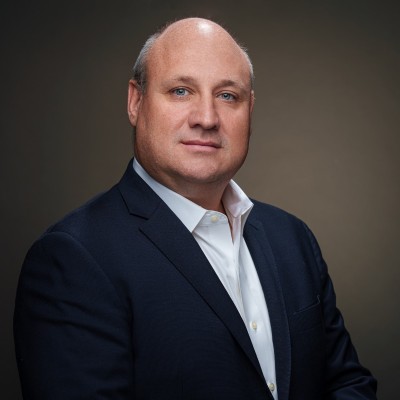
In the highly competitive shipping investment market, the ability to move quickly when buying and selling ships can make all the difference. If financial investors are to seize opportunities before they are gone, they have to avoid long negotiations with banks and legal advisors. This was one of the key messages from Jake Scott, Managing Partner of Clear Ocean Partners, at a luncheon hosted by the Connecticut Maritime Association (CMA), at the end of October.
Scott, with a background in tanker brokerage, spoke about how his company developed its investment strategy and how the acquisition of WOMAR became a pillar for its growth. Scott and two partners own Clear Ocean Partners, the firm that bought WOMAR in 2019. The platform was operating about 20 vessels in the chemical shipping trades at the time. Since then it has expanded its fleet to just under 60 ships.
“The company’s development,” says Scott, “shows why speed and financial flexibility are so important in shipping. He said investors often find it more convenient to buy and sell individual ships than to buy or sell entire corporate entities. That approach culminated in the 2021 launch of Easterly Clear Ocean, a fund group supported by family offices and a few private-equity firms.
The structure of the fund was intentionally kept separate from the permanent capital of the company. “We found that having two separate pools of capital makes it easier to enter and exit shipping markets without being held up by long financial processes,” Scott said. The aim is to ensure that investment decisions can be implemented rapidly when market opportunities arise.
Scott said that an existing operating platform coupled with capital that can be deployed quickly offers a competitive advantage. "The differentiator in marketplace is having a platform with capital," Scott said.
A growing shipping segments investment portfolio
Easterly Clear Ocean has continued to grow its fundraising. Scott told CMA attendees that the group had reached its fifth fund, with about $500 million deployed across its investment vehicles.
There are three funds currently operating in the market, while Funds #1 and #2 have been closed after what Scott called very successful runs. The first fund has delivered a multiple of greater than four times invested capital. Fund #2 did about as well.
The group’s investment strategy has gradually broadened out from its original focus. In 2025, Easterly Clear Ocean began to expand its operations into the dry bulk market with the launch of Easterly Fleet Holdings IV LLC, or Tranche IV. Its fifth investment vehicle, ECO Fleet Holdings V LP, also has a number of bulk carriers in its portfolio.
The expansion reflects the company’s efforts to roll out its investment model to a range of shipping segments, but with the flexibility to buy and sell vessels depending on market conditions.
WOMAR acquisition has been a game changer
Scott recalled an earlier attempt by him and his two partners to buy Heidmar, the pool operator then controlled by shipowner George Economou, and reflected on the company’s beginnings. The deal ultimately didn’t close, but the experience was part of the process that led to the subsequent development of Clear Ocean.
WOMAR, which was part of Heidmar, was later bought by BW Group. The investment platform’s evolution was defined in late 2019 when Clear Ocean acquired the business from BW.
“It’s important to build on what we’ve done in the past to create new opportunities,” Scott said. The WOMAR transaction provided Clear Ocean with two key elements: access to institutional quality capital and an established operating platform that has the ability to manage vessels.
"That was the moment in the evolution of Clear Ocean... because now we had institutional capable capital – the ability to raise money, and we actually had a platform [WOMAR] that could run ships," he said.
The timing was especially significant. Back then, private equity investors were still grappling with how to make winning plays in shipping investments. Clear Ocean believed a different structure might address some of the problems inherent in traditional investment models.
Under the traditional shipowner investment model
Scott said that in discussions with private equity investors the industry needed a simpler way to get involved in shipping markets. He preferred a model of direct purchases and sales of shipping assets, rather than allowing complex financial structures and lengthy transactions to delay investment decisions.
His argument was based on the old Greek and Norwegian shipowners, many of whom had built fortunes over generations by buying and selling ships at the right time.
Scott urged investors to rethink the traditional private equity model, asking why financial institutions would try to replicate a model that had failed repeatedly to deliver the same results.
His goal, he said, was to set up an investment structure that could move quickly, buying ships and selling them when market conditions called for an exit.
At Clear Ocean Partners, the combination of institutional fundraising capabilities, a proven vessel operating platform and flexible capital has become the foundation of its strategy.
Scott told the CMA audience at the end of his remarks that the company's experience had shown the approach could deliver: “I think we have shown that the model works.”
END OF REPORT