Business Nov 4, 2026
Parcel Shippers Diversify Delivery Networks as Carrier Surcharges Drive Up Costs
Tractor Supply expands its delivery strategy across parcel carriers, gig networks and a privately operated fleet, seeking greater flexibility, improved rural service and tighter control over rising transportation expenses.
CHICAGO - Growing delivery expenses and increasingly unpredictable carrier pricing are pushing retailers to rethink their parcel shipping strategies. Instead of relying on a single national carrier, more companies are distributing their shipments across multiple providers to gain greater control over costs, delivery capacity and service performance.
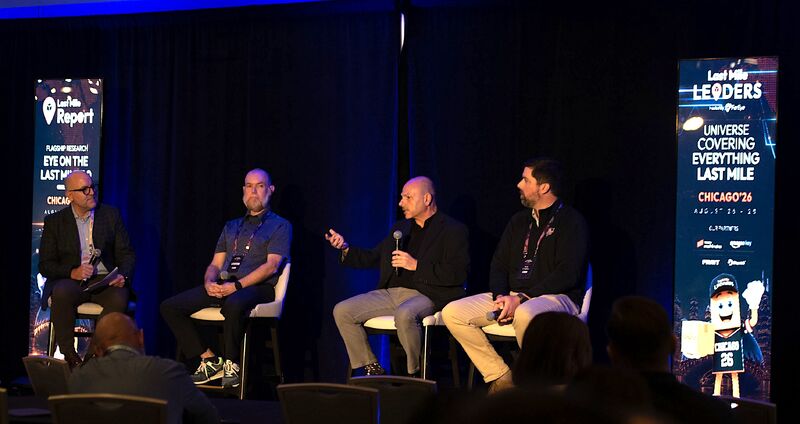
The shift was a central topic at FarEye’s Last Mile Leaders America 2026 conference in August, where industry executives discussed how technology, changing customer expectations and rising surcharges are reshaping last-mile distribution.
Among the speakers was Kyle Langley, Vice President of Final Mile at Tractor Supply Co., who has observed the evolution of parcel shipping from the retailer's perspective during approximately 15 years with the company. Tractor Supply operates nearly 2,500 stores across 49 U.S. states, serving customers who frequently live on rural properties ranging from five to 15 acres.
To accommodate those delivery requirements, the retailer has developed a diversified transportation model combining traditional parcel carriers, gig delivery networks and its own private fleet, launched approximately two years ago.
Langley participated in the discussion alongside Nick Costides, founder of C-Level Advisory and former global president of information technology at UPS, and Brock Johns, Director Analyst at Gartner.
Rising last-mile expenses challenge traditional shipping models
The financial pressure behind the industry's transition was highlighted through FarEye's Eye on the Last Mile America 2026 report, presented during the conference.
According to the research, 45.8% of U.S. delivery operators reported that their delivery expenses were increasing faster than revenue. When companies experiencing costs growing at the same pace as revenue are included, the proportion rises to 88%.
The survey also identified a 12% increase in median last-mile delivery costs for the second consecutive year.
The problem for retailers is not just the annual general rate increases (GRIs). Carrier pricing increasingly includes variable surcharges and shifting package classifications, making it trickier to forecast transportation budgets.
Langley explained that additional charges increasingly apply to specific shipment characteristics, including oversized and bulky parcels and packages requiring additional handling.
These adjustments introduce uncertainty into shipping expenses throughout the year, rather than limiting cost increases to the traditional annual pricing cycle.
Retailers also have less flexibility to transfer those additional expenses directly to consumers.
According to Langley, customers have come to expect dependable standard shipping, frequently at no additional charge. This makes it increasingly difficult for retailers to adjust their shipping and handling fees whenever carriers introduce new charges.
Tractor Supply has responded by developing alternatives that allow it to redirect shipments when a particular carrier introduces surcharges that make certain package categories more expensive to transport.
For example, when a carrier raises prices to discourage larger packages from entering its network, the retailer can move those shipments to another provider. This approach helps contain additional expenses, particularly early in the year.
Single-carrier agreements beyond
Tractor Supply began using several carriers to spread out its parcel shipments about seven or eight years ago.
The retailer had previously believed that it would have stronger negotiating leverage and better commercial terms by consolidating all shipping volumes with one provider.
But Langley said that focusing shipments with one carrier doesn’t necessarily result in the best financial outcome.
One company is responsible for a package portfolio. This pricing structure is a mixture of different shipment profiles. This may result in some categories, particularly the biggest and smallest packages, being shipped at less competitive rates.
Because it uses multiple carriers, Tractor Supply has more say in how certain types of packages and certain geographies get distributed.
Brock Johns said some businesses still like single-carrier contracts because they make it easier to buy, coordinate operations and manage pickups.
But a shift to a multi-carrier strategy alters the balance of negotiating power. A company may sacrifice some overall volume leverage but gain flexibility and stronger negotiating positions in particular shipping categories or geographic markets.
Technology undermines carriers’ control of shipping relationships
The development of multi-carrier shipping strategies began in the 1990s, said Nick Costides, when early shipping software enabled logistics teams to compare prices and delivery times for transportation from different providers.
Traditional carriers quickly realized the strategic value of embedding their technology deeply into their customers’ supply chains.
The goal was to make it harder and more expensive to switch providers by embedding the carrier systems into the logistics operations of companies.
Costides said two major disruptions eventually sped up the industry’s shift away from this model.
The first came in 2013, when the rapid growth of e-commerce outstripped carriers’ capacity forecasts ahead of the Christmas peak season. The second was the supply-chain crisis caused by the COVID-19 pandemic.
Both events highlighted the dangers of heavy dependence on a small number of transport providers.
Technology then became an important equalizer, providing shippers with tools to coordinate across multiple carriers through a single platform, rather than having to rely solely on individual carrier systems.
Costides also said that traditional carriers are structurally limited in offering truly carrier-neutral technology.
He pointed to FarEye as an example of why UPS couldn’t realistically launch a platform that advertized its own services while also providing customers access to competing carriers. Customers won’t want to share commercial and operational information about their competitors with a rival provider.
The discussion also included other developments that affect UPS. “The Teamsters were already campaigning around the 2028 contract negotiations and UPS was repositioning its business toward higher-margin healthcare services,” Costides said.
He gave an example of a 99-cent screw to show the economic challenges of some low-value deliveries. "It's hard to make it work commercially, to deliver such a cheap item in one day with unionized labor.
Rate optimization: Volume is the name of the game
Just because you have more than one carrier agreement does not mean you will get cheaper shipping costs. They are also subject to contractual discount levels that typically depend on the volume that each supplier is awarded.
“When orders come into the warehouse management system, Tractor Supply has tried real-time rate shopping,” Langley said. The goal was to compare contracted carrier rates and automatically select the least expensive option for each specific package.
But the strategy also created another challenge: keeping the distribution of shipments among carrier agreements correct.
If a lot of volume goes to one provider, the other carrier might not get the shipments it needs to keep its negotiated discount tier. The loss of that discount can then make the second carrier even less competitive and cause even more volume movement to the provider that initially offered the lowest price.
This leads to a self-reinforcing cycle where the apparent savings on individual shipments can ultimately increase the retailer's total transportation costs.
Therefore, picking the cheapest carrier for each package is not always the best thing to do. And businesses have to factor in the total financial impact of their carrier portfolio, from volume commitments to contractual pricing floors.
“Companies often underestimate the operational workload involved in managing multiple transportation agreements,” Johns said.
Moving from one carrier to five, six or even ten requires a lot more coordination, monitoring and time. Diversification is a natural progression in the evolution of logistics strategies, but the resources needed to manage it should not be overlooked.
Tractor Supply builds private fleet for specialized rural deliveries
In addition to its multi-carrier parcel strategy, Tractor Supply has developed its own transportation fleet to meet delivery needs that traditional parcel networks and gig services can’t always fulfill.
The program started about two years ago when the retailer began using gig delivery networks to provide same-day and next-day services outside its existing parcel agreements.
The private fleet was developed mainly to provide a unique service for the delivery of large and bulky items, a service that was not available to customers before. It was also expected that the initiative would provide longer-term benefits in terms of cost reductions.
Langley sketched out a fleet that could drop three or four pallets of horse feed directly onto a 10-acre rural property. The deliveries can be further afield than the customer’s driveway and drivers can take products directly into designated stables or storage areas as instructed by the customer.
This type of service is much more than just moving product from a warehouse to an address. "Drivers also need to understand where products need to go and how to serve the unique needs of rural customers.
Tractor Supply delivery now covers everything from a small parcel to loads up to 10,000 pounds.
The third-party transportation providers handle the smallest packages and extra volumes outside of the retailers own capacity. The company is also growing its network of specialized carriers to accommodate more complex white-glove deliveries.
Quality of service first, cost second
A major decision in building the private fleet for Langley was making customer service a priority from the start and not starting the operation with cost savings as the primary focus.
He said that starting with a low-cost, low-service model makes it harder to justify internally later investments in improving service.
By contrast, establishing high standards of service first gives the organization a solid operational base. This enables costs to be optimized incrementally without affecting the customer experience.
Tractor Supply has a three-year plan to recover the extra costs of launching its fleet while still providing the delivery quality that customers expect.
Langley said he would do it the same way again, stressing that service should come first and then a structured plan to improve efficiency and reduce costs.
The retailer’s experience is part of a broader shift in last-mile logistics. With carrier surcharges becoming more and more unpredictable and delivery expectations rising, shippers are increasingly seeking diversified networks that offer a combination of commercial flexibility, technological control and specialized in-house capabilities.
END OF REPORT