Tech Nov 24, 2026
Connected Engine Monitoring Helps Shipowners Cut Fuel Costs and Avoid Downtime
Real-time data, AI-powered analysis and shore-based engineering expertise are helping shipowners improve engine reliability, reduce fuel consumption and identify technical issues before they disrupt operations.
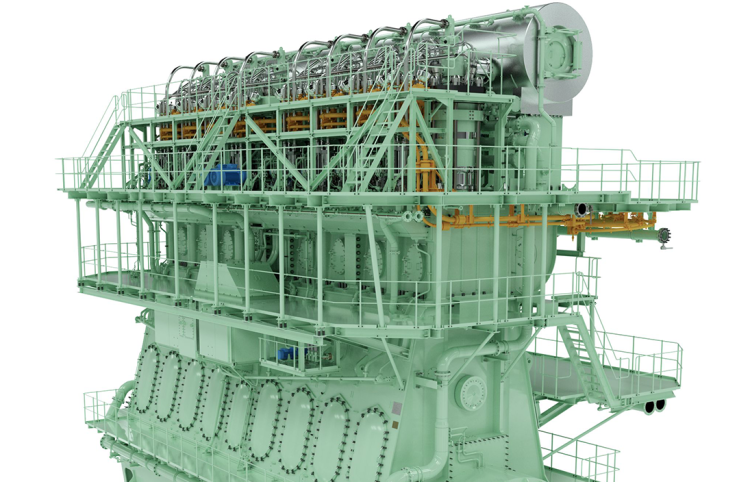
Several technology developments are driving the maritime industry’s move to lower emissions, even as international climate negotiations face renewed uncertainty. The collapse of the COP31 climate summit in Türkiye has increased uncertainty about expectations for next week’s talks in London on the International Maritime Organization’s (IMO) Net-Zero Framework. But shipping companies are already beginning to implement solutions that can improve their operational efficiency and reduce their environmental footprint.
One of the biggest changes has been the proliferation of real-time digital connectivity across commercial fleets. Although the switch was not motivated by climate issues, the constant availability of vessel performance data is enabling operators to achieve tangible improvements towards greener operations.
A decade ago, commercial shipping had almost no real-time digital connectivity. Today, thousands of vessels are continuously connected, revolutionising how shipowners monitor, maintain and manage their engines.
Everllence enables continuous engine monitoring for connected vessels
Digital specialists and marine engineering experts from engine manufacturer Everllence have shared how its PrimeServ Assist (PSA) services and test facilities in Copenhagen have reshaped its approach to engine support during a recent webinar.
The company’s monitoring and advisory solution covers two-stroke and four-stroke engines and turbines. Using real-time vessel sensor data, artificial intelligence algorithms and the technical expertise of shore-based chief engineers, it keeps engine performance up and the machinery operating as efficiently as it can.
The information is provided through CEON, Everllence’s cloud-based digital platform. Since 2020, the system has been installed on all new engines, providing constant, real-time 24/7 support.
Today, 1,200 engines are connected to the platform and 550 individual data points are monitored continuously for each engine. CEON processes over a billion data points in 24 hours on the network.
The system is built on three pillars: 100% engine reliability without any downtime, sustainable operation through constant monitoring and optimisation and cybersecurity to protect the continuous flow of essential engine data.
Its monitoring priorities are: engine performance, operational reliability and maximum availability, fuel economy and engine management according to precise operating guidelines.
Examples of the monetary effects of engine inefficiencies in practice are:
Stig Holm, Marine and Power Head of Everllence, gave two cases where early detection of technical problems could have prevented unnecessary consumption of fuel and additional CO2 emissions.
The first example was a vehicle carrier with a 13,600 kW main engine, where the air cooler performance was decreasing and the pressure drop was increasing. This inefficiency caused an increase of the fuel consumption of approximately 1.04 g/kWh.
The issue is estimated to have resulted in an additional 60 tons of fuel consumption over a 12 month period with an additional cost of $42,800. It also resulted in another 170 tons of carbon dioxide emissions.
Another was a bulk carrier with a main engine of 8,050 kW. The vessel was operating under continuous heavy running conditions i.e. the engine was producing more torque than expected at given engine speed (rpm). And it was also at full power, when it arrived to its full rated revolutions.
The results were also important. The operating condition resulted in 36.5 tons of wasted fuel over the 12-month period, a cost of about $21,880 and 114 tons of additional carbon dioxide emitted.
These examples also show that technical inefficiencies, which may be ignored at first, can add up to large financial and environmental costs if left unchecked.
Digital connectivity is changing engineering support at sea
The move to continuous surveillance has also fundamentally changed the way Everllence provides technical support to vessels.
The company’s senior manager for engine support, Kim Blichfeldt Kirkeby, explained that engineering support had previously been very much a manual process. The ship's engine data had to be copied onto a USB stick and sent to Copenhagen, where shore-based specialists would download and analyze it before they could assess the situation and provide recommendations.
Now this process is automated by CEON and its associated data gateway. Sensor information is collected, stored, and transmitted continuously, allowing shore-based specialists to support onboard engineering teams in real time.
The approach improves operational efficiency, reduces costs and manual workloads on board ships and provides marine engineers at sea with faster access to specialized technical support.
Remote Operations Center detects problems before alarms are raised
Everllence’s Remote Operations Center (ROC) is another important part of the service, where experienced marine engineers analyze incoming information and provide actionable, data-driven recommendations.
“We don’t just react to technical failures that already exist,” said Robert Hegyközy, senior technical advisor with the ROC. Its specialists are trained to identify abnormal operating patterns and possible problems before they become more serious incidents.
“We solve problems before they become a problem,” he said. “There’s no time off.
To identify anomalies, the ROC engineering team analyzes engine performance data and recommends appropriate corrective actions to shipboard engineers.
Crucially, this monitoring capability enables specialists to identify emerging trends far earlier than traditional onboard alarm systems can. Engineers onshore can spot warning signs much earlier by looking at how the engine's behavior changes over time, but normally vessel alarms will trigger when certain critical thresholds are crossed.
Processed 15,000+ support cases
The results point out the increasing importance of remote engineering support in maritime operations. Connected-engine services from Everllence have already handled over 15,000 support cases.
Shipboard engineers have commented: “We have found the ROC team’s quick response and technical advice very useful.
With digital connectivity becoming more embedded in vessel operations, continuous engine monitoring is becoming an important tool for shipowners looking to improve reliability, limit avoidable fuel expenditure and reduce emissions. Everllence is using automated data collection, artificial intelligence and specialist engineering knowledge to position remote support as a way of addressing operational problems before they cause costly downtime.
END OF REPORT