Air Nov 19, 2026
DHL Transfers Its Last Boeing 757 Freighter Out of EAT Leipzig as Fleet Restructuring Advances
The final 757-200PCF operated by European Air Transport Leipzig has been reassigned to DHL Air Austria, bringing EAT Leipzig’s Boeing 757 operations to an end. The move reinforces DHL’s fleet consolidation strategy, while Airbus A330 freighters are emerging as the preferred platform for the subsidiary’s future development.
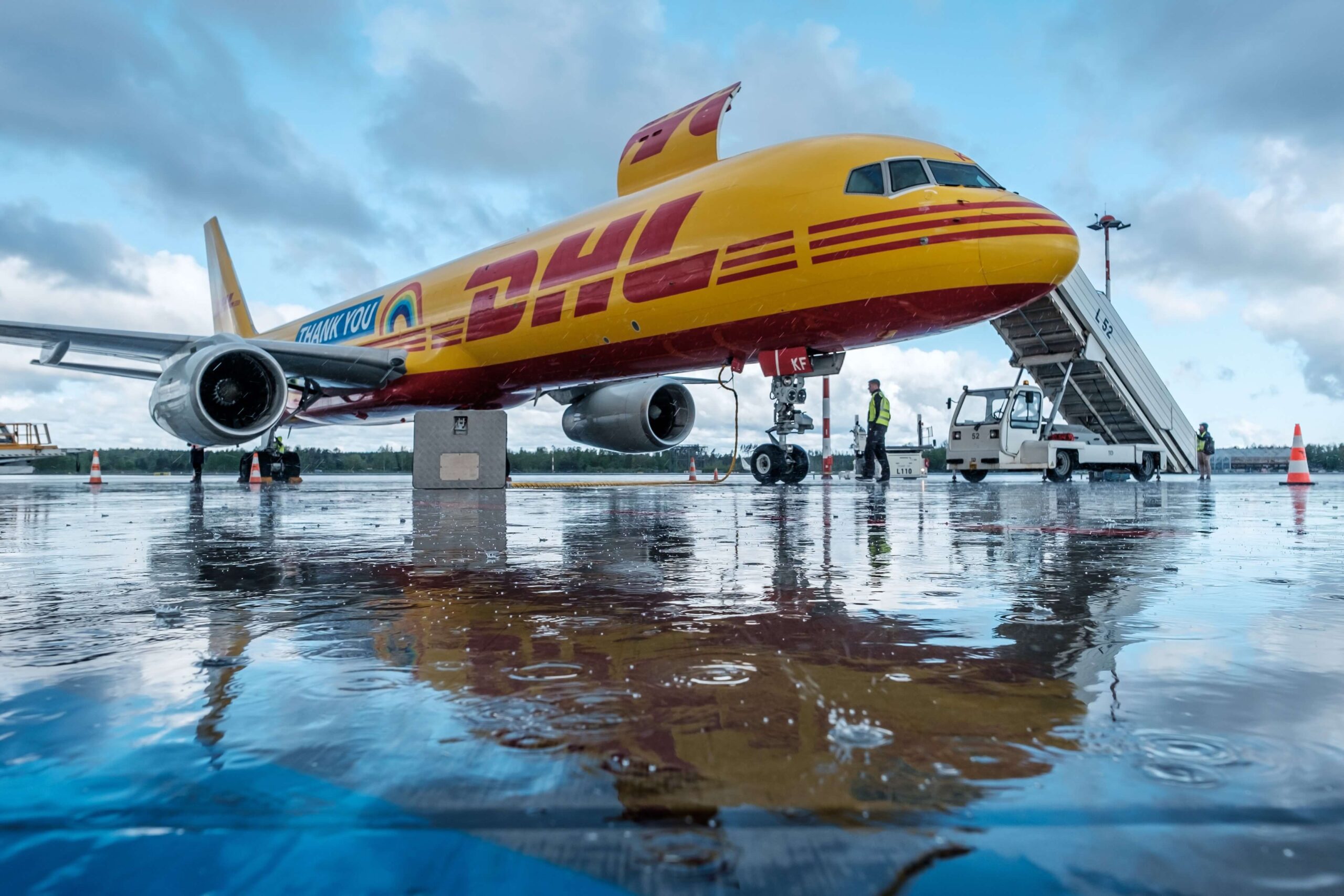
DHL Express has completed another step in its European fleet restructuring programme, transferring the last Boeing 757 freighter operated by its wholly owned subsidiary European Air Transport (EAT) Leipzig to DHL Air Austria. The reassignment means EAT Leipzig no longer operates any aircraft of the 757 family.
The aircraft, a 1999-built Boeing 757-200PCF powered by Rolls-Royce RB211 engines, carries manufacturer serial number 28174. On November 12, it completed its final flight under its German registration, travelling from Marseille (MRS) to Leipzig (LEJ).
Four days after that flight, on November 15, the aircraft was first detected operating with an Austrian registration by flight-tracking platform Flightradar24. The Austrian aircraft registry subsequently confirmed its registration under DHL Air Austria.
The freighter performed its first flight for its new operator on November 17, connecting Leipzig with Shannon (SNN), according to Flightradar24 tracking data.
EAT Leipzig had not responded to requests for comment at the time of publication.
DHL Air Austria strengthens its Boeing 757 fleet
Following the transfer, DHL Air Austria's fleet comprises 21 Boeing 757 freighters alongside four Boeing 767-300BDSFs. The latest reassignment follows another addition in October, when the Austrian subsidiary received its 20th 757 freighter, also previously operated by EAT Leipzig.
The development reflects a broader redistribution of aircraft within DHL's European air cargo network.
Meanwhile, EAT Leipzig is increasingly concentrating its operations around Airbus freighters. Its current fleet consists of:
26 Airbus A300-600F freighters;
Three Airbus A330-200F freighters;
Four Airbus A330-300P2F converted freighters.
The loss of the 757 fleet is part of DHL's wider strategy to rationalize its fleet, said David Yu, professor of finance at New York University and chairman of the Asia Aviation Valuation Advisors Group.
He said an all-Airbus fleet should offer a number of operational advantages, especially in maintenance, engineering support, spare parts management, crew training and fleet planning.
“There are no plans for DHL Air Austria to increase its Boeing 757 freighter fleet further, at least for now,” an expert familiar with the matter told Cargo Facts. But the carrier is still expecting one more Boeing 767 freighter in the second quarter of 2027.
Airbus aircraft to power next growth phase at EAT Leipzig
With the retirement of the Boeing 757 from its fleet, EAT Leipzig’s future development is expected to focus on Airbus freighter platforms.
DHL has invested in the subsidiary’s fleet in recent years. Wouter Dewulf, professor of air transport management and economics and dean of Antwerp Management School, said that EAT took delivery of one A330 freighter and two A300-600 freighters in 2024. In 2025 the carrier added an A330-300P2F and another A300-600.
In April, the expansion continued with the arrival of the fifth A330-300P2F at EAT.
Dewulf thinks the A300-600 will probably not be the main growth platform for the company in the long term. He said the aging fleet profile of the aircraft, relatively high noise levels and lack of new-build production were key constraints.
Consequently, any further A300 acquisitions are likely to be driven by attractive opportunities in the second-hand marketplace, especially where individual aircraft offer favorable economics.
Yu also foresees EAT Leipzig building up its A330 freighter fleet gradually and selectively over time, perhaps with a slow retirement of its aging A300s.
Dewulf sees the A330 as a better platform for future growth and the eventual replacement of aging freighters. The aircraft has a greater payload and cargo volume, longer range and access to a younger pool of passenger aircraft available for conversion, compared with the A300.
He also pointed to DHL’s existing commitment to the A330 passenger-to-freighter conversion program as a signal of the group’s faith in the platform.
The transfer of the last 757 is therefore more than just a change of operator for one aircraft. It also reflects DHL’s ongoing drive to rationalize its fleet structure in Europe, consolidate aircraft types and position EAT Leipzig around a growing Airbus-centred cargo operation.
END OF REPORT