Maritime Nov 11, 2026
DP World reroutes more than 1 million TEU through alternative corridors as Hormuz disruption reshapes Gulf logistics
The group has mobilised a fleet of 3,000 trucks and strengthened regional land connections to maintain trade flows, while preparing for a gradual recovery at Jebel Ali within one to three months of the Strait of Hormuz reopening.
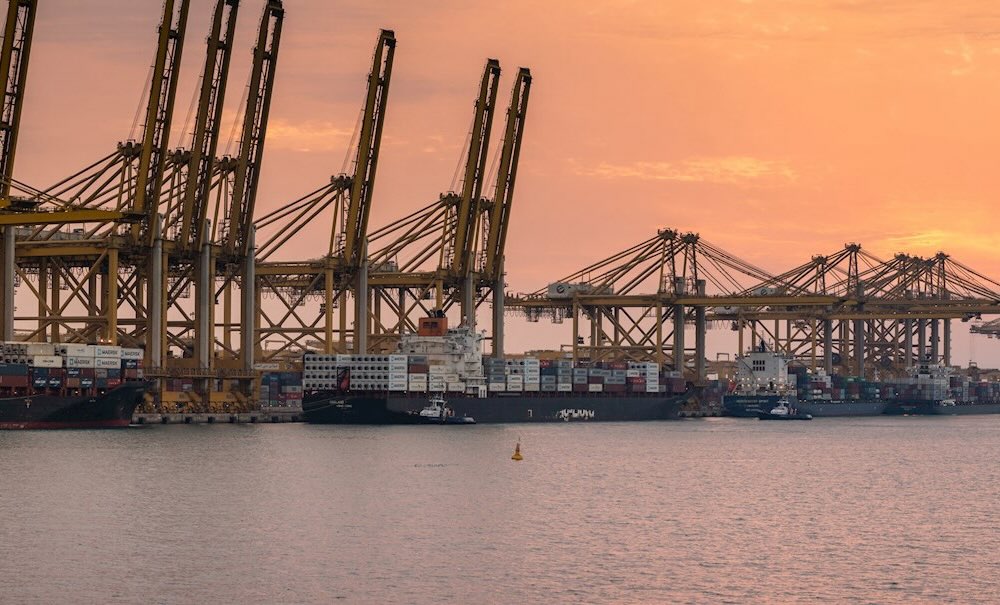
Since the first week of March, DP World’s alternative land corridors have moved over 1 million TEU, reinforcing the links between ports on the UAE’s east coast and the company’s flagship Jebel Ali facility as the closure of the Strait of Hormuz continues to disrupt maritime traffic across the Gulf.
DP World GCC CEO Ahmad Yousef Al-Hassan explained the scope of the operation at a media roundtable in Dubai. We've built a bonded logistics corridor between ports outside the Strait and Jebel Ali and we've done it very fast. We've backed that up with a significant expansion of our road transport capacity.
The operation has matured from zero dedicated truck fleet at the beginning to 3,000 trucks today managed and operated by DP World.
“We had to build this up from the ground up, starting with a fleet of zero trucks and now we manage and operate 3,000 trucks,” Al-Hassan said. “We moved now about 1 million teu between the east coast and the UAE, over road and over rail, since the first week of March.
The latest figure is a further increase since August when DP World said it had moved 500,000 TEU across the GCC over road and rail connections since March.
The establishment of these alternative routes has required close coordination with other port operators, government authorities and customs agencies. DP World has partnered with the Omani authorities and port operators to develop new corridors via Sohar and Duqm providing customers with new access points into the UAE and wider Gulf markets.
The disruption has highlighted the need to improve regional transport infrastructure beyond maritime gateways. For Al-Hassan, the acceleration of cross-border rail connectivity and the establishment of contingency arrangements that can be quickly activated in future emergencies are now key priorities.
“Everyone has come to the realisation that we need to accelerate and fast track rail connectivity,” he said.
As he pointed out, contingency planning must continue even after regular maritime operations have resumed.
Even if the Strait opens up tomorrow, we have to have our contingency planning ready to go.
Alternative routes saddled with higher freight rates, operating costs
Alternative corridors for trade have incurred significant additional costs for logistics operators and their clients.
Al-Hassan said that container freight rates from China to Dubai jumped to $10,000-$12,000 from around $2,000 before the disruption. Longer trucking distances, congestion and higher diesel prices have increased the pressure on transportation costs.
DP World has absorbed some of the increased costs and is working with shipping lines to look at ways of limiting the financial impact. The measures involve the arrangement of the relocation of empty containers from other ports, which will help to improve the efficiency of the revised logistics network.
The company has seen cost pressures and disruption to maritime access, but it remains confident of Jebel Ali’s long-term position as a major regional shipping hub.
Jebel Ali to recover in one to three months expected
DP World is looking for a robust rebound in container traffic once safe passage through the Strait of Hormuz is restored. Depending on how quickly carriers can move their vessels and restore their networks, shipping lines say services could start returning to Jebel Ali between one and three months after the reopening.
“Jebel Ali continued to function throughout the conflict, only closing for six hours since the start of the war,” Al-Hassan confirmed. But the disruption to maritime access has been a major blow to container volumes.
DP World’s second-quarter 2026 results reflected the scale of the drop, with a 90.1% drop in Jebel Ali’s container volumes in the quarter.
The company has continued to service equipment and maintain operational readiness for the last nine months in anticipation of the return of shipping services to the port. Jebel Ali has an annual capacity to handle more than 20 million TEU.
“We believe the recovery will be very strong,” said Al-Hassan. It may take one month to Three months. This is from the feedback that we get from the lines, depending on how quickly they can get their services and networks back there.
Nine shipping lines in Asia had recently talked to him and that had boosted his confidence. Al-Hassan met carriers during a visit last week to gauge their plans to restore services to the UAE's main maritime gateway.
All the nine shipping lines have confirmed their intention to continue calling at Jebel Ali and were already assessing the operational readiness of the port, he said.
“I was last week in Asia visiting all the shipping lines, and all of them undoubtedly told us Jebel Ali will be a port of call and will always be a port of call. They are already trying to understand: Are we operationally ready? And we say yes.
Jebel Ali’s developed ecosystem is a competitive advantage
DP World says the wider commercial and logistics ecosystem at Jebel Ali, as well as its maritime infrastructure, will be key to attracting shipping lines and winning back diverted cargo.
The port takes advantage of its existing international shipping routes and its proximity to Jebel Ali Free Zone, which is home to more than 12,000 companies. "Rival ports will find it difficult to match the combination of maritime services, logistics infrastructure and industrial activity," Al-Hassan said.
The free zone has maintained over 90% occupancy across its asset classes despite the disruption. Major infrastructure and construction projects across the UAE have also supported demand for cargo imports.
Al-Hassan said the transhipment of cargo to other regional ports is a temporary situation and customers and shipping lines will continue to choose reliable and cost-efficient trade routes.
“It’s only a distraction for a little while,” he said. “People always want the cheapest, most reliable trade route and Jebel Ali has always been providing that.
But he acknowledged the closure had revealed the need to develop other maritime gateways outside the Strait of Hormuz. But shipping lines are expected to continue to use the waterway as an important regional trade route once they are satisfied with the security situation and insurance costs start to fall.
Fujairah investment aims to strengthen the UAE's port network
The need for additional maritime access points is also behind DP World's planned AED 2 billion to AED 3 billion investment in two new terminals in Fujairah, announced in July.
The development is designed to provide an additional gateway outside the Strait of Hormuz while complementing the UAE's existing port and logistics infrastructure.
The project includes a container terminal near Fujairah Airport, with a planned capacity of 2.5 million TEU, alongside a second terminal in Dibba dedicated to general cargo.
DP World is targeting an initial phased start of operations within 18 to 24 months.
Al-Hassan stressed that the investment was not a reaction solely to the current crisis and was never intended to replace Jebel Ali or function exclusively as an emergency alternative when the Strait becomes inaccessible.
"When we took the decision for Fujairah, it wasn't a knee-jerk reaction to what's just happening today," he said. "We will always look at it as one integrated UAE port system."
The company's intention is to connect Fujairah with Jebel Ali's established logistics infrastructure and free zone ecosystem, creating an integrated network through which customers can select the most appropriate maritime gateway according to their cargo requirements.
Potential sources of demand for the new container terminal include East African transshipment cargo, which does not necessarily need to transit the Strait of Hormuz, as well as shipments destined for the Northern Emirates.
Development will be phased in line with market demand. While DP World is targeting an 18-month delivery period, Al-Hassan acknowledged that achieving this timeline would be challenging.
"We're targeting in 18 months. But if you speak to anyone, they'll tell you that's probably impossible. Twenty-four months is usually what it is."
A key consideration for the company is ensuring that Fujairah remains commercially competitive after the Strait reopens, rather than depending exclusively on cargo diverted during periods of disruption.
As Al-Hassan put it: "The challenging part is: what do we do when the Strait is open?"
Saudi Arabian operations benefit from changing regional trade flows
The closure of Hormuz had a major impact on Jebel Ali, but DP World's operations in Saudi Arabia have followed a different path and been more reliant on Red Sea gateways which handle container traffic.
The South Container Terminal at Jeddah Islamic Port has set new throughput records recently with regional trade growing through Saudi Arabia's Red Sea infrastructure.
DP World has invested heavily in expanding the terminal over the last four to five years, bringing its annual capacity to 4 million TEU.
Al-Hassan pointed to the strength of its recent performance, with record monthly volumes being reported in both July and October.
“We had a record month in July and now we have a record month in October,” he said.
It also plans to open a $250 million logistics park in Jeddah in the first quarter of 2027. The development is part of the company’s wider efforts to expand its integrated logistics capabilities in the Saudi market.
DP World is also developing a special economic zone on the Oman-UAE border as part of its investments in the region to strengthen its logistics and trade infrastructure in the region.
Al-Hassan said the company had not suspended any of its major regional investment projects despite the conflict.
DP World continues to develop its port, logistics and economic zone developments to enhance regional connectivity, increase capacity and build greater resilience into supply chains.
The experience of the Hormuz disruption has accelerated the need for alternative routes and additional gateways, but DP World's strategy remains centred on an integrated regional network in which Jebel Ali, Fujairah, Jeddah and other logistics hubs serve complementary roles.
END OF REPORT