Maritime Nov 11, 2026
Ports and Terminals Face a Big Decarbonization Question: Who Pays?
More and more operators are cleaning up their operations by electrifying port equipment, but making those investments financially worthwhile and securing enough renewable electricity remain major hurdles.
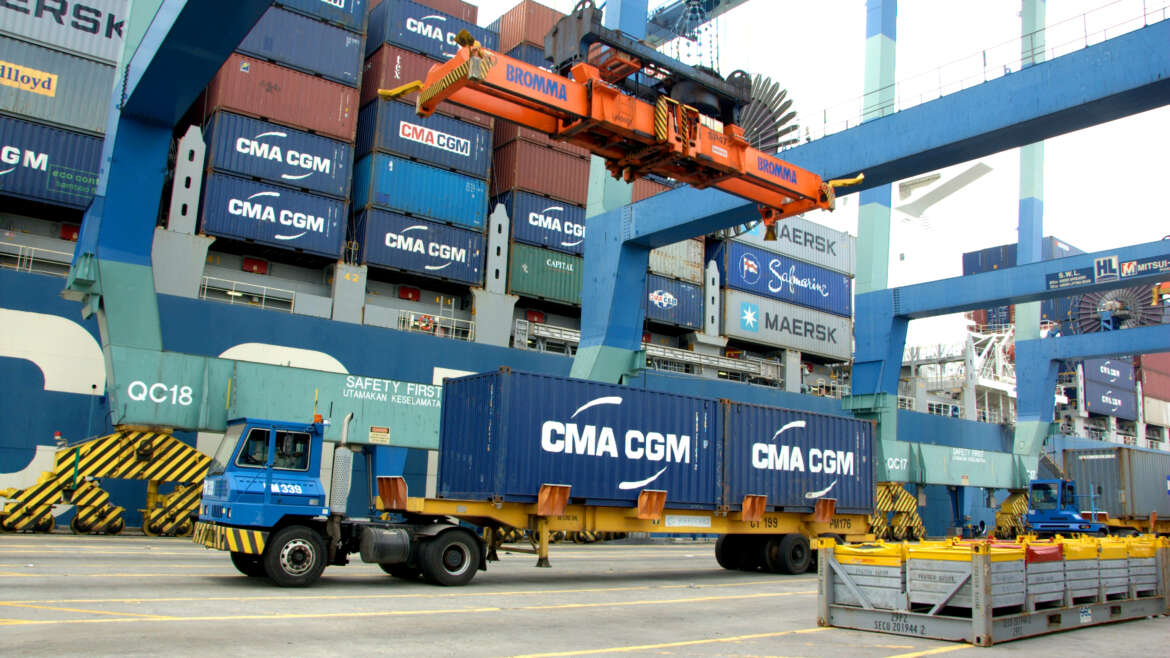
The transition to greener port operations is increasingly centered on electrification. But while ports and terminal operators recognize the need to cut their carbon footprint, a lack of money to fund the transition and the need to convince customers to share some of the costs are major barriers.
The challenge was the subject of a discussion at a sustainability panel at TOC Asia, where industry representatives discussed the financial realities of decarbonizing port infrastructure and operations.
“One of the fundamental problems of the industry is consumers not willing to pay much more for sustainable services,” says Ruben Emir Gnanalingam Bin Abdullah, Executive Chairman of Malaysian terminal operator Westports Holdings. The issue isn’t just a shipping problem, it’s a larger global issue, he said.
The question is not only how to make operations greener, but how to do that transition while staying financially sustainable,” he said. Ambitious environmental commitments can be hard to implement without a viable economic model and customers willing to pay for it.
This is the assessment made by DP World’s Vise President and Head of Sustainability for Asia Pacific, Vineet Mahajan, who noted cargo owners as the ultimate parties responsible for financing decarbonization across the supply chain.
While terminal operators are mainly serving the shipping lines, the ultimate justification for investment is the commitment of the cargo owners to pay for lower-emission operations, Mahajan said.
Cargo owners are also being increasingly pressured by their own customers to be greener and more transparent about emissions, he added. But this pressure is still not being translated into the level of financial commitment required to sustain major investments by terminal operators.
Electrification also needs to be economically and environmentally sensible
At Westports, investment decisions are directly correlated to their potential financial returns. “We are ready to proceed with sustainability projects when we can demonstrate the return on investment,” Gnanalingam said.
One is the solar farm at the port, which now meets about 16% of Westports’ energy needs. This will allow the operator to produce its own electricity from a 100% renewable source.
The company has also bought 60 electric terminal tractors. However, Gnanalingam cautioned that electrification did not automatically mean lower emissions, especially in countries where power generation was still heavily coal-dependent.
Economics of introducing electric vehicles was also a factor in Malaysia. “Electrification is financially attractive irrespective of the electricity mix in the country because the cost of running electric terminal tractors is now lower than diesel trucks,” Gnanalingam said.
The discussion also revealed that the national energy structures may have an important impact on the environmental gains of port electrification.
Singapore is working toward a net-zero emissions target by 2050 and port operator PSA is looking to electrify its operations, said New Wei Siang, Director of the International Division at Singapore’s Maritime and Port Authority (MPA).
But he cautioned that the environmental benefits would depend heavily on the source of electricity. Natural gas is still a fossil fuel . Singapore produces about 95 % of its electricity from natural gas . This does not mean, however, that simply replacing conventional equipment with electric alternatives will reduce the carbon footprint of operations.
One decarbonization strategy does not fit all markets
DP World operates 16 ports and terminals in the Asia-Pacific region and the choice of technology is dictated largely by the energy conditions in each country.
Electrification clearly has environmental benefits in markets like Australia where renewable electricity is readily available and the Philippines, Mahajan said. This is very different in countries like Vietnam and Indonesia, where the electricity mix can make electrification less effective in terms of emissions.
Indonesia is an example of this dilemma. DP World’s terminal operations there use B40 biodiesel, a fuel that contains 40% biofuel.
Mahajan said that switching these operations to electricity from the national grid would actually increase emissions rather than decrease them. Hence, in the present situation, it is more eco-friendly to keep using the current biodiesel solution rather than electrifying the equipment.
These differences illustrate the challenge of developing a consistent decarbonization strategy across an international port network. The best solution depends not only on the technologies available but also on the carbon intensity of the energy used to power them.
Regulation may speed up investment decisions
The panel also discussed the role of regulation in moving the industry beyond technology and financing.
Mandatory decarbonization requirements would make investment decisions much clearer for port operators, Gnanalingam said. They will have to pass on the costs to customers who will have no option but to pay. If environmental measures are imposed across the industry,
He cited the example of shore power. If shore-side electricity were to become a global requirement, ports would need to invest in the necessary infrastructure and charge shipping lines for its use.
Such regulatory requirements could address one of the sector’s perennial challenges: the mismatch between environmental expectations and customers’ willingness to pay for greener services.
Overall, the discussions at TOC Asia highlighted one central issue for the future of sustainable ports. Electrification is still an important weapon in the emissions fight, but it’s going to take more than just investing in infrastructure to make it work. The speed at which ports and terminals can decarbonize will be heavily reliant on access to renewable energy, commercially viable solutions, the financial commitment of cargo owners and clear regulations.
END OF REPORT