Maritime Nov 16, 2026
EU Approves €286 Million in State Aid to Modernise Hamburg Port Infrastructure
The European Commission has cleared two German public funding measures to renovate the Salzgitter and Steinwerder quays, helping preserve the operational safety and long-term functionality of one of Europe's strategic maritime hubs.
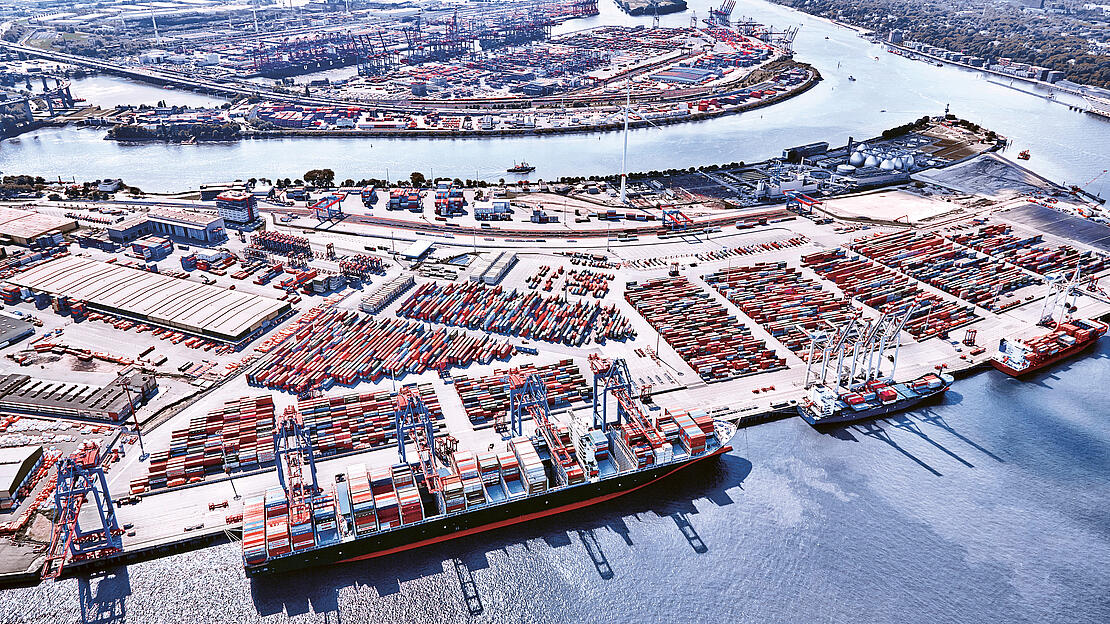
HAMBURG, Germany – The European Commission has approved the granting of €286 million in public support for the renovation of two major infrastructure facilities at the Port of Hamburg. The two projects will be equally funded by the City of Hamburg, the German authorities. There will be €143 million for the Salzgitter quay and the same amount for the Steinwerder quay.
The investments aim to prevent further degradation of the existing quay structures and to ensure the continued safe and uninterrupted operation of the port. The approval is an important step toward guaranteeing the infrastructure capacity of one of Europe’s key maritime gateways.
€551m allocated to two major quay renovation projects
The two renovation programs will require a total investment of €551m. Of this amount, €293 million is earmarked for the Salzgitter quay and €258 million for Steinwerder.
European public funding will only cover part of the total expenditure. The remaining costs will be financed by the Hamburg Port Authority from its own resources, bond issues and loans.
The planned works will be mainly the replacement of deteriorated quay wall structures. Such interventions are deemed crucial as they maintain the integrity of the infrastructure, guaranty the safety of operations and prevent the disruption of cargo handling activities.
The condition of the existing structures at Steinwerder has become especially worrying, with deterioration creating a potential risk of quay collapse. Hence the renovation is required to safeguard the facility and to ensure its continued use.
In Salzgitter the investment is to be used for the upkeep of the existing infrastructure for the continued handling of bulk goods, so that the terminal can continue to be used for the logistics and maritime activities already taking place there.
European Commission confirms state aid rules compliance
The approval comes after an assessment by Brussels of whether the two funding measures are compatible with the European Union's rules on State aid.
The projects were assessed by the Commission under Article 107(3) of the Treaty on the Functioning of the European Union (TFEU) which allows Member States to grant public financial support to certain economic activities, provided certain conditions are met and competition in the internal market is not unduly distorted.
The European Commission says that both investments are in line with common European transport objectives, as they ensure the operational continuity of a strategically important port that is part of the Trans-European Transport Network (TEN-T).
It is viewed as necessary to keep these facilities maintained to avoid disruptions in port activities and to keep the reliability of infrastructure that plays an important role in European transport and logistics networks.
Funding limited to the real investment needs
The Commission's assessment also focused on the proportionality of the public support.
Brussels confirmed that the funding would not exceed the funding gaps of the projects and would stay within the real financial needs of the projects. The difference here is between what it costs and what you expect to make on an investment over its useful life.
The purpose of the assessment is to ensure that public money only makes up the financial gap to undertake the infrastructure improvements and is not used to grant beneficiaries excessive financial advantages.
No extra port capacity or competitive advantage
The Commission also examined the possible effect of the investments on competition in the maritime sector.
The deciding factor for approval was that neither project would increase the handling capacity of the Port of Hamburg. The money will be used only to repair and maintain existing infrastructure, not to expand the port’s commercial operations.
On this basis the Commission concluded that any possible distortions of competition would remain limited and that the advantages of ensuring the maintenance of safe and functional port facilities would outweigh any possible negative effects linked to the public aid.
Thus the €286 million approval gives Hamburg financial support to tackle the deterioration of key infrastructure, while ensuring that the projects comply with European competition rules and the broader objectives of the TEN-T network.
END OF REPORT