Logistic Nov 25, 2026
European Commission Approves New Platform to Strengthen Rail Users’ Voice in EU Policy
The European Railway Platform will bring together railway companies, freight operators, ports, terminals and intermodal transport stakeholders to help shape future European rules on rail capacity and network management.
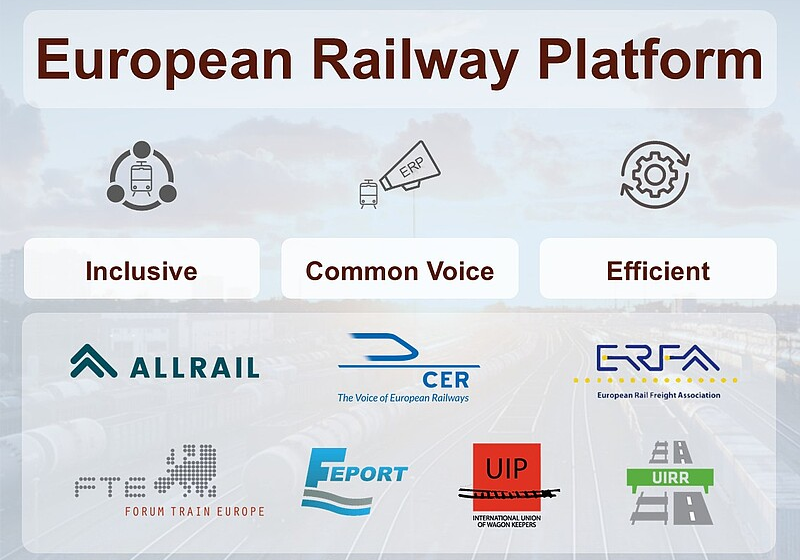
The European Commission has given its approval to the establishment of the European Railway Platform (ERP), a new body designed to give railway infrastructure users a stronger and more coordinated voice in the development of European rail regulations. With the approval secured, the platform can now be formally established and begin its activities.
The initiative aims to ensure that the organisations and companies using Europe's railway network have a more direct role in decisions concerning infrastructure capacity, train operations and network performance. Until now, infrastructure managers have played a central role in shaping how the railway system is organised. The ERP is intended to bring the perspective of market users more systematically into that process.
Its membership will cover a broad range of stakeholders, including railway undertakings, freight transport operators, ports, terminals, combined transport companies and other organisations requesting or using railway infrastructure capacity.
The platform is being established under EU Regulation 2026/1184, which governs the use of railway infrastructure capacity within the Single European Railway Area. Its creation was initially proposed on 11 June 2026 by seven industry associations: ALLRAIL, CER, ERFA, FEPORT, FTE, UIP and UIRR. These organisations have now jointly announced the European Commission's approval.
The Commission, working alongside the European Network of Rail Regulatory Bodies (ENRRB), assessed the proposed governance arrangements and operating rules. The review focused on ensuring balanced representation across the different categories of stakeholders, as well as transparent and non-discriminatory participation conditions.
A central responsibility of the ERP will be to act as the collective representative of railway market users in discussions with the European Network of Infrastructure Managers (ENIM), which brings together Europe's railway infrastructure managers.
While ENIM develops technical proposals for organising and allocating railway network capacity, the new platform will consolidate feedback from the companies and organisations that depend on that capacity. It will coordinate their positions and develop common proposals to contribute to the European regulatory process.
The platform's first major task will be to review the draft European Framework for Capacity Management, the forthcoming European framework governing railway capacity management. ENIM is expected to publish the draft before the end of 2026. The ERP will gather input from operators across different countries and turn their contributions into joint recommendations for consideration during the development of the new rules.
Freight transport and intermodal connectivity will be among the key areas benefiting from this new structure. The inclusion of ports and terminals, represented through FEPORT, alongside combined transport operators represented by UIRR, will ensure that their operational requirements are reflected in discussions at European level.
Their participation is particularly relevant to rail connections serving seaports, terminal operations and the integration of rail freight with other transport modes. By bringing these stakeholders together, the ERP aims to ensure that future capacity management rules better reflect the practical requirements of Europe's freight and intermodal logistics sector.
Following the Commission's approval, the membership application process has also been opened. All eligible stakeholder categories can now apply to join, including railway undertakings, capacity applicants, service facility operators and other users of railway infrastructure.
Meanwhile, the seven founding associations are preparing the platform's first plenary assembly, which is expected to take place in the coming weeks.
The establishment of the European Railway Platform marks a new step towards a more inclusive approach to European rail governance, giving infrastructure users a structured channel through which to influence the rules that will shape the future use of the continent's railway network.
END OF REPORT