Land Nov 5, 2026
Fermerci Calls for New Legislation to Reverse Decline in Italian Rail Freight
The Italian freight rail association is working with the CNEL on a comprehensive legislative proposal aimed at strengthening rail transport through stable funding, improved incentives, workforce training and infrastructure development. The initiative comes amid declining rail activity and growing pressure on European freight corridors.
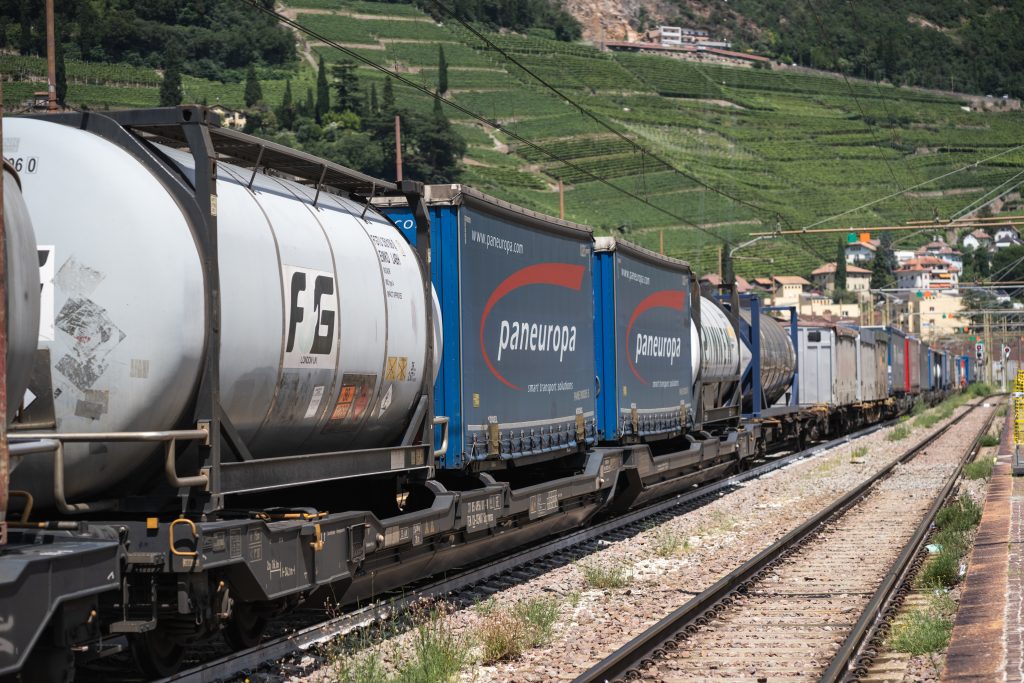
A big policy shake-up could be coming for Italy’s rail freight sector after industry association Fermerci presented a new legislative proposal to support and boost rail freight transport.
The initiative was presented in Rome on 5 November 2026, during the 18th edition of the MercinTreno Forum at Villa Lubin, and is being developed in cooperation with the National Council for Economics and Labour (CNEL). Fermerci is urging the Italian Government and Parliament to guarantee reliable and long-term financial resources for the sector, starting with the next Budget Law.
In the panel discussion "MercinTreno and Geopolitics", the President of Fermerci, Clemente Carta, pointed out the strategic role of transport connectivity for the industrial and export-oriented economy of Italy.
“As an exporting and manufacturing economy, the quality of its connections is part of Italy’s ability to compete,” Carta said.
The association plans to present its proposal to Parliament via the legislative initiative powers of CNEL. The project was an industrial policy framework to support Italian companies, linking the competitiveness of the rail freight sector with the country’s production, commercial and environmental interests, Carta said.
A key element of the proposed legislation is financial incentives for rail freight operators. Fermerci also calls for clearer and more reliable deadlines for the payment of public contributions, and for adjustments to the existing support mechanisms to ensure compliance with European Union state aid regulations.
The proposal also foresees a bigger role for regional authorities, which could co-finance or complement national support schemes. This would help to overcome the lack of coordination between national and regional measures that currently exists.
In addition to financial aid, the legislative package would implement a multi-year training scheme for railway workers, revise safety rules governing freight terminals and increase the number of intermodal freight centres in Italy. Highest traffic volumes would be given special attention in the facilities.
Carta said that infrastructure investment alone would not be sufficient if the industry does not retain the skilled workforce and operational capacity needed to fully utilise new facilities and equipment.
“The idea is that when the investments are made, the sector has kept the industrial capacity to absorb them,” he stressed.
The proposed reform is set against a difficult performance backdrop for Italian rail freight. Fermerci's annual report indicates that in 2024, rail accounted for just 11.6% of freight transport in Italy, significantly lower than the European average of 16.6%. The gap is even bigger if compared with Germany, where rail accounts for over 20% of freight transport, or Austria, where the share is 30%.
Rail freight activity in Italy has not gained ground, but continued to shrink. “Total train-kilometres fell from 53.8 million in 2021 to 49.4 million in 2025, a decline in three successive years,” Carta said.
The downward trend has continued to 2026. Train-kilometres were down another 8.1% in the first half of the year. Fermerci reckons the figure could drop to around 47 million by the end of the year.
The situation is also worsening at last-mile rail facilities, a key link between the railway network and industrial production sites. Train movements at these locations fell by 14% between 2021 and 2025, illustrating the challenges in providing effective links between rail freight services and the wider manufacturing economy.
Pressure is expected to increase over the next three years. European railway networks, particularly in Germany, could be limited by problems at Alpine crossings, possibly reducing the number of connections and alternative routes available to freight operators.
In this context, Fermerci's legislative proposal aims to tackle both structural weaknesses and immediate operational challenges in Italian rail freight. It aims to create more stable conditions for investment, to improve the sector’s competitiveness and to strengthen the role of rail in the country’s transport and industrial supply chains.
END OF REPORT