Land Nov 5, 2026
House Transportation Committee Faces Major Shake-Up After Election
Rick Larsen is expected to take over the committee’s chairmanship as Democrats regain control of the House, while the trucking industry closely watches David Rouzer’s uncertain re-election bid and the future of key provisions in the next highway bill.
The Democratic Party’s sweeping victory in the US elections is set to reshape the political landscape surrounding the country’s transportation sector. Changes in the composition and leadership of congressional committees are expected to influence trucking regulations, infrastructure funding and the next version of the federal highway legislation.
Among the most significant developments is the expected transition of leadership at the House Transportation & Infrastructure (T&I) Committee. Several current members will leave the committee next year, including its chairman, Republican Sam Graves of Missouri, who is retiring.
However, the immediate concern for the trucking industry is the political fate of David Rouzer, Republican representative for North Carolina’s 7th Congressional District. At the time of publication, he held only a narrow lead in a race that had not yet been called in his favor by the Associated Press or any other news organization.
Rouzer's position is particularly important to the industry. As a member of the T&I Committee and chairman of its Highway and Transit Subcommittee, he has become an influential ally for trucking interests in Congress. Although retaining his House seat would allow him to remain involved in transportation policy, the Democratic takeover means he will lose control of the subcommittee. Following Graves’ retirement, Rouzer could nevertheless become the committee’s leading Republican member.
Democratic leadership set to reshape transportation policy
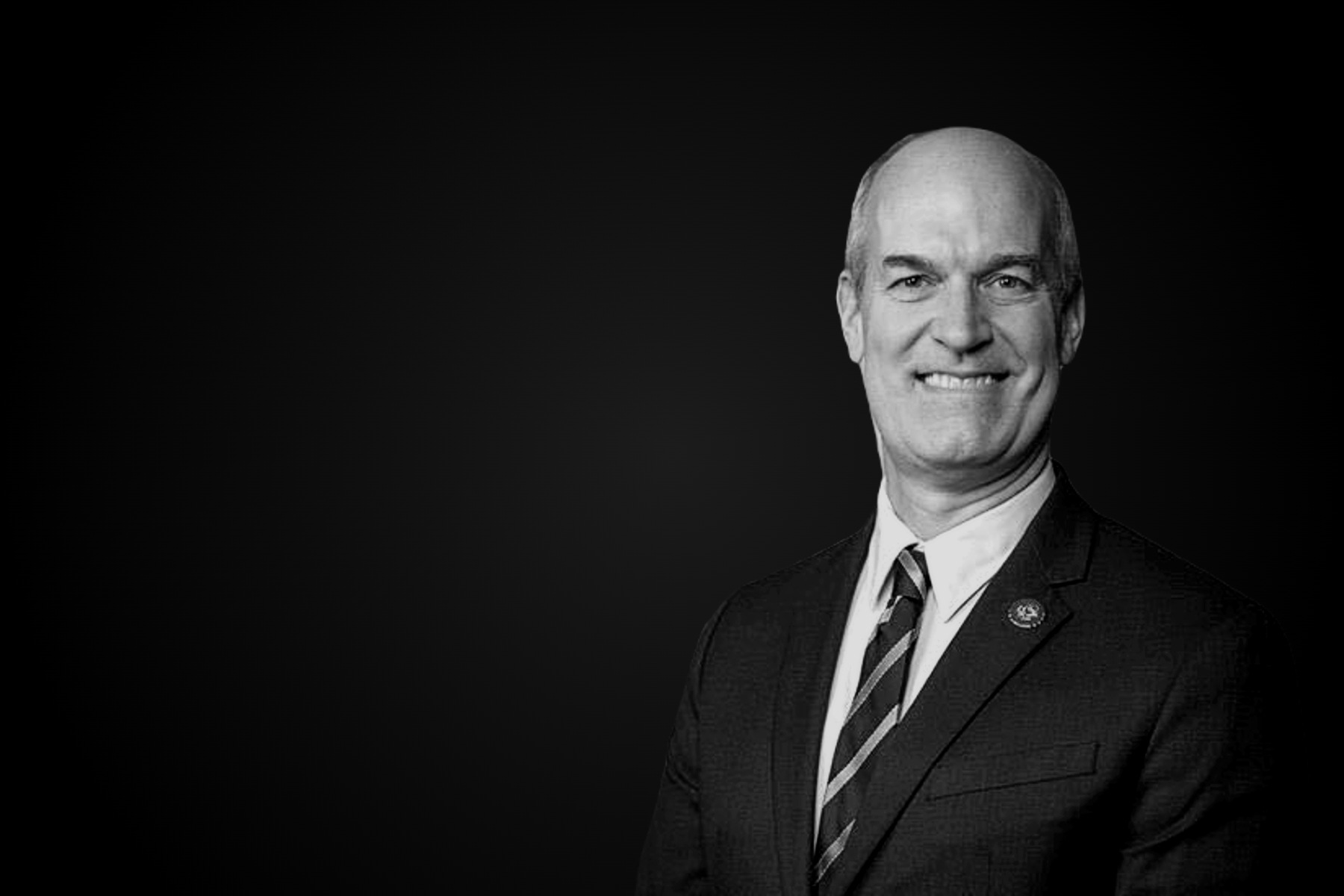
With Democrats taking control of the House, Rick Larsen of Washington is expected to become chairman of the T&I Committee. He currently serves as the committee’s ranking member.
The leadership transition comes alongside a broader departure of lawmakers. Nine committee members from both parties are leaving because of retirement. Several additional Republicans, but no Democrats, were defeated in their re-election campaigns, are leaving the House to pursue another elected position or were still awaiting the outcome of their races as of Wednesday. Rouzer’s contest remained among those unresolved.
A similar leadership change is expected in the Senate. Republican Ted Cruz of Texas will give way as chairman of the Commerce, Science & Transportation Committee to Maria Cantwell of Washington, currently the committee’s ranking member.
The Senate committee will experience fewer changes in its overall membership. Marsha Blackburn of Tennessee is leaving to become her state’s governor, while Republican Dan Sullivan of Alaska remains involved in a closely contested vote-counting process that will determine whether he returns to Washington in 2027.
Highway bill faces December funding deadline
The outgoing Congress’ most recent major action affecting trucking took place within the T&I Committee, which overwhelmingly approved the BUILD America 250 Act, widely known as the highway bill.
Despite that approval, the legislation has made no further progress. Meanwhile, funding under the existing highway law is scheduled to expire on December 11.
The version approved by the committee in May contained several measures supported by the trucking industry. One of the most significant was a proposed allocation of $750 million over five years to expand truck parking capacity.
Jim Mullen, president of the Truckload Carriers Association, told FreightWaves that he expects consideration of the highway bill to be postponed until the new Congress takes office.
Regarding the approaching December deadline, Mullen anticipates that the outgoing, or lame-duck, Congress will approve a temporary funding extension lasting until June.
He does not expect lawmakers to use that extension to introduce substantial policy changes. In his view, the measure should remain a straightforward continuation of existing funding, without additional policy provisions.
Nevertheless, the next full highway bill may not reproduce the version approved in May. Mullen believes some elements could be reconsidered during the legislative process, although the proposed truck parking investments are likely to remain part of the legislation.
Autonomous vehicles and lease-purchase agreements among provisions under review
The next version of the highway bill could reflect some of the Democratic Party’s policy priorities, particularly in areas where transportation technology intersects with labor concerns.
Mullen pointed to a provision in the original legislation calling on the Secretary of Transportation to oversee an « Autonomous Vehicle Accessibility Study », to be conducted by the Transportation Research Board of the National Academies.
The proposed study would establish a framework for government oversight of autonomous vehicles where such supervision is considered necessary. Rather than restricting the technology, the provision is viewed as supportive of autonomous vehicle development.
Its future remains uncertain under Democratic leadership. Mullen said he could not predict whether Democrats would retain the measure, noting that lawmakers concerned about the implications of automation for workers might push for its removal.
Another provision addresses lease-purchase arrangements involving independent owner-operators.
Under the proposed requirements, trucking companies using these agreements would have to provide participating drivers with a document outlining important contractual details. The information would include compensation levels, average weekly mileage and the number of drivers who actually complete the programme by purchasing a truck at the end of the lease.
The latter figure is particularly relevant because the possibility of eventually owning the vehicle is one of the main selling points of lease-purchase agreements.
The legislation also states that the Secretary of Transportation may organize a public awareness campaign to improve understanding of how standard lease-purchase programmes operate.
Higher minimum insurance coverage could return to the debate
Another potential flashpoint that could come up again in the revamped highway bill is mandatory insurance requirements for trucking companies.
The T&I Committee’s approved version did not include an increase to the current minimum coverage of $750,000. But Mullen said there had been a legislative effort to put a higher threshold in during the legislative process before the provision was ultimately eliminated.
A prior attempt in 2020 to increase the mandatory insurance coverage to $2 million also did not succeed.
But Mullen, despite those setbacks, thinks the problem could come in the next iteration of the legislation, which he said could bring lawmakers back to the table to take a look at another provision to increase minimum insurance requirements.
The highway bill also represents a prime opportunity for bipartisan cooperation, according to the American Trucking Associations (ATA). A divided government doesn’t have to mean political dysfunction, the group told FreightWaves in a statement.
However, the association pointed out that the outgoing Congress has unfinished business to attend to. Its priorities include bipartisan legislation to address organized cargo theft and freight fraud.
Dalilah’s Law remains unresolved after House committee approval
Beyond the highway bill, another significant piece of transportation legislation could face renewed scrutiny under the incoming Democratic majority.
Dalilah’s Law, introduced by Representative David Rouzer, attracted considerable attention and secured approval from the T&I Committee in March. However, it failed to progress further through Congress.
Although a companion measure was introduced in the Senate, it did not receive a hearing before the corresponding committee.
The legislation takes its name from Dalilah Coleman, a young girl from California who suffered serious injuries in a 2024 crash involving a truck driven by a person who was illegally present in the United States.
One of the bill’s central objectives was to impose English-language proficiency requirements on holders of commercial driver’s licenses (CDLs). Democratic members of the House committee opposed the legislation largely because of these requirements.
Rick Larsen, who is expected to become the committee’s next chairman, argued in March that the English-language provision duplicated existing regulations, particularly following the tightening of standards introduced earlier this year.
Democrats also objected to other measures they believed would impose excessively restrictive conditions on non-domiciled individuals seeking to obtain a CDL legally. They warned that the proposed requirements could effectively prevent non-citizens benefiting from Deferred Action for Childhood Arrivals (DACA) from becoming professional truck drivers.
Mullen believes Democrats could revisit the issue in a future highway bill but adopt a different approach. He suggested that a revised proposal might address the status of non-domiciled drivers while preserving the ability of DACA recipients to maintain their commercial driving credentials.
In his assessment, there is a strong likelihood that lawmakers will address the issue again, although the resulting provisions may differ considerably from those included in Dalilah’s Law.
Court challenge adds uncertainty to non-domiciled driver rules
The debate is also continuing through the judicial system. The stricter regulations governing non-domiciled drivers are currently under consideration by a judge at the US Court of Appeals for the District of Columbia Circuit.
Oral arguments in the case took place in September, leaving the future of the tightened requirements subject to the court’s consideration.
As the new Congress prepares to take office, the trucking industry is therefore facing several interconnected policy questions. The future of infrastructure funding, truck parking investments, insurance requirements, autonomous vehicle oversight, lease-purchase transparency and commercial licensing rules will all depend on the direction taken by the incoming leadership of the House transportation committee.
END OF REPORT