Customs Nov 20, 2026
FMC sets 1 March deadline for container carriers to file annual US export policies
Ocean carriers serving US ports must submit detailed export policies covering pricing, equipment availability, blank sailings and vessel capacity by 1 March each year. Failure to meet the requirement could result in daily civil penalties of up to $74,943.
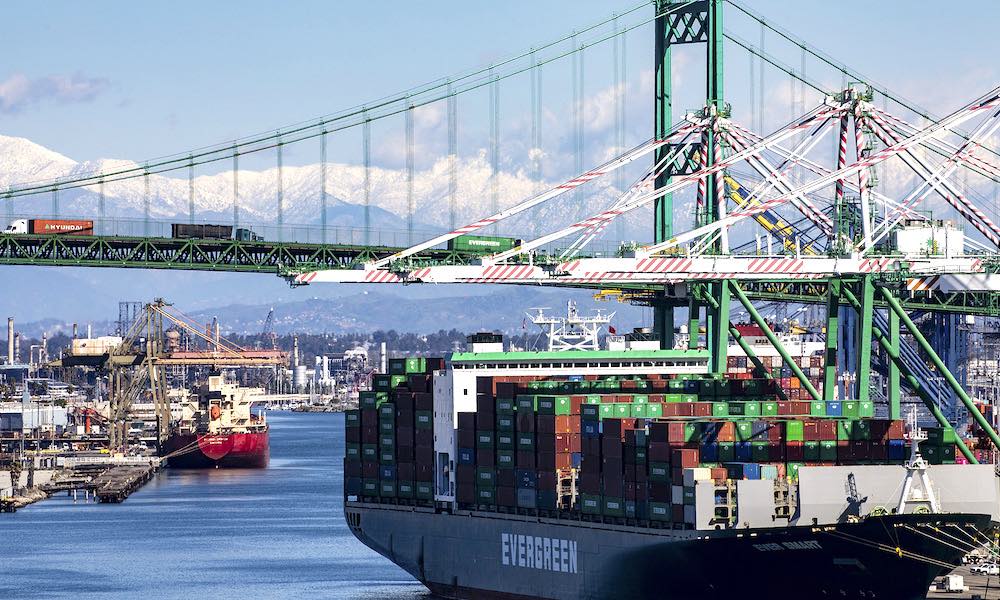
The Federal Maritime Commission (FMC) has reminded ocean carriers operating in US ports of their annual duty to submit documented export policies by March 1. Businesses failing to comply with this legal requirement could face significant financial penalties for non-compliance, including a penalty of $74,943 per day for willful and knowing non-compliance.
The filing requirement is part of the regulatory regime created by the FMC to protect the timely and efficient movement of US export cargo. The agency’s 2024 final rule on unreasonable refusals to negotiate or provide accommodations for exporters of vessel space is followed.
In a compliance advisory issued November 17, the FMC stressed that all covered carriers must file their documentation in English, with all monetary amounts in US dollars. Submissions must be emailed to exportpolicy@fmc.gov by March 1 annually.
Once submitted, an export policy remains in effect until the next annual submission deadline. However, carriers can provide updated versions more frequently when changes in operational circumstances justify updates.
6 key areas must be included
To comply with regulatory requirements, each carrier must have a documented policy on six key aspects of its export operations.
The first is about pricing strategies. Companies must disclose the criteria and cost drivers utilized in setting export cargo rates in service contracts, published tariffs and spot rates. This includes vessel utilization, equipment availability and trade imbalances. Carriers also must reveal how much notice they provide to customers prior to changing rates, surcharges or other fees.
The second area is markets and services. The documentation shall identify the geographical export markets served, the sailing frequencies and alternative routes and the conditions governing the acceptance of bookings. The terms applicable to export cargo must be given special attention, as distinct from those applicable to imports.
Carriers also need to explain their equipment provisioning procedures, including how empty containers are tracked, allocated and positioned to avoid or minimize equipment shortages.
Blank sailings. “Mandatory” component. Operators must describe the circumstances and procedures under which sailings may be canceled, how affected shippers will be informed and what measures will be taken to mitigate the impact on existing export bookings.
The FMC is also seeking information on sweeper vessels, including rules and performance targets for vessels dedicated to clearing empty containers from US ports.
Finally, policies should provide for alternative remedies in the event of refusal of an export booking. Carriers must explain their capacity for alternate vessel space for affected customers and direct shippers to where to get assistance on the company’s website.
Formal requirements and confidentiality rules
The operational information must be accompanied by the filing, as well as evidence of the authority of the authorized corporate officer who signs the filing.
The filing must clearly indicate the carrier’s FMC organization number, its legal corporate name and all trade names used by the parent company and any subsidiary companies included in the filing.
The Commission has also assured that submitted export policies will be kept confidential. They will not be released outside the agency and are exempt from disclosure under the Freedom of Information Act (FOIA).
Late deadlines daily penalties
Failure to comply can result in significant penalties. Failure to file by March 1 is a federal offense and carriers could face civil penalties up to $14,988 per day of non-compliance.
For violations committed knowingly and willfully, the maximum daily penalty increases to $74,943. They may be held criminally responsible for any false statements in their submissions.
The FMC’s reminder highlights the necessity of regulatory compliance for ocean carriers servicing the U.S. market, particularly as the annual filing requirement is intended to enhance transparency around export capacity, container availability and the handling of cargo bookings.
END OF REPORT