Business Nov 16, 2026
Freightos founder challenges board over shareholder vote, alleging unfair treatment of his proposals
Former CEO Zvi Schreiber accuses Freightos of undermining shareholder voting rights by excluding one of his resolutions from its proxy card, as the board pushes back against his proposed governance and strategic changes.
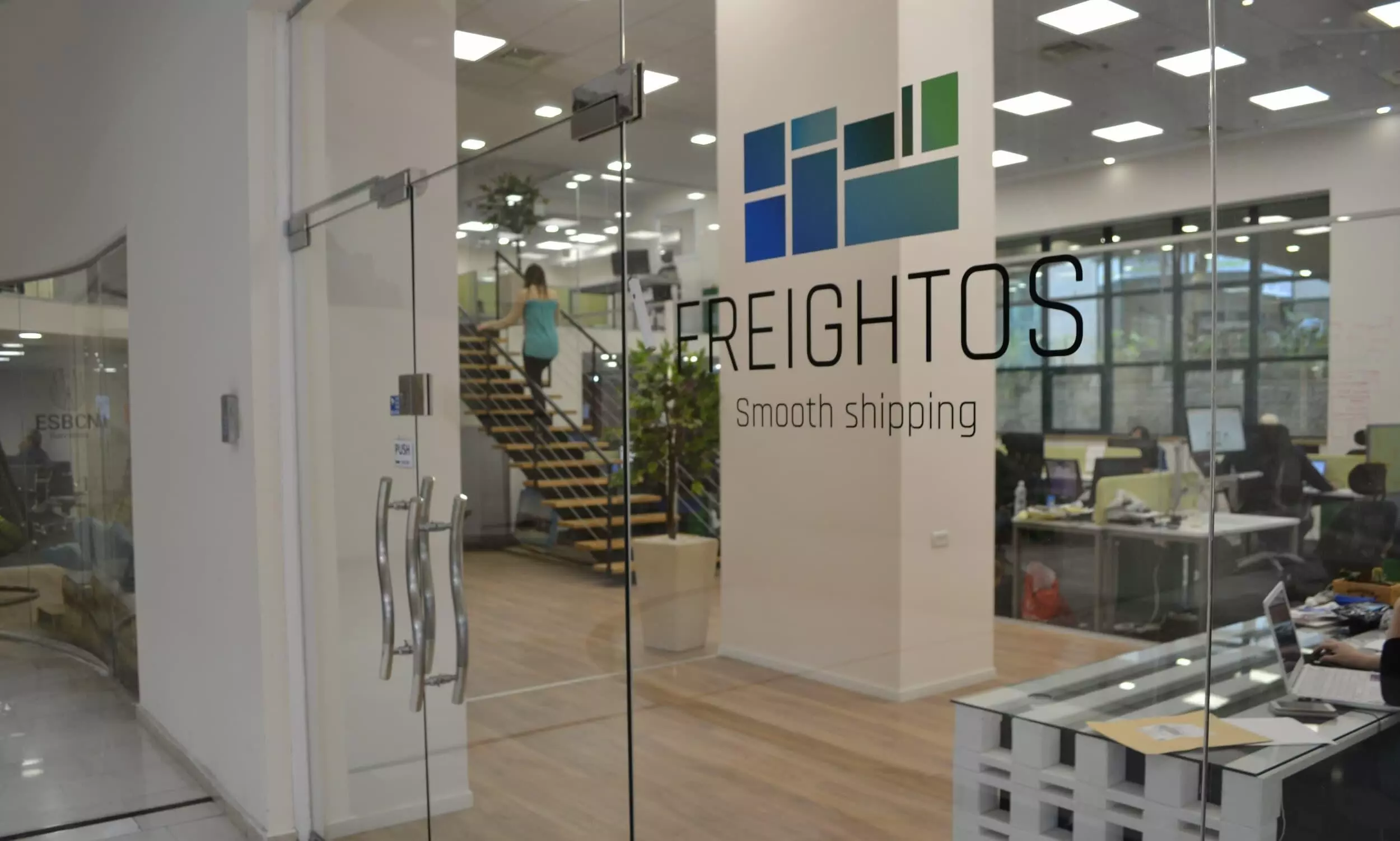
A brewing battle between Freightos and its founder and former CEO Zvi Schreiber is headed for a shareholder showdown Dec. 16. Schreiber has accused the digital freight platform of rigging the voting process, after discovering that one of his proposals was not included as an option on the company’s routine proxy card.
In a letter to the full board, Schreiber demanded that Freightos issue a new proxy card that would allow shareholders to vote on each resolution. If the company does not fix the problem by Tuesday, Nov. 17, he warned that he would take the issue to a higher level. He has not said what he might do next.
The dispute involves the company’s proxy statement, filed Nov. 4. The document lays out Schreiber’s proposal, but shareholders can’t signal their support for it through the usual proxy voting process. “Instead, those who want to vote in favor must attend the annual general meeting in person at Freightos’ offices in Modi’in, Israel.
Schreiber considers this arrangement an obstacle to the exercise of voting rights by shareholders. He says that properly filled proxy forms will automatically cast votes against the resolution.
Shareholders will vote on three proposals put forward by the former CEO at the meeting on Dec. 16. Freightos has advised against all three. They are the removal of Chairman Udo Lange, introduction of annual elections for all board members and a strategic shift to accelerate the growth of the company's digital freight booking platform.
Dispute over direction of Freightos continues
The showdown follows months of tension between Schreiber and the company over its business strategy and financial performance.
Schreiber resigned as chief executive in January and stepped down from the board in February. He submitted his three proposals to Freightos in July and formally launched his shareholder campaign on September 9. He still has a 6% stake in the company.
At the heart of his criticism is how Freightos allocates resources between its two main activities. He wants the company to focus more on its Platform business, which allows digital freight bookings, rather than its Solutions business, which sells software and data products to logistics companies.
Schreiber has also questioned Freightos’ continued focus on software development, saying that advances in artificial intelligence could make such products easier to copy and potentially dilute their competitive advantage.
Proxy card dispute focuses on shareholder rights
Schreiber’s recommendations include appointing a chairman to the board with experience in scaling technology companies through their growth phases and pivoting the company’s strategy to faster expansion, with a focus on its Platform business.
The resolution is nonbinding and advisory. Even if shareholders approve it, the board isn't legally bound to take the recommendations up.
Freightos, however, was very much in favor of its current business model, saying the Platform and Solutions divisions complement each other and shouldn’t be viewed as competing priorities.
“The Board believes that a focus on near-term Platform growth at the expense of this integrated approach could undermine the very foundations of the company’s long term growth potential,” the company said.
The board also said Schreiber's recommendation was "abstract and imprecise" and mixed up two separate issues, the chairman's professional qualifications and the company's commercial strategy. Freightos said both issues were in the purview of the board, not the shareholders' rights as laid out in the company's articles of association.
More contentiously, the company said that properly executed proxy forms would be counted as a vote against Proposal 4, the advisory resolution.
“The shares represented by this proxy, when duly executed, will also be voted ‘against’ PROPOSAL 4,” Freightos said in its filing.
Schreiber strongly objected to this provision, saying it was an attempt to undermine the voting process.
“They said something which I think is totally, you know, basically rigging the vote,” he said. "It's a very basic principle of corporate law that shareholders have the right to vote. It is written in the articles … I don’t get it.”
Under the current arrangement, shareholders who want to support the proposal will have to attend the meeting in Modi’in in person. This requirement is a particular problem for Schreiber, who thinks very few investors will make the trip.
These meetings, I can tell you, I was running in practice. “Very few shareholders – if any – actually come to travel,” he said. “If I remember correctly, there were no people that actually voted in person at the meeting last year.”
Chairman’s proposal to remove casts doubt on leadership continuity
Schreiber’s first resolution calls for the removal of Udo Lange from the board. His argument is closely tied to Freightos' growth performance and the fall in its share price since Lange became chairman in July 2025.
Schreiber's shareholder campaign released figures that showed Freightos shares lost about 62% of their value between July 28, 2025 and September 8, 2026. The Nasdaq Composite added some 25% in that time.
Looking at historical closing prices published by Nasdaq, Freightos’s decline was a little less, at around 59%, while the index’s gain was about 25%.
This is a change from earlier FreightWaves reporting covering the prior 12-month period, which showed Freightos shares down about 78%, compared to gains of about 16% for the Nasdaq Composite.
Freightos’ board does not favor removing Lange before his current term is up. It says such a move could endanger leadership continuity and board oversight while the company is trying to become profitable.
According to the proxy statement, Lange was re-elected to the board in 2025 with 99.9% of votes cast by shareholders at the meeting. Schreiber himself supported Lange’s re-election at the time, but has since reversed his position after falling out over the company’s strategic direction.
“Removing the independent Chairman of the Board in the middle of his elected term would disrupt the continuity of the Board’s leadership and oversight at an important juncture in the Company’s development,” Freightos said.
The board also questioned the wider purpose of the proposal, saying it could be seen as an attempt to target a specific incumbent, rather than create a principle of governance.
“The proposal could be seen as a mechanism for going after a particular incumbent (Lange) rather than a durable, principle-based governance standard.”
Founder and company split over annual board elections
Schreiber’s third suggestion is about the corporate governance structure of Freightos. He wants to change the company’s articles of association to introduce annual elections for all directors from 2027.
Now the board members are serving three-year staggered terms. This means that at successive annual general meetings different groups of directors are eligible for election, rather than the whole board being eligible for election at an annual shareholder vote.
“Having elections on an annual basis is a good corporate governance practice,” Schreiber said, regardless of his differences with the current leadership and the company’s commercial strategy.
But Freightos believes the current arrangement is more stable.
This stability permits management to weather short-term market pressures and stay focused on achieving key financial milestones, the company said in its proxy filing.
Different approval thresholds ahead of the December meeting
The three resolutions submitted by Schreiber are subject to different voting requirements.
Removing Lange as chairman and approving the advisory recommendation on leadership qualifications and business strategy each require a majority of votes cast by eligible shareholders.
The proposed amendment to the company's articles of association, introducing annual elections for all directors, faces a higher threshold: approval from at least two-thirds of votes cast.
Shareholders will also be asked to consider Freightos' own resolutions, including the re-election of directors Ezra Gardner and Pablo Pinillos, as well as the reappointment of EY Israel as the company's independent auditor. The board has recommended voting in favour of both proposals.
Investors registered as shareholders on November 5 are eligible to participate in the vote. All voting submissions must be received by 11:59 p.m. EST on December 15 to be counted.
The December 16 annual general meeting is therefore set to become an important test of shareholder support for Freightos' current leadership, governance structure and strategic direction, while the disagreement over the proxy card adds another layer of tension to an already contentious boardroom dispute.
END OF REPORT