Logistic Nov 19, 2026
Graypool Launches Closed Freight Exchange Allowing Carriers to Share Loads Across Seven Partner Networks
The new Graypool Exchange enables truckload carriers to transfer eligible freight to vetted industry peers when they lack available capacity, helping preserve customer relationships, generate additional margins and reduce reliance on traditional load boards.
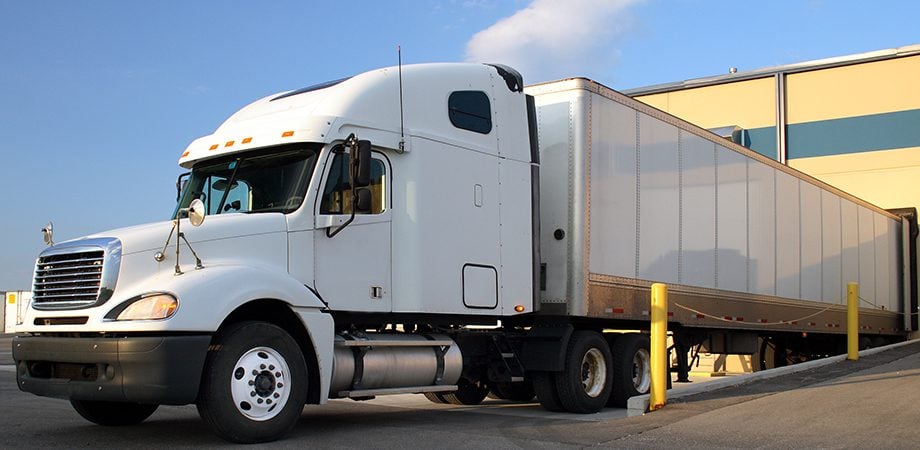
Truckload carriers facing capacity constraints can now redirect freight they are unable to handle to a network of approved industry partners rather than immediately returning loads to shippers. Graypool, the Atlanta-based freight technology company previously operating under the name HOPTEK, officially launched its Graypool Exchange on Wednesday, bringing together seven founding carrier members in a closed freight-sharing network.
Integrated into Graypool's existing tender management platform, the exchange allows participating carriers to offer selected loads to other members before rejecting a shipment. Each carrier retains control over the freight it makes available, the loads it is willing to accept and the commercial terms, including pricing.
The initiative arrives at a time when contract freight rejection rates remain significantly higher than a year ago. According to the SONAR Truckload Rejection Index, the average rejection rate reached 14.5% in the third quarter, compared with 5.3% during the same period last year. The index's latest weekly reading subsequently showed a decline to 12.77%, its lowest level since early May.
Graypool CEO Marc Held said carriers across the United States regularly turn away freight they would otherwise prefer to transport, not because the routes are unsuitable but because they lack an available truck. Until now, he argued, carriers had no dedicated marketplace of their own to redirect such shipments.
An alternative to the traditional tender process
Under conventional freight procurement arrangements, when a carrier rejects a tender, the shipper typically moves the shipment to the next provider listed in its routing guide. Each subsequent tender can increase transportation costs for the shipper.
Data from SONAR's Routing Guide Premiums index, introduced in late October, indicates that loads accepted on the second tender cost shippers 9.25% more. When freight moves to the third tender or beyond, the additional cost reaches 19.84%.
Graypool Exchange is designed to offer carriers another option before a shipment returns to the shipper's routing guide. Marc Held explained the model through a pricing example: if a shipper offers Carrier A a load for $100 but that carrier has no truck available, it can transfer the shipment to Carrier B, which is prepared to move it for $80. Carrier A retains the customer relationship and earns a $20 margin, while Carrier B gains access to freight it might not otherwise have secured.
According to Held, the objective is to help carriers accept more customer requests without compromising profitability. Rather than automatically rejecting a shipment because of a temporary capacity shortage, they can rely on another network participant to complete the transportation.
A controlled membership model and seven founding carriers
Access to Graypool Exchange is currently restricted to carriers that are invited only. The seven founding members will have to abide by common commercial, data sharing and insurance requirements. Interchange agreements also require the approval of the respective insurers.
Not all shipments can be moved through the platform. Eligible freight must be authorized by the shipper to turn over to the carrier. The exchange does not include loads with contractual obligations for the carrier originally selected to perform the transportation itself.
Graypool is the platform’s independent exchange operator. The company does not own shipments, act as a freight broker, or become involved in individual transactions. It is intended to provide and operate the mechanism for the exchange of available freight between participating carriers.
Graypool also has a good understanding of the network and operational capabilities of each carrier. Since the company decides which tenders are appropriate for individual carriers, it can offer qualifying shipments to all participating members simultaneously. Carriers have to respond in less than five seconds, said Held.
“This exchange doesn’t need a separate load board or another round of bidding,” he said. The platform already has the information required to identify suitable capacity in the participating network.
Paper Transport, a Graypool customer, has expressed support for the initiative. Graypool Exchange was the company’s preferred option for accessing reliable capacity and freight opportunities through established industry partners, Ben Schill, the company’s corporate development officer, said.
Third addition to Graypool’s freight technology platform
Graypool Exchange adds to a product portfolio that already includes two other solutions to support carrier operations.
Carriers use Graypool Accept to decide which incoming tenders to accept into their transportation networks. Graypool Source identifies spot freight opportunities and allows carriers to bid on available shipments. Graypool Source has produced $150 million in annualized freight revenue for carriers, the company announced.
Its customers include major transportation operators like Werner, Marten, Prime, Hirschbach, Paper Transport and Maybach International Group.
The expansion comes after the company changed the HOPTEK name to Graypool in October. With the rebranding, the company raised $5 million in a pre-seed round led by Jerk Ventures, Kearney, LPX Partners, Venture 53 and Werner Enterprises.
The launch of Graypool Exchange doesn’t make it a marketplace open to shippers, but a carrier-centric platform. “Shippers don’t put freight on the exchange themselves,” said Marc Held. Instead, the system deals with contract tenders and spot shipments already being done through Graypool's existing carrier operations.
Create a central marketplace for freight exchange
“We see the platform as an opportunity to add more structure to the freight transaction between transportation providers,” Held said. “It’s similar to what you see with financial market operators like Nasdaq and Intercontinental Exchange,” he said, noting the potential to centralize previously fragmented over-the-counter transactions in a clearinghouse.
Graypool’s immediate goal is to get more use out of existing trucking capacity, while giving carriers more flexibility to manage customer commitments. The launch of seven members offers a first framework to test this approach in a controlled network.
Graypool Exchange also addresses capacity shortages by allowing carriers to reroute eligible loads without immediately losing the customer relationship. This improves freight utilization and generates additional revenue opportunities across the participating networks.
END OF REPORT