Logistic Nov 16, 2026
Slovenia Strengthens Customs and Logistics Cooperation Through New Strategic Memorandum
The agreement between Slovenia’s Financial Administration and the Slovenian Chamber of Commerce and Industry’s Transport Association reinforces a partnership spanning more than three decades, with a focus on cargo security, customs digitalisation, streamlined procedures and greater supply chain competitiveness.
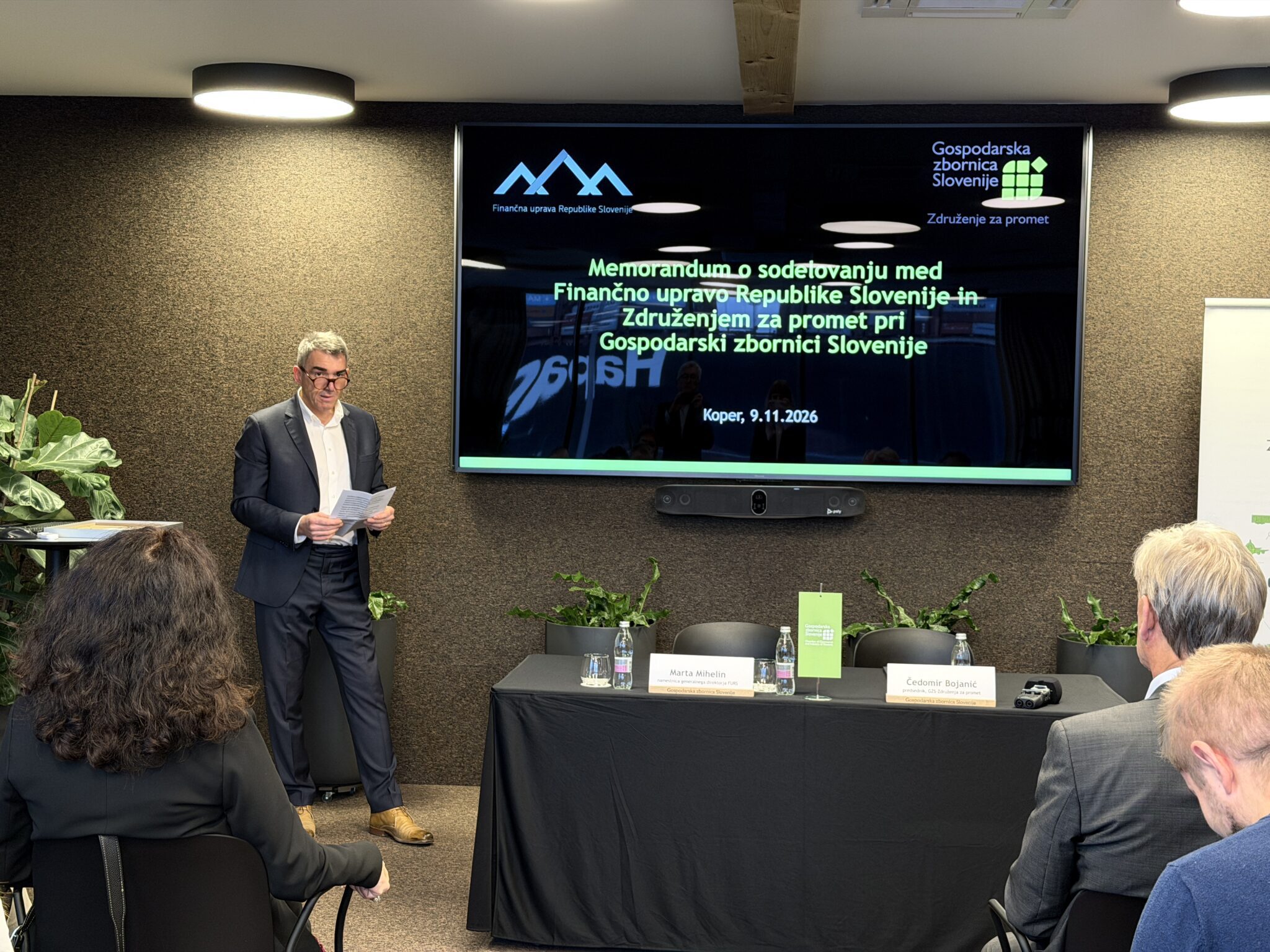
Slovenia is taking additional steps to strengthen cooperation between its financial administration and the transport and logistics industry. The Transport Association of the Slovenian Chamber of Commerce and Industry and the Financial Administration of the Republic of Slovenia (FURS) signed a renewed memorandum of understanding. The agreement builds on a partnership forged more than 30 years ago and aims to make freight movements safer, efficient and more competitive.
FURS (Finančna uprava Republike Slovenije) is a public authority that, among other things, collects taxes and customs duties and controls goods entering and leaving the country. Its role places the administration at the heart of efforts to ensure that international trade flows are compliant with regulations while remaining operationally efficient.
Commenting on the renewed agreement, Marta Mihelin, Deputy Director General of FURS, emphasised that close cooperation between public institutions and economic operators is vital to maintain the security, legality and efficiency of goods movements.
“The logistics environment is changing rapidly and modern supply chains are becoming more complex,” she added. In this context, timely information exchange and mutual trust are becoming more important for effective coordination between authorities and businesses.
From the industry’s point of view, the importance of creating a business environment that supports the competitiveness of the sector was pointed out by Čedomir Bojanić, President of the Transport Association at the Slovenian Chamber of Commerce and Industry. Logistics operations, he added, should be as simple, fast and predictable as possible.
This requires reducing administrative barriers, enhancing professional cooperation and increasing the use of digital solutions along transport and customs processes.
The memorandum identifies a number of priority areas for joint action. These measures aim to fight the smuggling and counterfeiting of goods, create awareness in the port community on operational security and legal compliance, speed up the digitalisation of customs procedures and encourage the exchange of expertise and practical experience between the parties.
The deal also includes Luka Koper, the company that operates the Port of Koper. “We need coordination between public authorities and logistics businesses,” said Gregor Belič, a member of its management board.
He emphasised that efficient and predictable procedures are not only crucial for the competitiveness of the Port of Koper, but also for the performance of the entire logistics chain of Slovenia. The presence of port operator is indicative of the importance of harmonising customs operations, port activities and transport services to enable smooth freight movements.
The renewed memorandum continues the cooperation framework established on 28 November 1995, when the first agreement was signed between Franc Košir, on behalf of the then Customs Administration of the Republic of Slovenia (CURS), and Ivan Štrukelj, President of the Association of Transport and Maritime Agencies.
That first agreement already acknowledged the need for greater coordination between the supervisory authorities and the business community to ensure that trade flows were efficient, secure and competitive.
More than three decades later, the recommitment shows the ongoing importance of that partnership. Slovenia is looking to enhance cooperation within its logistics sector and improve the competitiveness of its port and transport infrastructure by focusing on cargo security, customs digitalisation, regulatory simplification and information sharing.
END OF REPORT