



South Korean LNG infrastructure developer GasEntec has received an Approval in Principle (AiP) from Lloyd’s Register (LR) for its latest floating storage and regasification unit (FSRU) design.
The approval, announced at Gastech 2026 in Bangkok, enables GasEntec to initiate discussions with potential customers and to consider how the FSRU design can be customized to meet the specific needs of ongoing projects.
The new design aims at combining high regasification capacity with greater operational flexibility. The unit can be configured for open-loop, closed-loop, or combined-loop operation, allowing operators to tailor the system to specific local environmental and operational needs.
In the open loop mode, seawater is used to heat the supercooled gas prior to regasification. However, in some places, the use of seawater may be limited due to environmental reasons.
But in the closed-loop configuration it is the vessel’s own boilers that raise the temperature of the gas. This avoids direct impact on the surrounding marine environment but requires additional fuel. The combined-loop configuration enables the operators to work with both methods depending on the operating conditions.
The floating gas sector is seeing a growing demand for design flexibility. FSRU developers are able to tailor vessels to meet local regulations and continue production in challenging external environments. Operators can also reduce fuel use and associated emissions where seawater can be used safely.
The FSRU offers a common modular platform that can be configured for different capacities, pressures and operating conditions, said TG Kim, co-chief operating officer at GasEntec. “This allows for more efficient project-specific engineering and faster deployment,” Kim said.
“The constraint is not supply as the world’s demand for energy is accelerating from grid growth to AI data centre-driven power needs, it’s how quick and reliable you can get gas to where it’s needed,” Kim said.
The floating gas business is growing rapidly, and FSRU technology provides an alternative to large land-based infrastructure. They can deliver power and gas in densely populated areas and in remote locations where communities have not had access to reliable energy.
Several FSRUs are already in operation or under preparation for operation across Africa including in Egypt, Ghana, Ivory Coast, Mozambique, Senegal and South Africa.
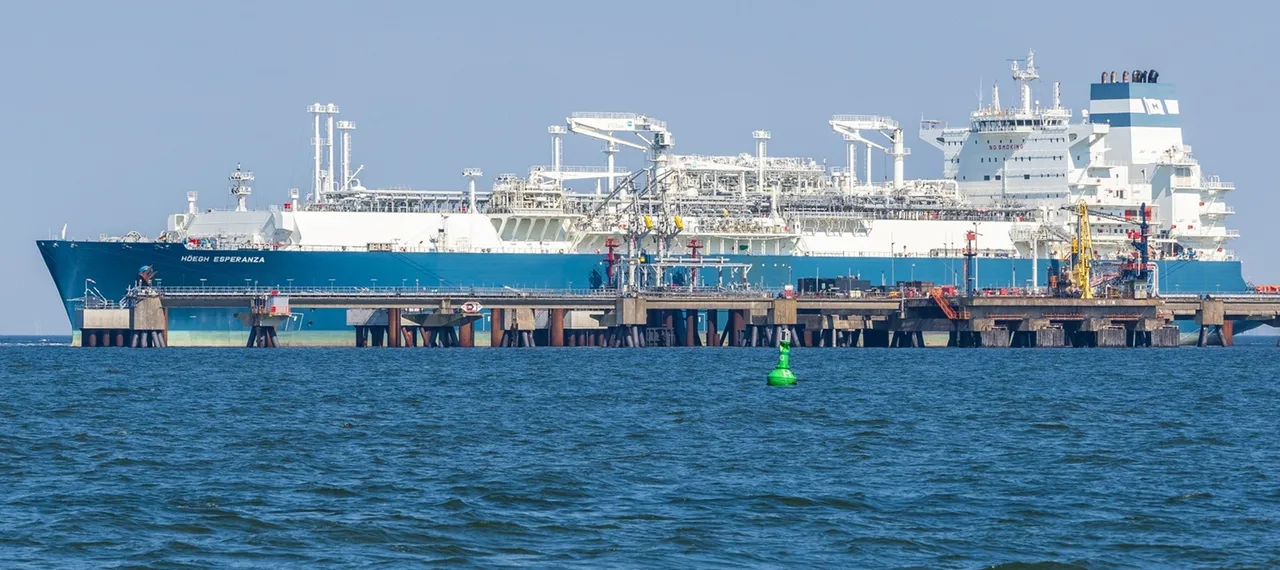
Germany has also accelerated the deployment of four FSRUs since 2022 as it sought to replace natural gas previously supplied via pipes from Russia. Høegh Esperanza began operations in Wilhelmshaven in late 2022 and Excelsior in August 2025.
Elsewhere, the Neptune and Energos Power FLNG units were both commissioned in early 2023 and Energos Force is preparing to begin operations in 2027.