Business Nov 20, 2026
Institutional Capital Set to Transform Shipping Ownership and Investment, JP Morgan Says
Institutional investors are increasingly viewing shipping as a long-term infrastructure opportunity as traditional bank financing declines. However, regulatory uncertainty surrounding alternative fuels and decarbonisation continues to delay major investment decisions.
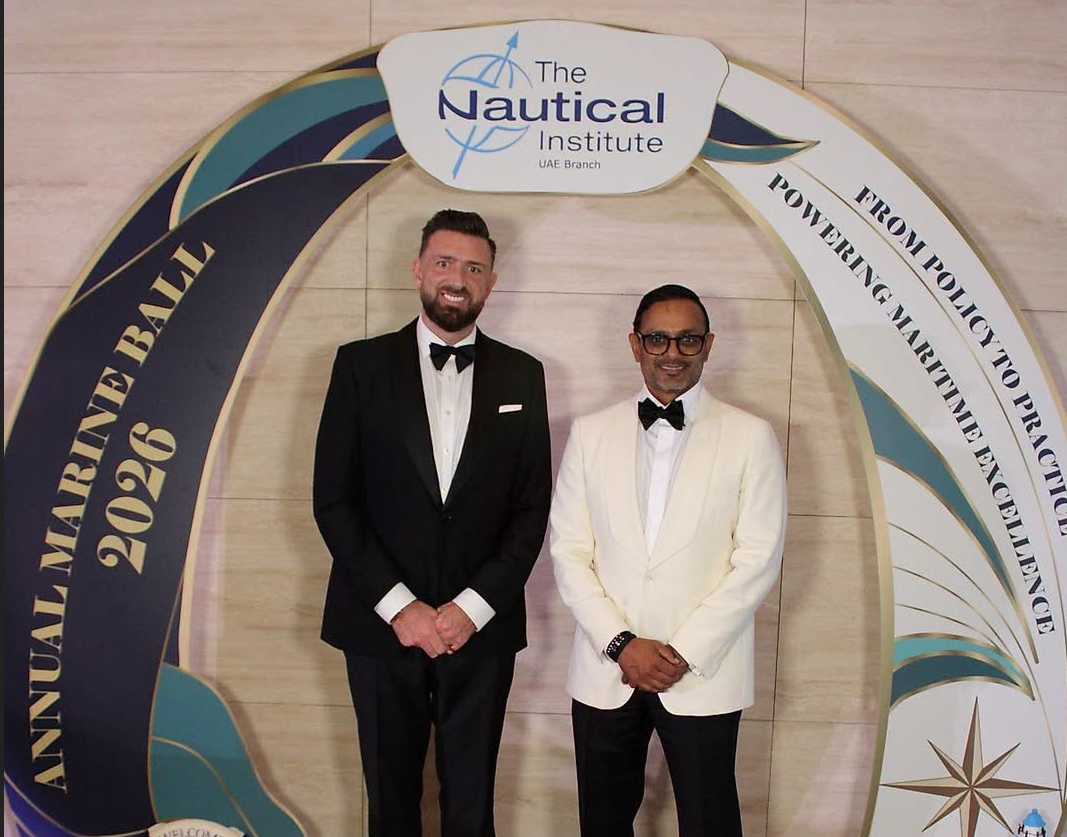
This signals a new era for the shipping industry where traditional banks are reducing their exposure to the industry and institutional investors are likely to play a larger role in the financing and ownership of ships. J.P. Morgan Asset Management’s Anurag Agarwal pointed out that institutional capital is only going to become a bigger force in maritime investment.
The industry is undergoing a fundamental change in its sources of funding, said Agarwal, co-head of J.P. Morgan Asset Management’s Global Transportation Group and chairman of shipmanager OSM Thome, at the gala dinner of the Nautical Institute in the UAE.
“I think the industry is seeing the institutionalization of where its source of capital is coming from,” he said.
Shipping ownership has historically been concentrated among wealthy families and private shipowners. But changes in the financial markets, along with tighter banking regulations that followed the global financial crisis, have created space for a different kind of investors.
Institutional funds have historically been linked to investments in real estate and infrastructure, but they are increasingly looking at shipping as an attractive asset class. "The industry still has a long way to go to showcase the investment potential of the sector and instill confidence in these new sources of capital," Agarwal said.
“We have to work hard to educate institutional investors. "We have to make sure the risk and return parameters are understood and we have to deliver on the expectations to continue to see those funding sources," he said.
When asked if this could significantly change the ownership structure of the global fleet, Agarwal said institutional investors will necessarily become more prominent.
Sure. I think that’s the future in some ways.
Shipping is seen more as a long-term infrastructure
At J.P. Morgan Asset Management, we see shipping as part of the infrastructure of global trade, rather than simply through the short-term volatility that has historically characterized the maritime market.
Agarwal said the investment group takes a long-term approach, with decisions that extend long past the typical shipping market cycles.
He said, “We view it as infrastructure and for us that’s a very compelling investment thesis.”
He said investors should be looking at the potential of the industry in 25 years’ time, rather than opportunities in the next five.
This is different to the immediate opportunities created by geopolitical disruptions that have pushed up the demand for tonne-miles and generated extraordinary earning opportunities across some segments of shipping.
This is evident in today’s Very Large Crude Carrier (VLCC) market. Agarwal said the market atmosphere is feeling like a "Wild West gold rush" with the extraordinary opportunities presented by disruptions to global trade flows.
However, he cautioned against reading these short-term gains as a sign of a stable market environment. The pandemic and the Russia-Ukraine conflict and continuing Middle East tensions have all shown how vulnerable shipping supply chains remain to outside shocks.
Yes, we are seeing upside in the immediate term which is purely coming from the dislocation to the supply chain. Tonnemiles are being extended,” he said.
Agarwal believes some of the changes stemming from these disruptions will have long-lasting implications for international trade. With the fragmentation of supply chains the shipping industry will need to revaluate its capacity requirements and how to best accommodate changing trade patterns.
Regulatory uncertainty is holding back major decarbonization investments
Although interest in shipping has been growing from institutional investors, the transition to lower-emission operations remains a major challenge for investors and shipowners.
Uncertainty over future fuel choices, new technologies and decarbonization regulations is making it difficult to commit substantial amounts of capital to projects that need to be commercially and technically viable for decades to come.
Agarwal emphasized that before investors put billions of dollars into decisions involving new technologies and vessel infrastructure, there needs to be a clear and predictable regulatory framework in place.
"The average lifetime of a ship was 25 to 30 years, which meant that the investment decisions taken today had to take into account regulatory requirements and environmental objectives far in the future.
The average life of a vessel is going to be 25, 30 years. "So if you're going to invest hundreds of millions of dollars in technology, you want to make sure the regulatory framework and the policy that supports that framework is in place for you to be able to keep that asset relevant to achieving the goals that we want."
For the time being, investors and shipowners are treading carefully, backing all sorts of new technology with small amounts of money rather than focusing on a single solution.
“Everyone is sort of putting small bets, but we are not ready to declare a winner yet,” Agarwal said.
Workforce issues still at the heart of shipping’s future
Agarwal also pointed to the maritime workforce as another area of focus for an industry that is going through a major transformation as we look ahead to 2030.
Shipping will need to attract younger generations, increase the female representation among seafarers and tackle persistent labor shortages in shipyards.
He also stressed that the development of autonomous technologies should not be mistaken with a future where skilled maritime professionals are not needed. “Technology can change how things are done but there will always be a need for qualified people in the industry.”
Joint work to ensure long term investment
Ultimately, Agarwal believes that greater cooperation across the maritime value chain will determine the industry’s ability to attract capital and realize its long-term ambitions.
Shipowners, charterers, financial institutions, regulators and maritime professionals all have a part to play in creating the conditions for sustainable investment and further development of the sector.
Without a shared direction and greater clarity from regulators, shipping will continue to have problems getting the financial commitment needed for transformation.
Without collaboration and clarity, it’d be difficult to get commitment. “And what we need now is a lot of commitment from everybody to start going in the same direction.”
END OF REPORT