Business Nov 19, 2026
Porto Marghera Set to Become Europe’s Strategic Hub for Critical Raw Materials
European Commission approval of Italy’s proposal paves the way for a strategic storage platform involving the ports of Trieste and Ravenna, Verona’s Quadrante Europa intermodal terminal and the Tassullo mine in Trentino.
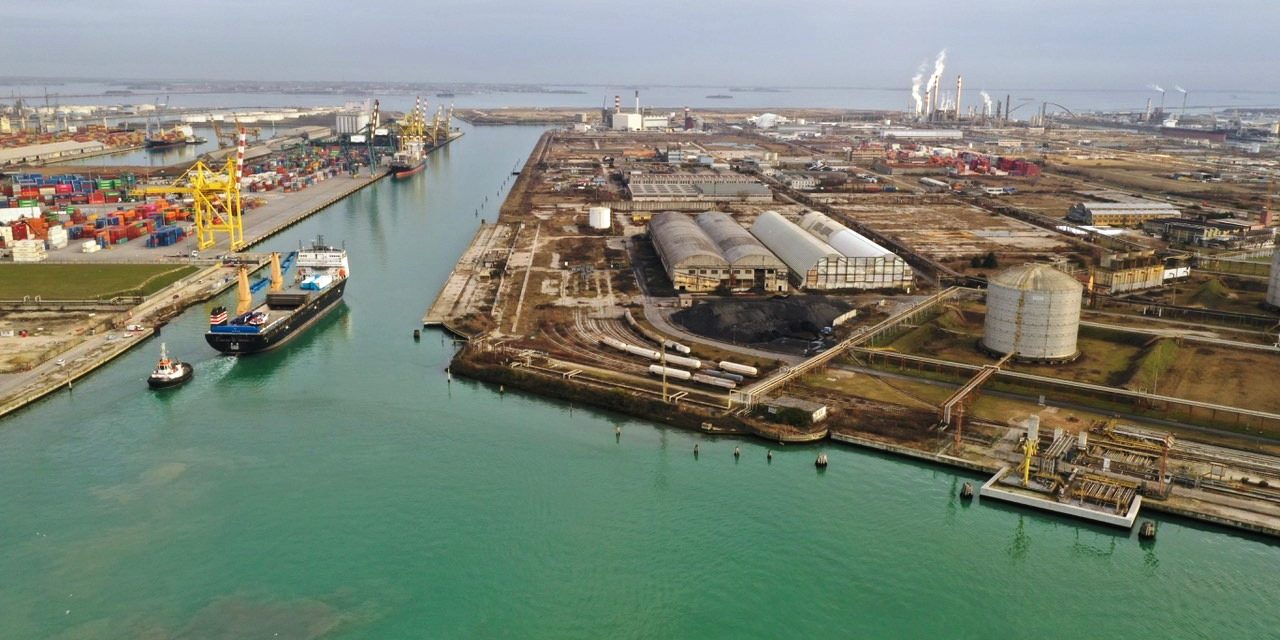
VENICE – Porto Marghera is set to become the centrepiece of Europe’s first pilot project dedicated to the strategic storage of critical raw materials, following the European Commission’s approval of Italy’s proposal, submitted jointly with the Netherlands. The initiative aims to strengthen industrial supply chain security and reduce Europe’s exposure to potential disruptions in international raw material supplies.
Although Porto Marghera will serve as the project’s main hub, the initiative will extend across a wider logistics network in northeastern Italy. The ports of Trieste and Ravenna, Verona’s Quadrante Europa intermodal terminal and the Tassullo mine in Trentino will all contribute to the development of the platform.
The announcement was made by Italy’s Minister for Enterprises and Made in Italy, Adolfo Urso, during the Critical Raw Materials Forum held in Milan on 19 November. The European initiative предусматриes two strategic storage centres: one serving the Mediterranean region, with Porto Marghera as its reference location, and another in northern Europe, based in the Rotterdam area.
The pilot phase will initially focus on rare earth elements and tungsten. Both materials are essential to a range of industrial sectors, including automotive manufacturing, electronics, energy technologies and defence. Their strategic importance has made securing reliable supplies a growing priority for European industrial policy.
A logistics network connecting Italy’s main northeastern gateways
The selection of Porto Marghera reflects the advantages of an integrated logistics system rather than the capabilities of a single port. Each participating location is expected to bring specific infrastructure and operational expertise to the project.
Trieste offers deep-water access suitable for vessels with significant draught, alongside international rail connections and its free-port regime. Ravenna, meanwhile, brings specialised infrastructure and experience in handling bulk commodities. Verona’s Quadrante Europa terminal provides a major intermodal connection, supporting the onward distribution of materials towards European industrial markets.
This combination of maritime, rail and intermodal infrastructure is expected to play an important role in establishing an efficient supply chain for strategic materials across the continent.
Beyond storage: Italy targets a new industrial district
The Italian government's ambitions extend well beyond the creation of strategic reserves. The project is also intended to encourage the development of an industrial ecosystem focused on processing, refining and recycling critical raw materials.
Minister Adolfo Urso highlighted this longer-term objective, stating: "We believe that the first Italian industrial district for refining and, above all, recycling critical raw materials could emerge around Marghera."
The proposed industrial district would combine strategic stockpiling with activities aimed at recovering and processing valuable materials from manufacturing processes and end-of-life products. This approach would allow Italy to strengthen its ability to manage supply disruptions while developing domestic capabilities in sectors considered essential to Europe's industrial competitiveness.
Port authority calls for investment and stronger regional cooperation
Matteo Gasparato, president of the Northern Adriatic Sea Port System Authority, welcomed the European Commission's decision and acknowledged the Italian government's efforts in supporting the country's application.
He described the approval as an important milestone, while stressing that it should also mark the beginning of a broader development strategy to establish Porto Marghera as an industrial, port and manufacturing centre of national and European importance.
According to Gasparato, the area already benefits from the infrastructure, industrial expertise and business operators needed to attract new production facilities. However, the development of storage capacity must go hand in hand with investments in recycling, material management, refining and the processing of rare earth elements and other critical resources.
Such investments could generate skilled employment opportunities while encouraging the development of new manufacturing activities.
Gasparato also emphasised that the project's success will depend on effective cooperation between the logistics infrastructure of the Upper Adriatic. He pointed in particular to the importance of strengthening rail connections with Verona's Quadrante Europa terminal.
As he explained, the competitiveness of an industrial hub depends partly on its ability to work alongside other economic and logistics centres. Greater coordination between ports, intermodal terminals, industrial operators and manufacturers will therefore be essential to establishing Porto Marghera's position within Europe's emerging critical materials supply chains.
European selection follows months of technical assessments
The approval concludes a process that began several months ago and involved technical inspections and institutional discussions with European representatives.
In May, a European Commission delegation visited Porto Marghera to assess the area's potential. This was followed in June by a visit from Executive Vice-President Stéphane Séjourné, accompanied by Minister Adolfo Urso. During the same period, the potential contribution of the Port of Trieste was also examined, particularly its maritime accessibility, railway connections and storage opportunities under its free-port regime.
Italy formally submitted its application on 9 October, paving the way for the European Commission's approval.
Operational details still to be determined
Despite the positive decision, several important aspects of the project remain to be finalised. These include the investments required, the storage capacity to be developed, the allocation of activities between the participating sites and the overall implementation timetable.
These decisions will determine how the different locations work together and how quickly the strategic storage platform can become operational.
The European Commission's approval nevertheless represents a significant step towards establishing a new European supply chain model for critical raw materials, with Porto Marghera positioned at the centre of an integrated industrial and logistics network.
END OF REPORT