



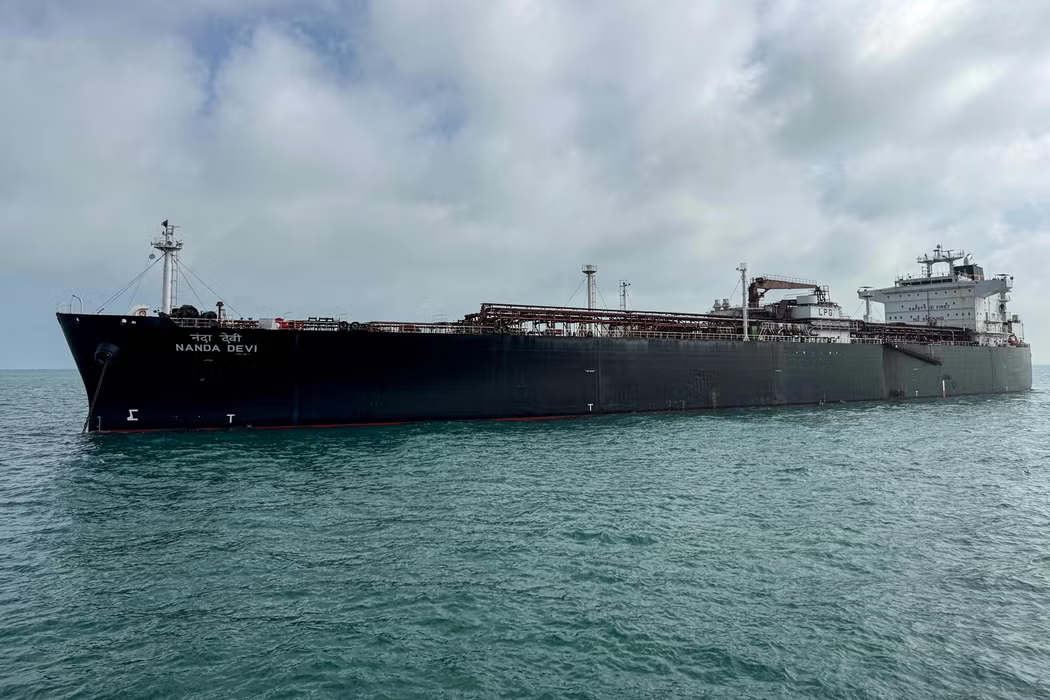
A 60-day waiver of the Jones Act introduced by the Trump administration is likely to generate new commercial opportunities for tanker owners outside the United States, as energy flows in the western hemisphere are reshaped by the Middle East conflict.
The waiver was announced last week in response to major disruption in seaborne energy trades and temporarily relaxes restrictions under the 106-year-old Jones Act, which normally reserves many US domestic tanker movements for US-flagged vessels.
Supporters of the legislation have long argued that it is vital for domestic maritime capacity and national security. Critics, however, continue to point to the inefficiencies it creates and the high transport costs associated with US-flag tonnage.
In announcing the waiver, the White House said the measure was necessary to ensure that US airfields and military installations remain properly supplied, particularly from the Gulf Coast, and to avoid any shortfall that could undermine military operations. The administration also said the move would help stabilise the oil market as the US military continues to pursue the objectives of Operation Epic Fury.
The scale of current disruption is far from ordinary. Speaking at CMA Shipping 2026, Poten & Partners lead tanker analyst Erik Broekhuizen said the word “unprecedented” was fully justified, noting that it had never happened before that 20 million barrels of oil were effectively removed from the market.
Poten believes the Jones Act waiver could create openings in both the clean and dirty tanker segments. Because most Jones Act tonnage is committed to long-term cabotage trades, including routes linked to Alaska, the supply of US-flag tankers available for other trades is relatively limited.
As a result, changes in supply patterns are expected. Refineries on the US East and West coasts that had previously relied on crude from the Middle East may now need to be supplied with domestic US crude instead. Poten also suggested that Gulf Coast refiners could require clean tankers to move products such as gasoline to the East Coast and jet fuel to terminals on the West Coast.
One example cited by the broker highlights the potential efficiency gains from allowing foreign-flag tonnage to participate. Poten pointed to the fixture of a foreign-flag tanker to move refined products from the Atlantic Coast to Hawaii, noting that a Jones Act vessel would be unlikely to undertake such a voyage because of the long distance and time involved.
That route underlines the scale of the challenge. Hawaii sits in the middle of the Pacific, more than 5,000 nautical miles from the US Atlantic coast, making flexibility in tanker supply increasingly important under current market conditions.