Land Nov 11, 2026
Kearney and MIT forecast cost parity between autonomous and conventional US trucks by 2028
Autonomous trucks could reach a cost of $2.60 per mile in 2028, slightly below the $2.70 projected for traditionally operated vehicles, as fleet expansion and lower technology costs reshape the economics of long-haul transportation.
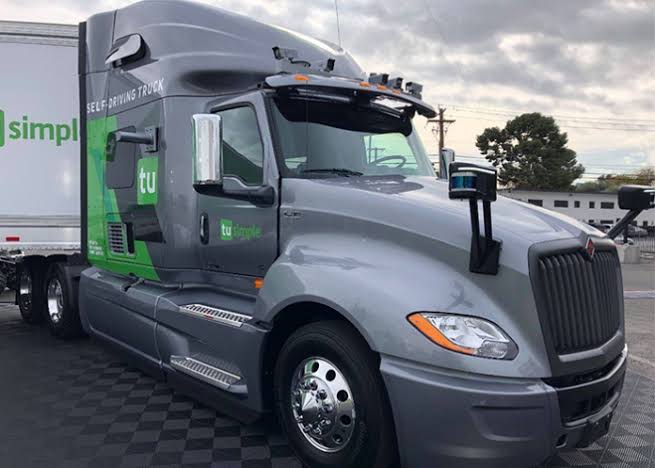
Kearney and the MIT Mobility Initiative estimate that autonomous trucks will be cost competitive with traditional human-driven trucks in the U.S. by 2028. The report, released November 5, predicts a major change in the economics of long-haul road freight.
The study estimates that the cost of operating a driverless truck will be around $4 a mile in 2026, versus $2.50 for a conventional truck. But the gap should close quickly as both models converge toward $2.60 per mile by 2028.
The financial implications are particularly acute in long-haul trucking, where drivers account for about half of the total cost per mile in the United States. Commercial autonomous trucking is still limited to a relatively small number of routes and geography, but progress is becoming increasingly tangible. Take Aurora for example, which has already driven over 500,000 miles on public roads with no driver at the wheel.
The US is likely to reach this economic inflection point before other regions do. Kearney reckons that Europe will be approximately two years behind and that the Middle East could be four years behind the US.
The difference is mainly due to labor costs. The cost of a fully loaded long-haul truck driver in the U.S. is about $10,000 per month, including benefits estimated at about 30%. That’s about double the equivalent cost in Europe and four times the cost in the Middle East.
Kearney’s projections vs. other industry estimates
The study's baseline for conventional trucking costs is broadly consistent with industry figures today. The average operating cost was a record $2.336 per mile in 2025, an increase of 3.4% compared with 2024, said the American Transportation Research Institute (ATRI) in its Analysis of the Operational Costs of Trucking: 2026 Update.
Kearney’s model starts at a higher figure of $2.50 per mile in 2026 and assumes inflation will drive conventional trucking costs to about $3.50 per mile by 2035.
For its calculations, the study uses a Class 8 truck with a value of $200,000 and a useful life of five years. Each vehicle is expected to travel 185,000 miles a year, with the help of two drivers each driving 92,500 miles a year.
The $4 per mile cost for autonomous trucking in 2026 is much higher than some numbers that have already been released by technology developers. Aurora’s own analysis of the Fort Worth-to-Phoenix route, for example, estimated the operating cost of its virtual driver at $1.84 a mile, compared with $1.99 for a human driver.
Goldman Sachs Research has also pinpointed 2028 as the year when autonomous trucks could be cost competitive with conventional vehicles in the US. Analyst Mark Delaney hit the same milestone in an April 30 analysis, although he used a much higher initial cost estimate.
Goldman Sachs estimates that the all-in cost of autonomous trucking, not including corporate operating costs, will be about $8.56 per mile in 2025. That number is expected to drop to around $2.03 by 2035.
Kearney's analysis is based on more than 25 interviews with interested parties across the autonomous mobility ecosystem, including technology developers, truck manufacturers, carriers, freight brokers and investors.
Fleet expansion will determine how quickly costs fall
Beyond technological progress, the economic viability of autonomous trucking will depend heavily on the scale of deployment.
Kearney expects the cost of operating a driverless truck to decline to approximately $2 per mile by 2035, representing a reduction of 49%. Much of this improvement is expected to come from distributing the substantial development costs of autonomous driving technology across a growing number of vehicles.
The model assumes annual global research and development expenditure of $750 million, amortised over five years. It also anticipates that the autonomous truck fleet will reach 40,000 vehicles by 2035.
At the same time, the need for remote supervision is expected to decrease. Kearney projects that the ratio of remote operators will improve from one operator for every 10 trucks to one for every 20 vehicles.
However, the forecasted 2028 cost-parity milestone is closely tied to these fleet expansion assumptions. If autonomous fleets reach only 10,000 trucks by 2035 rather than the projected 40,000, the United States could have to wait until 2032 to achieve comparable operating costs, according to the report.
Regulatory and liability questions also remain unresolved. Texas, Arizona, Florida and Georgia already allow fully driverless truck operations, the study notes. Nevertheless, many interstate and cross-border routes continue to require a human driver.
The industry also lacks a definitive framework for certifying a virtual driver. Liability following an accident remains another major question, particularly when determining how responsibility should be distributed between the carrier, the truck manufacturer and the autonomous driving technology provider.
Four business models competing for the autonomous trucking market
Kearney identifies four distinct business models emerging in the driverless trucking sector, each offering a different approach to commercial deployment.
The first is an original equipment manufacturer (OEM)-led platform, illustrated by Volvo's VNL Autonomous. The second involves purpose-built autonomous vehicles, such as those developed by Humble.
The third model is based on autonomous carriers, with Bot Auto cited as an example. The fourth focuses exclusively on providing virtual-driver technology, a strategy pursued by companies including Waabi and Aurora.
Despite their different operating structures, all four models are targeting the same major source of potential savings: the human driver. Kearney estimates the value of this cost component at approximately $1.26 per mile.
The report identifies three priority market segments for autonomous trucking. Private truckload fleets represent one of the largest opportunities, with an estimated market value of $450 billion and approximately $180 billion in driver-related costs.
For-hire truckload transportation and less-than-truckload (LTL) operations are the other two segments expected to attract significant interest.
The central question, according to the report's authors, is which business model will capture the greatest share of the value created once autonomous trucking becomes economically competitive, and which companies will establish the strongest positions within the wider ecosystem.
Why it matters
The growing capabilities of artificial intelligence in physical environments are accelerating interest in autonomous trucking among fleet operators, manufacturers and technology developers.
A projected cost-parity milestone around 2028 provides a clearer economic horizon for the commercialisation of driverless long-haul transportation. It also reinforces the increasingly positive outlook expressed by original equipment manufacturers and autonomous vehicle developers seeking to establish their market positions ahead of broader adoption.
Nevertheless, achieving the projected savings will depend on more than technological improvements. Fleet deployment, regulatory approval, remote supervision costs and the resolution of liability issues will all influence the pace of commercial expansion.
If Kearney’s projections are correct, autonomous trucking could become a serious cost competitor to traditional road freight within the next few years, potentially transforming the structure of long-haul logistics and the economics of freight transportation.
END OF REPORT