Cargo Nov 12, 2026
LATAM Cargo Triples Its Storage Capacity with a New Warehouse at Bogotá Airport
The 4,320 m² facility at El Dorado International Airport will significantly expand cargo handling capabilities, increase refrigerated storage by 20% and strengthen Colombia's position in international flower exports, alongside investments in regional infrastructure and digital technologies.
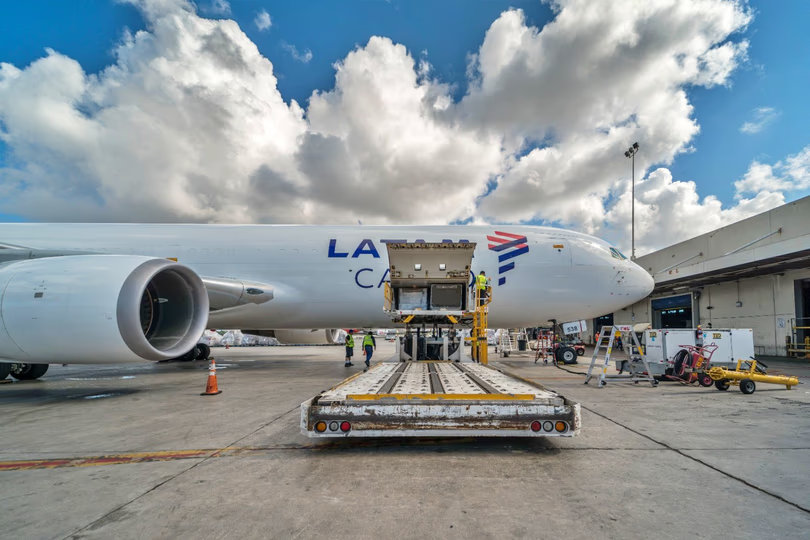
LATAM Cargo is enhancing its logistics infrastructure in Colombia with the construction of a new cargo warehouse at Bogotá’s El Dorado International Airport. The project, which was announced at IATA Colombia Cargo Day 2026, will cover some 4,320 m² and will triple the company’s storage capacity in the Colombian capital.
The investment is designed to support the growth of international trade and domestic freight operations, while increasing the efficiency of cargo handling at the country’s main air transport hub.
The new facility will be located on the eastern expansion of the airport’s cargo terminal. The design will give direct access from trucks to aircraft, facilitating ground operations, minimizing unnecessary handling movements and better co-ordination between road and air transport.
In addition to increasing general storage capacity, LATAM Cargo plans to increase refrigerated storage capacity by about 20%. In particular, this development is a result of the increasing demand for flower exports, a strategic market where the airline already has a 35% market share.
The project will also include the expansion of domestic cargo facilities in Bogotá and a specific area for import processing, reinforcing the company’s capacity to manage different freight flows.
“It is an important commitment for the long-term development of the company in Colombia,” said Santiago Álvarez, Chief Commercial Officer (CCO) of LATAM Cargo Group. He emphasized that the project embodies the LATAM Group’s confidence in the country, regardless of the short-term economic situation or specific seasonal cycles.
Greater investment in regional airport infrastructure
From Bogotá, LATAM Cargo is developing improvements at three strategic airports in Colombia: San Andrés, Leticia and Pereira.
The program offers extra warehousing, improved X-ray screening equipment and the application of new technology to speed acceptance and delivery of cargo.
The initiatives are aimed at improving regional cargo operations, with LATAM carrying 46% of regional cargo volume on passenger flights.
The company wants to upgrade infrastructure at these airports to improve operational efficiency and strengthen links between regional markets and its larger air cargo network.
Digital transformation improves cargo operations
Beyond infrastructure development, there's a wider digital transformation strategy to enhance the client experience, optimize resources and more closely integrate the supply chain.
Internationally, LATAM Cargo is implementing the IATA ONE Record program, which seeks to digitize the exchange of information between the different actors of the industry and customs authorities. The program is intended to enhance information sharing and coordination within the air cargo supply chain.
The company also uses AI-based tracking tools and radio-frequency identification (RFID) technology on flower shipments in Colombia. Based on its CargoLink platform, these solutions enable pre-acceptance of shipments and help in more efficient handling of cargo.
A wider strategy to grow LATAM Cargo’s logistics network
The warehouse project in Bogotá is part of the LATAM Cargo Group’s broader program to upgrade the infrastructure at its main operational centers.
The company is boosting its operational capabilities and serving the changing needs of international air freight with the combination of improved storage capacity, enhanced refrigerated facilities, modernized regional airports and digital technologies.
The investment additionally emphasizes the strategic importance of Colombia in LATAM Cargo’s regional network, especially for the flower export market, where temperature controlled logistics and efficient airport handling are still critical to remain competitive.
END OF REPORT