Air Nov 3, 2026
LATAM deploys A319 preighter to deliver 12.8 tonnes of humanitarian aid to the Galápagos
An innovative cargo operation enabled LATAM to transport 12.8 tonnes of essential supplies to more than 2,000 families affected by severe flooding on Santa Cruz Island, overcoming aircraft and airport capacity restrictions.
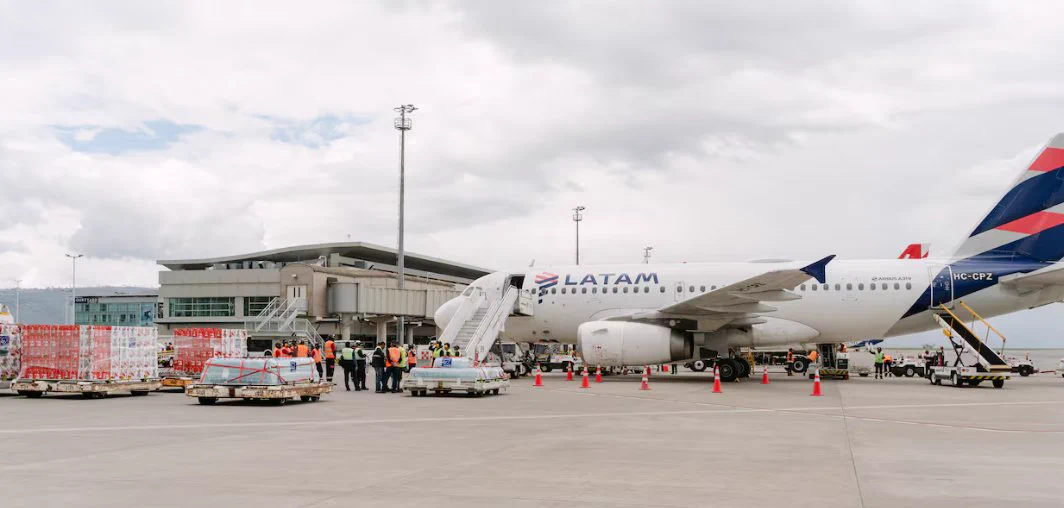
LATAM Airlines Group has activated its humanitarian aid program, Avión Solidario (Solidarity Plane), to deliver emergency supplies to communities hit by severe flooding on Santa Cruz Island in the Galápagos. The operation was activated within hours of the airline being asked to provide help, with more than 2,000 families in need of support after heavy rains linked to the El Niño phenomenon.
LATAM Ecuador, together with the Chamber of Industries and Production (CIP) and Grupo Entregas, transported essential supplies from Quito, with operational support from LATAM Cargo Group. The shipment included 1,000 food and hygiene kits and 9,600 liters of drinking water for affected households.
Alternative aircraft configuration bypasses airport restrictions
To deliver such a huge volume of humanitarian cargo, an unconventional logistical solution was required. LATAM Cargo Group couldn’t use the Boeing 767 freighters that are normally used for this type of mission due to the infrastructure and operational restrictions at Baltra Airport.
Instead of restricting the amount of support being transported, the airline’s cargo teams came up with an alternative loading setup using an Airbus A319. The aircraft was modified to fly as a passenger-freighter, or “preighter”. This meant the aircraft could carry humanitarian supplies in the cargo hold and the passenger cabin.
The operation involved loading 6,700 kg of supplies in the hold of the aircraft and safely placing 6,100 kg on passenger seats. The configuration brought the total humanitarian payload to 12,800 kg.
More than three times the normal cargo capacity of the aircraft.
The solution greatly enhanced the A319's traditional carrying ability. A normal passenger aircraft usually carries some 3,500 kg of cargo on a normal flight. The alternate setup had three times as much.
The 12.8-tonne load was also almost twice the aircraft’s standard hold-only capacity of about 6,800 kg, an illustration of how operational flexibility can help to overcome infrastructure limitations during humanitarian emergencies.
Andrés Bianchi, Chief Executive Officer of LATAM Cargo Group, pointed out the need for rapid mobilization and cooperation to successfully deliver emergency aid.
“The first thing in an emergency is to get aid in there as quickly as possible. The Galápagos restrictions meant that for us to achieve that goal we had to have a Plan B, flying an A319 as a “preighter.” The speed at which this was achieved speaks volumes about the creativity, expertise and passion of the teams in the LATAM group. “With their support and partners like CIP and Grupo Entregas, we were able to move over three times the amount of aid this aircraft would normally carry.”
Humanitarian logistics, the core of LATAM’s regional commitment
This operation reaffirms LATAM’s commitment to the Avión Solidario program that uses the group’s regional connectivity, aircraft and cargo capabilities to respond to humanitarian and social needs.
The Galápagos delivery shows how different airplane configurations and coordinated logistics operations can help keep essential supplies flowing when traditional freight solutions are not available. It also underscores the role of airline partnerships in helping communities affected by natural disasters across the region.
END OF REPORT