Cargo Nov 6, 2026
Lithium-ion Battery Fires are a Major Threat to Global Supply Chains
The use of lithium-ion batteries is growing in maritime transport and exposing major safety gaps. With fire losses on board ships increasing, shipowners and insurers are demanding better prevention, improved detection systems and tougher regulations.
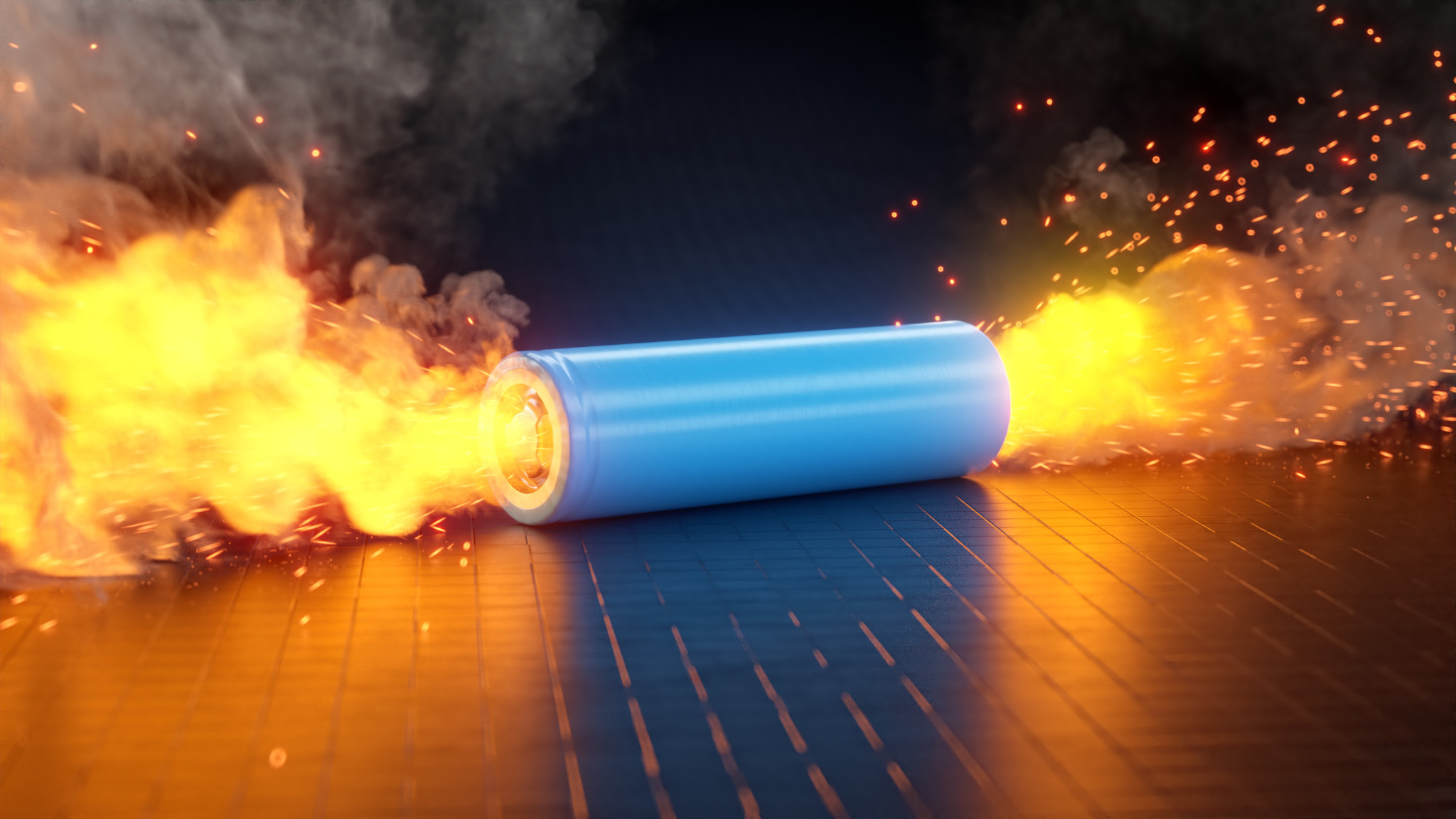
Lithium-ion fires: an increasing challenge for maritime transport
Lithium-ion battery fires are becoming a growing worry for the global freight industry. The increasing number of serious incidents on container ships and vehicle carriers is underlining the limitations of present maritime safety measures, while insurers are getting more worried about the scale of potential losses.
The consequences have already been catastrophic. Since 2020, at least three vehicle carriers have been lost after major fires – the Höegh Xiamen in 2020, the Felicity Ace in 2022 and the Morning Midas in 2025. A number of other ships were also badly damaged but saved in the end.
“There is no ‘one size fits all’ solution for all lithium-ion battery fire scenarios,” says Akshat Arora, Regional Loss Prevention Director, UK P&I Club, Singapore. We need a comprehensive strategy combining prevention, early detection, effective containment and cooling measures,” he stresses in an interview with Seatrade Maritime News. Equally important is the training of the crew, especially to ensure that seafarers understand the capabilities and limitations of the firefighting systems available.
A risk that is far more than container ships
Container ships and vehicle carriers are especially prone to cargo fires, but the risks of lithium-ion batteries apply to a much wider range of vessel types.
Ro-ro ships, bulk carriers and general cargo vessels are also at risk. “Batteries are present in scrap shipments, and liner vessels are carrying an ever-increasing variety of products with lithium-ion cells.
That’s why, Arora says, vessel categories should not be the sole basis for risk assessments. The introduction of Battery Energy Storage Systems (BESS) is presenting the industry with a new dimension of safety challenges. The aviation industry is already starting to limit the carriage of these systems in a sign of growing concern about the possible risks.
Thermal runaway is a challenge for conventional firefighting techniques
One of the main problems of lithium ion batteries is thermal runaway. What you have here is an uncontrolled chain reaction in the battery. It produces heat very fast and it spreads to other cells causing fire.
The conventional equipment on board ships is not enough to tackle these incidents effectively, Arora said.
Water remains a critical tool, especially in cooling damaged batteries and preventing heat from spreading to neighboring battery cells, vehicles or other cargo. But it remains a major operational challenge to deliver sufficient water to the exact location of a fire.
The issue is made worse if the damaged batteries are located inside vehicles or sealed containers, which make direct access difficult.
Safety gaps resulting from regulatory shortcomings
While regulatory developments are underway – supported in part by the P&I Clubs – the current requirements still do not provide the level of protection needed to address the growing threat.
Arora mentions particularly the Special Provision 188 which is part of the regulations for the transport of dangerous goods, such as the International Maritime Dangerous Goods (IMDG) Code and the ADR agreement for road transport.
This requirement limits the quantity of individual lithium ion cells and batteries that may be included in each shipping package. There is however no equivalent restriction on the total number of batteries that can be loaded into a single Cargo Transport Unit (CTU), e.g. a standard 20-foot container.
The effect is that a container can be carrying a high concentration of individually compliant batteries without triggering the dangerous-goods documentation or CTU placarding requirements that would typically make the associated hazards more visible throughout the transport chain.
The regulatory gap was raised at the IMO Sub-Committee on Carriage of Cargoes and Containers (CCC 12) in September.
A number of flag states, supported by international industry bodies and P&I Clubs, pointed out the lack of a specific safeguard that would apply to the total amount of batteries contained in a single CTU.
An amendment has been proposed to create a threshold that would require additional, prescribed dangerous goods documentation. But the next revision of the IMDG Code is not planned until 2030, so the industry will have a long wait for updated requirements.
New Onboard Safety Measures IMO
Despite the regulatory delays, there are also practical developments of firefighting capability at the IMO.
The Sub-Committee on Ship Systems and Equipment (SSE), finalized the draft amendments to the Safety of Life at Sea (SOLAS) Convention in March 2026. The proposals include portable infrared thermal imaging equipment, and water-mist lances and associated design and performance guidelines.
These actions are intended to enhance the ability to detect fires onboard and the response to fires involving lithium-ion batteries.
“These batteries have been fundamental to modern international trade and the global energy transition,” says Arora. He argues their transportation should not be discouraged either. Instead, the emphasis has to be on ensuring that batteries are transported with the right information, the right safety precautions and the right level of preparedness for the risk involved.
The challenge for the maritime industry is thus no longer only to recognize the danger of lithium-ion batteries but to develop the regulatory framework, operational procedures and technical capabilities required for their safe transport.
END OF REPORT