Land Nov 17, 2026
Meta expands its electric trucking strategy with 25 Nevoya trucks on the I-10 corridor
A new multi-year environmental certificate agreement will support zero-emission freight operations between California and Arizona from 2027, extending Meta's partnership with the electric carrier beyond Texas.
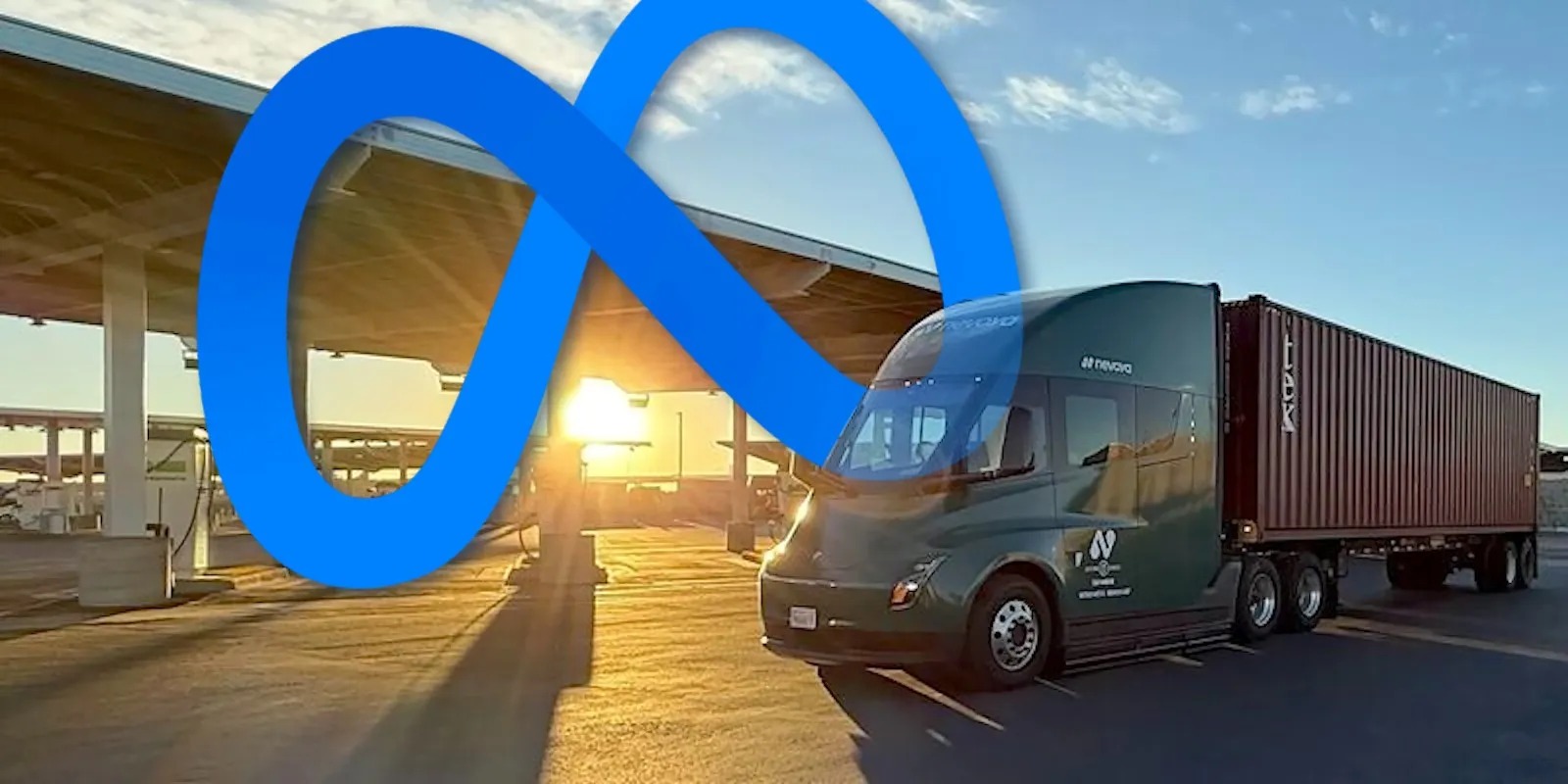
Meta is extending its commitment to lower-emission freight transportation through a new agreement with electric trucking company Nevoya. The technology group will purchase environmental attribute certificates linked to 25 battery-electric Class 8 trucks operating along Interstate 10 (I-10), between San Bernardino, California, and Phoenix, Arizona.
Announced by Nevoya on Thursday, the multi-year arrangement is expected to support approximately 4 million freight miles annually, with operations scheduled to begin in 2027. Beyond adding another electric freight corridor, the agreement provides Nevoya with a second source of committed demand for its growing truckload operations.
The partnership also represents Meta's second collaboration with the carrier, although it is the first agreement negotiated directly between the two companies.
Their previous involvement concerned a Texas initiative led by the Center for Green Market Activation (CGMA), which brought together several corporate buyers to finance environmental certificates supporting Nevoya's deployment of 63 electric trucks between Houston and Dallas.
Nevoya, which secured a $9.3 million seed funding round in July 2025, said the new agreement with Meta establishes a framework that could eventually be extended to additional freight corridors.
Data centre expansion delivers double whammy to supply chain emissions
Meta’s purchase of the certificate doesn’t imply that Nevoya’s trucks will be used exclusively to move the company’s own equipment or materials. Instead, the deal allows Meta to support lower-emission freight while the vehicles continue hauling goods for other shippers.
But the choice of I-10 is not a small one. This passage is a vital channel for moving the building materials needed to construct data centres throughout the southern United States.
This infrastructure expansion is expected to create significant demand for freight transportation. FreightWaves SONAR analysis shows that data centre construction could add 18.9 million truckloads to the U.S. between 2026 and 2031.
Reducing emissions from transportation is especially relevant to Meta’s larger environmental strategy. According to the company’s 2025 Sustainability Report, 99% of the company’s 8.2 million metric tons of carbon dioxide equivalent emissions in 2024 came from value chain emissions, or Scope 3.
Devon Lake, head of net zero strategy at Meta, said freight transportation is included in the emissions from building and running the company’s data centres. Those kinds of multi-year commitments are aimed at addressing Scope 3 emissions, he said, and helping make electric trucking more accessible and commercially competitive on routes serving the areas where Meta is growing.
Technology companies support cleaner freight, but financial details remain undisclosed
Meta and Nevoya haven’t disclosed the financial terms or length of the deal.
Meta announced the partnership in a newsroom update Thursday, along with other commitments on low-carbon cement and near-zero-emission steel. These initiatives are part of a wider effort to cut emissions across the supply chains that support its data centre footprint.
The company has also backed zero-emission freight operations with NFI in Virginia.
Meanwhile, the Nevoya electric truck deployment in Texas has been attracting continued big tech involvement. The corridor reached a peak of 63 trucks after Google agreed in September to back 25 vehicles. Google says the project will cover around 11 million miles per year.
These corporate commitments are a demonstration of how technology companies are increasingly leveraging supply chain partnerships to help enable the development of lower-carbon transportation solutions even when they themselves are not the direct customers of the freight services in question.
Understanding the ‘book-and-claim’ model that supports the agreement
The Meta-Nevoya partnership’s commercial structure is based on an environmental accounting mechanism called book and claim.
In this arrangement, Meta buys certificates for the environmental benefits created by Nevoya’s battery-electric freight operations. The trucks are still free to carry goods for other customers and the environmental attributes that are created by using the trucks are allocated separately to the buyers of the certificates.
This allows companies to count emissions reductions in their value chains, including logistics operations, without having to physically haul their own goods in the electric vehicles.
The mechanism allows the environmental attributes of a low-emission shipment to be separated from the physical shipment, tracked and accounted for independently, according to the Smart Freight Centre, a non-profit that co-leads the Texas initiative with the Centre for Green Market Activation.
The organisation set out this approach in a white paper in December 2025 looking at its application to road freight transport.
The credibility of the system also depends on independent checks. In the Texas project, an accredited external auditor verifies the emissions impact as the corridor is operated by Nevoya, Commercial Carrier Journal reported in January.
But the latest announcement does not say which organisation will be responsible for verifying the environmental certificates tied to the I-10 operations.
New charging infrastructure planned along Interstate 10
Beyond financing the environmental attributes of electric freight transportation, the agreement includes the development of charging infrastructure along the I-10 corridor.
Charging for the 25 trucks will be matched entirely with renewable energy certificates, representing 100% renewable energy coverage for their charging requirements.
Nevoya expects the new charging facilities to be accessible to all freight operators using the corridor. Meta has also described the planned installations as permanent, open-access charging stations.
Neither company has disclosed the identity of the infrastructure partner responsible for the installations or provided specific locations for the charging sites.
The development is nevertheless important for the wider freight industry. Making charging facilities available beyond Nevoya's own fleet could help other operators consider electric trucks on the same route, reducing one of the practical barriers to adopting battery-electric heavy-duty vehicles.
Nevoya had already announced plans to introduce electric trucks on I-10 in August 2025. The latest agreement now provides a commercial framework to support that expansion.
Nevoya sees Meta's renewed commitment as a model for future corridors
For Nevoya, securing a second agreement with Meta represents an important endorsement of its commercial approach.
John Verdon, the company's co-founder and chief commercial officer, said Meta's decision to support another corridor demonstrates confidence in the model.
He argued that electric trucks are already economically competitive on the routes where Nevoya operates, but that wider deployment requires multi-year demand commitments capable of supporting financial and operational innovation.
Verdon added that the company intends to reproduce the approach corridor by corridor.
END OF REPORT