Maritime Nov 23, 2026
Navig8 capitalises on an exceptional tanker market boom through strategic investments
By acquiring vessels at favourable points in the shipping cycle and expanding its commercial operations, Navig8 has built a business model designed to withstand market volatility and benefit from tanker market recoveries.
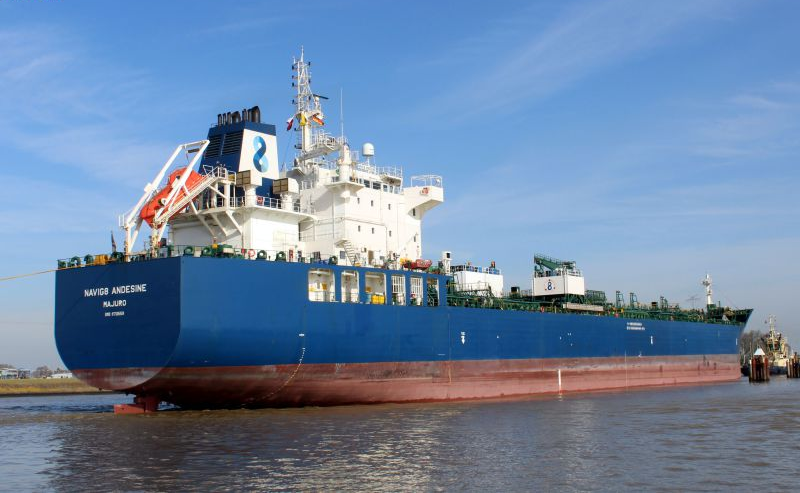
Navig8’s strategy of fleet investment and commercial growth has positioned the company to capitalize on one of the largest tanker market booms in shipping history. The tanker owner and pool operator has cemented its position as freight markets have recovered with a strategy of buying vessels at cyclical lows and building a strong commercial presence.
Navig8 Group managing director Jason Klopfer told attendees at a Society of Maritime Arbitrators (SMA) luncheon in New York how the company has worked to reduce its exposure to shipping’s traditional boom-and-bust cycles. “Diversification, market intelligence and investment timing are the core of its business model,” he said.
“The market conditions we are seeing now, with very good rates for tanker owners, are often linked to broader geopolitical and economic instability,” Klopfer said. “Unfortunately, these types of freight levels appear to be reserved for when the world is in some sort of disarray,” he said.
The challenge for Navig8 has been to create a more structured way of doing shipping than the traditional model of buying vessels, operating them and eventually sending them to be demolished, with profitability largely determined by the state of the market.
“We thought there was probably a more systematic way of looking at the market,” said Klopfer.
The strategy of the company has therefore been to combine vessel ownership with a sufficient commercial scale to create additional revenue opportunities and to gain a better insight into market developments.
Klopfer pointed out the necessity of maintaining a broad commercial network and of building strong relationships with commodity traders and transport operators. That presence allows the company to identify potential inflection points in commodity markets and anticipate changes in shipping demand.
"You also need the scale in terms of commercial framework...we think you need to be everyplace, and be very close to the commodity movers, so you can judge when there are inflection points in the underlying commodity markets," he said.
This market intelligence has also guided Navig8’s investment decisions, such as locking in MR-sized chemical tankers at attractive rates ahead of a shift in charterer demand to larger methanol cargoes.
“Navig8’s combination of fleet capacity and a strong commercial platform enabled it to exceed broader market levels,” says Klopfer. The performance also saw a greater number of shipowners placing their vessels under the company's commercial management activities.
Navig8 chose to invest the bulk of its profits in acquiring more of its own ships rather than distributing the lion’s share of the income it earned from commercial management. This strategy was designed to create alignment of interests between the company and its pool partners and gradually build a stronger position as an independent shipowner.
Navig8’s owned fleet and commercial management operations also made the company more attractive to potential investors. “This was a major reason why ADNOC Logistics & Services acquired a majority stake in the company in early 2025,” Klopfer said.
The timing of Navig8’s investments is another defining feature of its strategy. The company bought vessels when asset values were low in weaker market cycles and benefited from rising ship prices and better cash generation as tanker markets improved.
“If you are very calculated in when you buy assets, you can have lower break-evens than your competitors … and you’re less likely to be forced to sell,” Klopfer said.
Lower operating breakeven requirements provide ship owners with more financial flexibility during periods of weak freight rates. Companies with lower cost structures can hold their vessels and await the next recovery rather than sell vessels in unfavorable market conditions.
This resilience can give a significant competitive advantage when shipping markets recover, especially in an industry where geopolitical developments and unforeseen disruptions can quickly change the dynamics of freight rates.
Even for seasoned industry participants it was hard to see the size of the current performance in the tanker market,” Klopfer said.
“You couldn’t really have expected the kind of freight environment we’re in today,” he said.
END OF REPORT