Maritime Nov 20, 2026
Neoliner Origin Records Major Fuel Savings Despite First-Year Sail System Challenges
Neoline’s wind-powered ro-ro vessel has completed nine transatlantic rotations and logged more than 62,000 nautical miles, reporting significant emissions reductions, while technical challenges with its SolidSail system remain an issue ahead of its next operational improvements.
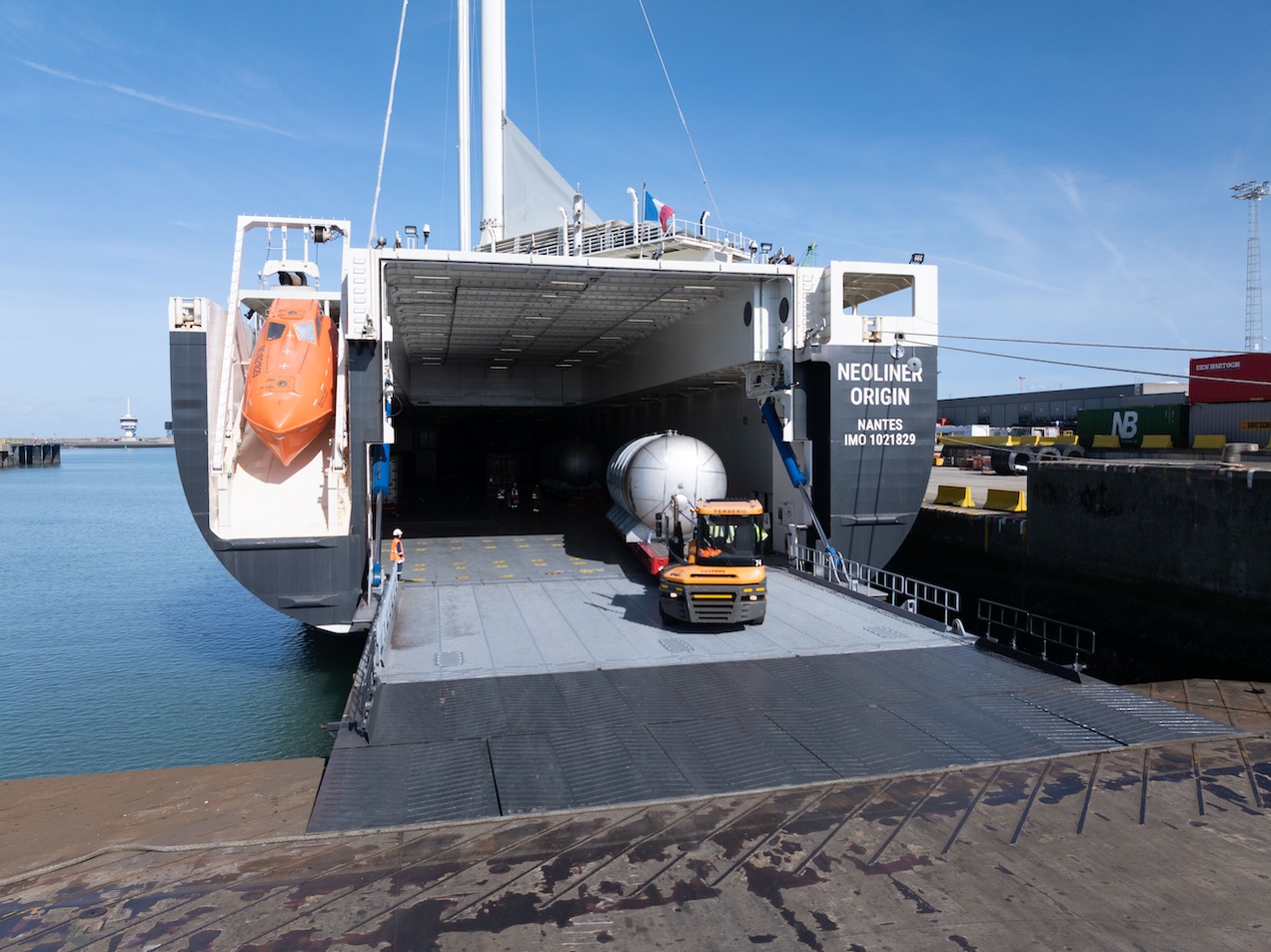
Neoline’s Neoliner Origin has now been in commercial service for a year, offering significant savings in fuel and emissions despite technical issues that have impeded the full use of its wind propulsion system. The 136m ro-ro vessel has completed nine transatlantic rotations, covering more than 62,000 nautical miles since entering service in October 2025.
Figures released by the French shipowner on 5 November 2026 showed the vessel consumed 66% less fuel than the reference fleet benchmark set by the Global Logistics Emissions Council (GLEC) in its first year. The drop for operations conducted in 2026 alone was 70%.
According to Neoline, this represents a saving of 3,502 tons of fuel and an avoidance of 11,228 tons of CO2 emissions. The company also ran a comparative simulation with a conventional vessel of the same size (without sails) cruising at 15 knots. For the 2026 rotations, the fuel savings were between 62% and 67% with this alternative model.
But the shipowner points to a 15% margin of uncertainty in those calculations, as adjustments to scheduled arrival times have yet to be factored into the virtual vessel model.
The service connects Montoir-de-Bretagne with Saint-Pierre-et-Miquelon, Baltimore and Halifax, with Zeebrugge joining the rotation in September 2026. In its first year the Neoliner Origin transported 1845 cargo units, about 12,063 tons and 55,889 cubic meters. Cargo included vehicles, containers, out of gage shipments, industrial machinery and refrigerated goods. Also on board were more than 170 passengers.
But the ship’s operational performance has been blighted by a series of incidents concerning the SolidSail system developed by Chantiers de l’Atlantique. These technical problems have restricted the use of the sails, particularly in attempting to operate with the complete sail configuration.
The first serious incident was on the ship’s inaugural passage on 18 October 2025 when the upper panel of the aft mainsail was damaged. So Neoliner Origin went on sailing in hybrid mode, wind propulsion and engines in combination.
Harsher winter weather in the North Atlantic caused more failures between the first and second rotation, including damage to sailing equipment. The incidents caused a technical stop in France from 30 December 2025 to 30 January 2026.
In December, some operational changes were implemented, with Neoline changing its service schedule, with rotations extended to five weeks instead of four, except during the summer period. For February and March 2026 departures, the ship called only at Saint-Pierre on the return leg. This meant the transit time between Saint-Nazaire and Saint-Pierre was 22 days, rather than the normal eight to ten days.
On 27 June 2026 another incident occurred on the return journey from Saint-Pierre-et-Miquelon to Montoir. A mechanical failure caused the supporting spar of the forward mainsail to collapse. There were no injuries and the vessel was not in danger. The Neoliner Origin continued on powerplant.
On July 5 the ship made a technical call at Lorient to assess damage and remove the damaged sail. 9 July to 13 July, which caused a delay in loading cargo at Montoir. Then the next rotation was planned with a smaller sail configuration.
Chantiers de l’Atlantique has initiated a technical investigation to determine the causes of the incidents that have affected the sailing equipment.
But Neoline is not giving up and is looking to improve the vessel’s environmental performance even more. The company targets a reduction of at least 78% in fuel consumption in the 2026-2027 operating period versus the GLEC reference benchmark.
A second technical stop is planned for February 2027 in an effort to get the SolidSail system running again. Neoline’s chairman and chief executive officer, Jean Zanuttini, is confident that the vessel could achieve 80% or more in fuel savings by 2027.
The first year of operations of the Neoliner Origin thus illustrates both the potential of wind-assisted maritime transport and the technical hurdles to integrate large-scale sail propulsion into regular commercial shipping operations.
END OF REPORT