Air Nov 10, 2026
Nippon Cargo Airlines to absorb ANA’s Boeing 777F operations in 2027
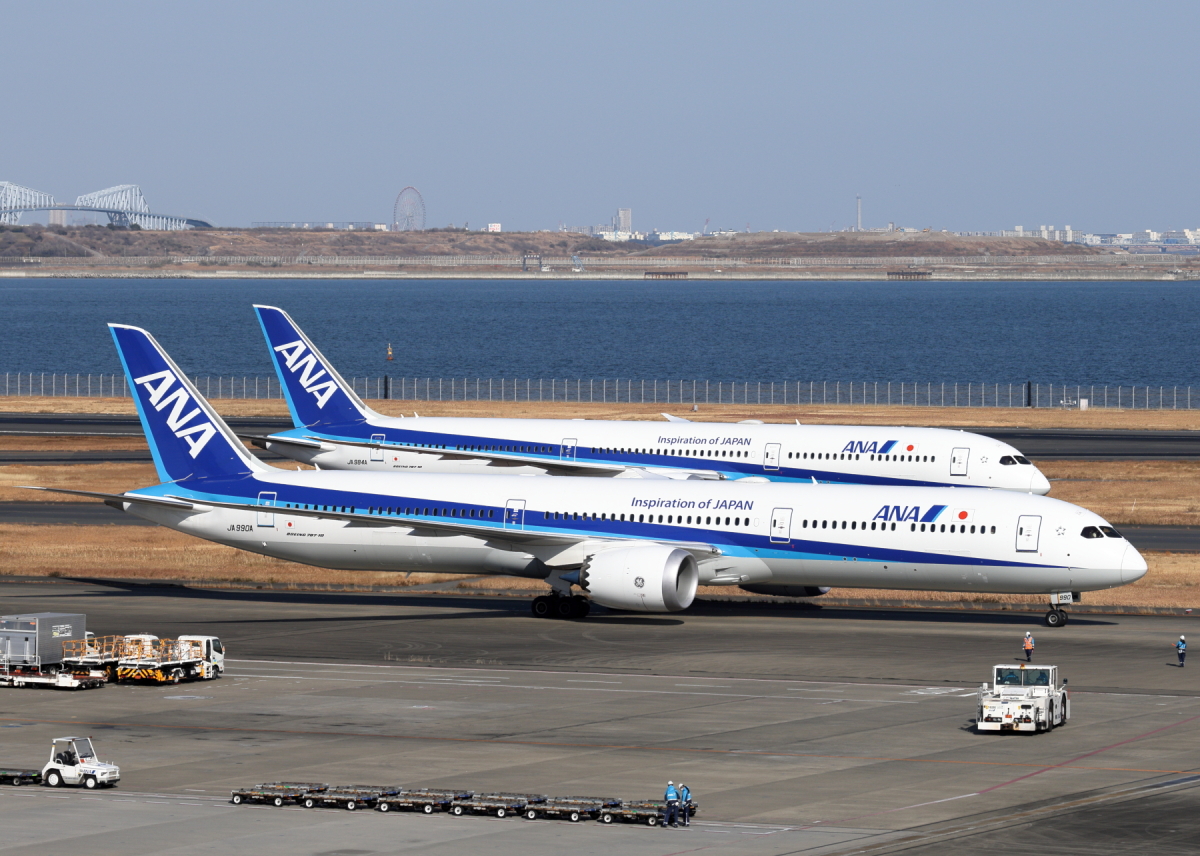
As part of the consolidation of ANA Group’s cargo activities, Nippon Cargo Airlines will progressively take over the operation of All Nippon Airways’ two Boeing 777 freighters next year. The integration, which is expected to be completed on April 1, 2027, will pave the way for a unified cargo airline operating under the future name ANA Nippon Cargo Airlines.
ANA Group accelerates integration of cargo business
Japan's ANA Group is advancing its air freight operations integration plan, with Nippon Cargo Airlines (NCA) to gradually take over the Boeing 777F fleet operated by All Nippon Airways (ANA) during 2027.
The move of the aircraft operations is part of a wider corporate restructuring, designed to bring together the group’s cargo businesses into a more unified organization. The process is expected to be completed on April 1, 2027, when the combined operation will be called ANA Nippon Cargo Airlines.
This follows ANA Group’s acquisition of NCA in August 2025. A month later, Japan's largest airline said it will combine three cargo-related businesses: ANA Cargo, Nippon Cargo Airlines and NCA Japan.
The goal is to build a more integrated freight operation that can provide more reliability and responsiveness to customers in international markets. The group has championed the merger as a way of improving its overall service offering, while making better use of its aircraft and network resources.
Two Boeing 777 freighters to transition to NCA
The heart of the operational changes are the two Boeing 777F aircraft that ANA currently operates.
Flight-tracking information shows that these freighters usually fly routes between Tokyo Narita International Airport and Shanghai, Chicago and Los Angeles. They operate vital links between the major Asian and North American cargo markets.
However, the move to NCA does not guaranty the existing routes will remain unchanged.
According to an ANA Group spokesperson, the company has not yet decided whether the switch will entail changes to the existing route structure. The airline will continue to align its network with market demand.
“We have already moved away from an operating model where each brand is independent,” explained Shoko Takashima, from ANA’s corporate communications department. The strategy now is rather to create an integrated network throughout the whole ANA Group.
In future, she said, the network decisions would not be bound by the traditional route structures. The group wants to look at the specific capabilities of each aircraft, particularly how much they can carry and how far they can fly to see how its fleet can be used more profitably.
The approach is designed to better respond to changes in global air cargo demand and changing market conditions.
Future of ANA’s other freighters still undecided
The announced integration plan includes the transfer of two Boeing 777Fs to NCA, but the future deployment of ANA’s other freighter aircraft is not yet defined.
The group has therefore not yet confirmed whether further aircraft will eventually be transferred, or how its remaining cargo fleet will be structured under the new set-up.
The change is expected to lead to a broader re-assessment of fleet deployment, with operational decisions increasingly driven by the performance and capabilities of individual aircraft rather than the historical split between the group’s cargo brands.
This means ANA is moving to manage cargo capacity as a shared group-wide resource.
ANA and NCA target a 30% increase in cargo capacity by 2030
Beyond the corporate restructuring, ANA Group has set an ambitious objective for the development of its air freight business.
ANA and NCA are targeting a 1.3-fold increase in available tonne-kilometres (ATK) by fiscal year 2030, equivalent to a 30% increase compared with the reference level.
The objective was outlined in August by Minori Kinoue, from ANA Cargo's general affairs department, in comments to Cargo Facts.
Available tonne-kilometres measure the freight capacity offered by an airline, taking into account the payload capacity available and the distance flown. This indicator is widely used to assess the scale and development of air cargo operations.
Achieving this target will require the group to optimise aircraft utilisation, coordinate its cargo networks and adapt capacity to demand across its international markets.
A common framework for a stronger freight network
The group is moving to a more centralized and commercially coordinated air freight model, as shown by the planned move of ANA’s Boeing 777F operations to Nippon Cargo Airlines.
ANA Nippon Cargo Airlines’ future structure is expected to integrate the group’s cargo know-how and operational capabilities, while aircraft will be assigned according to their specific capabilities and needs of the market.
The fate of the remaining freighter fleet of ANA and the future route network are among major decisions still to be taken, but the April 2027 integration is a major step in the restructuring of Japan’s air cargo sector.
The group’s longer term ambition is clear – to increase available freight capacity, improve network profitability and build a more responsive international cargo operation able to adapt to fluctuating global trade flows.
END OF REPORT