Maritime Nov 11, 2026
Ocean freight reliability remains beyond shippers’ contractual control
After years of successive disruptions, container shipping schedule reliability continues to hover around 50%. Industry representatives warn that cargo owners have few contractual means to hold carriers accountable, leaving them to absorb additional costs through higher inventories and alternative transport solutions.
Reliability of container shipping continues to be a major challenge for beneficial cargo owners (BCOs), with a series of disruptions since 2020 eroding schedule performance across the industry. At TOC Asia in Singapore, few industry representatives were confident that a big improvement was around the corner, pointing to the limited ability of shippers to hold carriers contractually accountable for delays.
Figures published by analyst Sea-Intelligence show the world’s 13 largest container shipping lines achieved a schedule reliability of 50.6% in September. This was a modest increase of 0.9 percentage points from August, after three months of falling performance in a row.
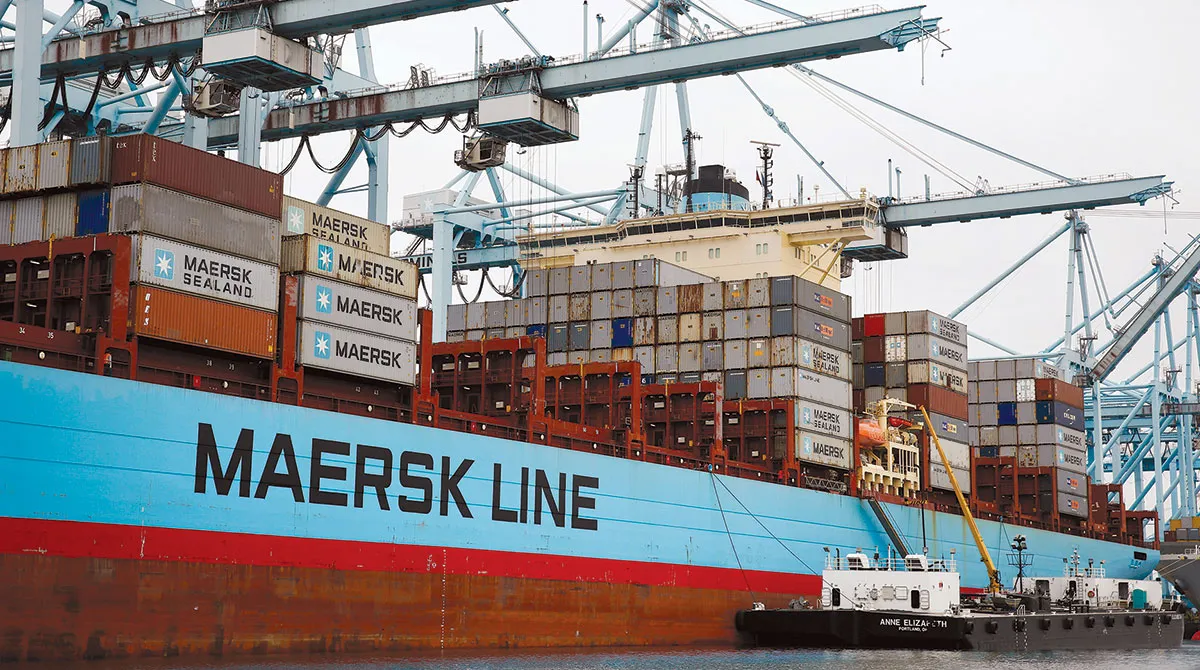
The gap still remains between carriers. Maersk was the best performer with 64.8% schedule reliability, while Wan Hai was the worst performer with only 26.7% of its services on schedule.
“I would advise to temper expectations for the coming years,” says Jaya Moorthi, VP Logistics, International Ops (MEA, SAM, South Asia, Pacific & India), Schneider Electric.
"I think reliability will settle in a relatively narrow range, maybe 50%, 55% or 60% at best," he said speaking at TOC Asia.
He also cited the string of disruptions to maritime transportation over the past seven years beginning with the Covid pandemic. He said the industry has faced a succession of new circumstances that have hurt service performance, with no firm commitment from carriers to make lasting improvements.
“The relationship between shippers and shipping lines is now more based on best efforts of the carrier rather than guarantyd service standards,” Moorthi said. Cargo owners book their shipments but there is little guaranty transit times will be respected.
Contractual commitments are not much protection
The challenge is more than just operational performance. There are also significant constraints on BCOs when trying to build credible schedule commitments into their contracts with carriers.
“I have not seen BCOs really enforcing reliability requirements on shipping lines,” Moorthi stressed. This makes it increasingly difficult to enforce ocean freight contracts regarding the actual performance of the service.
"This is a fair assessment," said Vincent Chew, Consultant, Container Shipping Markets at Drewry Shipping Consultants. “It’s still hard to put measurable performance obligations in contracts in an environment that already has low reliability,” he said.
Drewry is therefore advising cargo owners to focus on reducing their exposure to operational risk rather than relying on contractual guaranties.
Resilience comes at an extra cost
The absence of enforceable performance commitments represents a major operational and financial problem for shippers.
“Companies that want to compensate for reliability levels of about 50% and get to an effective performance closer to 70% may need to add inventory on individual countries or regions,” Moorthi said.
Holding extra stock provides a buffer against unexpected delays, helping to protect continuity of supply chain. But this method is resource consuming and increases the cost of logistics.
And in the end, that extra cost has implications that go far beyond the shipper itself. “The cost of building resilience is likely to be borne by customers,” Moorthi said.
Multimodal transport is an option.
In addition to inventory adjustments, companies are also looking at alternative transport options to reduce their reliance on ocean freight schedules.
Port congestion, especially at major Chinese ports, has been a big concern this year. Another layer of uncertainty has been added to maritime operations by severe weather.
In this sense multimodal transport can be a more efficient solution in some cases, enabling companies to combine different modes of transport and decrease the total transit times.
And Schneider Electric has already seen tangible results from this approach. “By using multimodal solutions, we have been able to reduce transit times in some cases from 60 days to 42 days,” said Moorthi.
He recalled the company’s efforts, saying Schneider Electric has done a lot of work in this area through 2026.
The broader challenge remains for the industry. As long as shipping schedules cannot be reliably guarantyd or effectively enforced through contracts, cargo owners will have to find their own ways to protect supply chains, even if that means accepting higher logistics costs.
END OF REPORT