

• Latest
  • Trending
ONE MONTH INTO THE IRAN WAR, SHIPPING REMAINS CAUGHT IN THE CROSSFIRE

ONE MONTH INTO THE IRAN WAR, SHIPPING REMAINS CAUGHT IN THE CROSSFIRE

March 28, 2026
USPS MOVES AHEAD WITH TEMPORARY 8% RATE INCREASE ON SELECT SERVICES

USPS MOVES AHEAD WITH TEMPORARY 8% RATE INCREASE ON SELECT SERVICES

March 28, 2026
CHINA OPENS TWO INVESTIGATIONS INTO US TRADE PRACTICES

CHINA OPENS TWO INVESTIGATIONS INTO US TRADE PRACTICES

March 28, 2026
ADVERTISEMENT
US AND JAPAN STEP UP CRITICAL MINERALS COOPERATION

US AND JAPAN STEP UP CRITICAL MINERALS COOPERATION

March 28, 2026
EU PARLIAMENT BACKS CORE TERMS OF US TRADE DEAL

EU PARLIAMENT BACKS CORE TERMS OF US TRADE DEAL

March 28, 2026
STRAIT OF HORMUZ DISRUPTION PUTS MANUFACTURERS ON ALERT FOR HIGHER COSTS

STRAIT OF HORMUZ DISRUPTION PUTS MANUFACTURERS ON ALERT FOR HIGHER COSTS

March 28, 2026
UPS HALTS DRIVER BUYOUT PROGRAM IN 13-STATE CENTRAL REGION

UPS HALTS DRIVER BUYOUT PROGRAM IN 13-STATE CENTRAL REGION

March 28, 2026
DP WORLD RECASTS MARINE SERVICES AS TRADE DYNAMICS SHIFT

DP WORLD RECASTS MARINE SERVICES AS TRADE DYNAMICS SHIFT

March 28, 2026
MAERSK SHAREHOLDERS FAIL TO WIN VOTE ON ISRAEL-RELATED SHIPMENTS

MAERSK SHAREHOLDERS FAIL TO WIN VOTE ON ISRAEL-RELATED SHIPMENTS

March 28, 2026
EVERGREEN AND COSCO SUSPEND ASIA–MIDDLE EAST LOOPS AS CONFLICT DEEPENS

EVERGREEN AND COSCO SUSPEND ASIA–MIDDLE EAST LOOPS AS CONFLICT DEEPENS

March 28, 2026
COSCO RESUMES GULF BOOKINGS THROUGH MULTIMODAL LAND BRIDGE SOLUTIONS

COSCO RESUMES GULF BOOKINGS THROUGH MULTIMODAL LAND BRIDGE SOLUTIONS

March 28, 2026
QATAR AIRWAYS STORES AIRCRAFT IN SPAIN AS AIRSPACE RESTRICTIONS BITE

QATAR AIRWAYS STORES AIRCRAFT IN SPAIN AS AIRSPACE RESTRICTIONS BITE

March 28, 2026
KENYA’S FLOWER EXPORTS FEEL THE STRAIN OF IRAN CONFLICT

KENYA’S FLOWER EXPORTS FEEL THE STRAIN OF IRAN CONFLICT

March 28, 2026
  • Home
  • About Us
  • Press Room
  • Podcasts
  • Media Kit
  • Contact Us
  • Careers
Saturday, March 28, 2026
  • Login
  • Register
The Logistic News
  • Logistic
  • Air
  • Maritime
  • Land
  • World
  • Business
  • Tech
  • Events
  • Advertise
No Result
View All Result
  • Logistic
  • Air
  • Maritime
  • Land
  • World
  • Business
  • Tech
  • Events
  • Advertise
No Result
View All Result
The Logistic News
No Result
View All Result
Home Logistic

ONE MONTH INTO THE IRAN WAR, SHIPPING REMAINS CAUGHT IN THE CROSSFIRE

With Hormuz effectively paralysed, around 1,000 vessels stranded and at least 18 attacks recorded, the conflict has created one of the most severe maritime crises in decades.

The Logistic News by The Logistic News
March 28, 2026
in Logistic, Maritime, World
Reading Time: 3 mins read
0
ONE MONTH INTO THE IRAN WAR, SHIPPING REMAINS CAUGHT IN THE CROSSFIRE
ADVERTISEMENT

A month after the first US and Israeli strikes on Iran, the maritime fallout has become one of the most serious disruptions the shipping industry has faced in decades.

The Strait of Hormuz, one of the world’s most critical chokepoints, has effectively become a frontline zone. The conflict has left thousands of ships trapped, raised war risk premiums to extreme levels and exposed commercial crews to direct attack, debris strikes and prolonged uncertainty.

The significance of Hormuz is hard to overstate. Roughly 20% of global oil and gas flows normally pass through the waterway, along with about 10% of world container throughput, in addition to major volumes of fertiliser exports and food imports for the region.

ADVERTISEMENT

Although Iran cannot legally close the strait unilaterally, the security threat quickly became real enough to stop normal traffic. Within hours of the first strikes on 28 February, warnings circulated on VHF Channel 16 claiming the waterway was closed, and many vessels immediately chose to turn back into the Arabian Gulf or wait in the Gulf of Oman rather than attempt a transit.

Ports and ships were soon under pressure. By the second day of the conflict, strikes had been reported on Jebel Ali in Dubai and Duqm in Oman. The first known attack on a merchant vessel followed shortly afterwards, when the 11,622 dwt tanker Skylight was struck off Oman, leaving four crew injured, one dead and one seafarer missing.

According to the International Maritime Organization, there have so far been 18 confirmed incidents involving ships attacked or hit in the region between 1 and 19 March. Nine seafarers are known to have died, four remain missing and several others have been seriously injured.

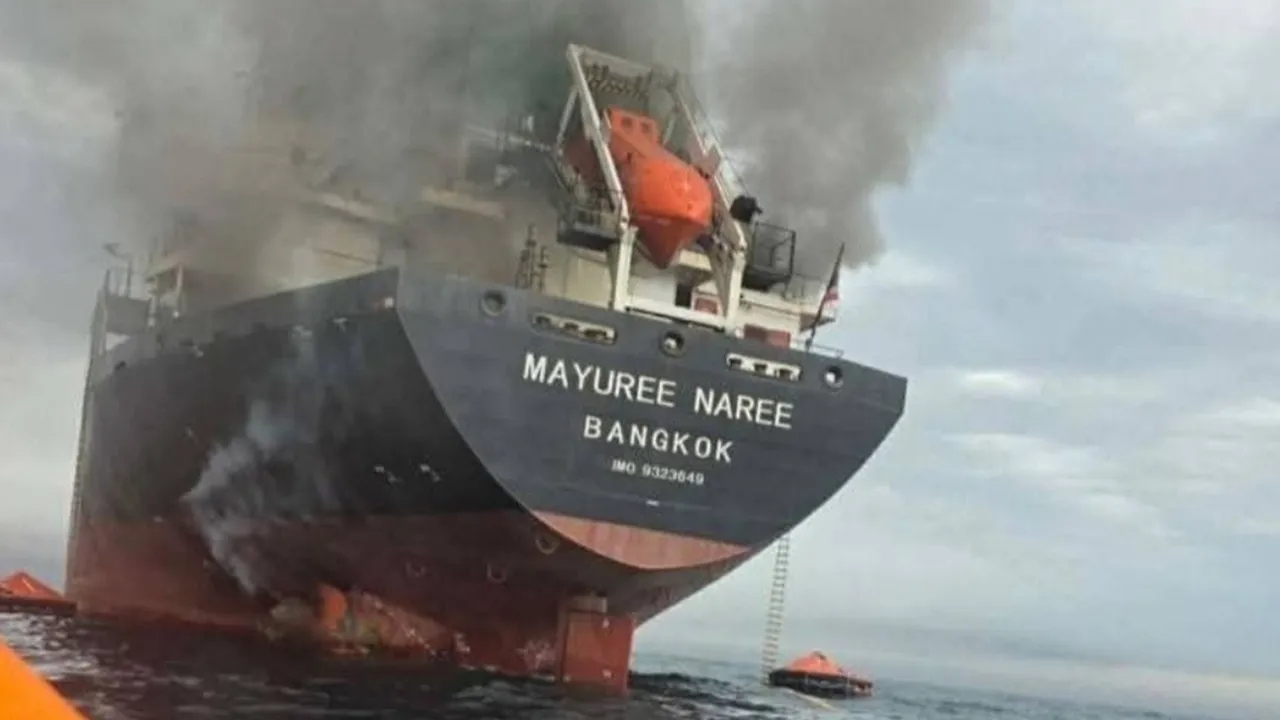
The danger has made regular transits through Hormuz all but impossible for most operators. Combined with sharply rising war risk insurance premiums, the threat has left only a handful of ships willing to attempt the passage, some with serious consequences, such as the Thai-flagged bulker Mayuree Naree.

As a result, an estimated 1,000 internationally trading vessels and around 20,000 seafarers are stranded across the Gulf region. Some ships have been hit directly, while others have been affected by debris from missile defence systems. For crews, the situation has brought not only physical danger but mounting stress, compounded by reports of ships running short of water, food and fuel.

Over the past week, there have been signs of limited change. No new commercial vessel attacks have been confirmed since 19 March, and Iranian authorities have stated that the Strait of Hormuz is open to “non-hostile ships”, provided they do not support aggression against Iran and comply with declared security rules.

In practice, however, the approval process is highly uncertain. Ships reportedly need authorisation from Iranian authorities and may face a $2m toll payable in Chinese yuan or cryptocurrency. Some governments, including China, India, Pakistan, Malaysia and Thailand, have also engaged in bilateral talks with Iran to secure passage for ships linked to their countries.

Even then, the issue of nationality is rarely straightforward. A Marshall Islands-flagged ship, for example, may be beneficially owned in the US or Greece, or may be carrying cargo linked to countries Iran considers hostile. For many owners, the uncertainty alone makes the risk too high.

That complexity was illustrated when two Hong Kong-flagged Cosco vessels — CSCL Indian Ocean and CSCL Arctic Ocean — attempted to leave the Gulf through Hormuz on Friday, only to be turned back by the Islamic Revolutionary Guard Corps, along with another container ship. Cosco has since reopened bookings into Gulf markets, but is relying on landbridge routes via Khor Fakkan and Fujairah across the UAE instead of direct transits through the strait.

War risk cover remains another major obstacle. Even if Iran were to approve a vessel’s passage, insurers may still view the regional risk as critical. The Joint Maritime Information Center continues to classify the area at its highest threat level, and brokers warn that any toll payment to a sanctioned Iranian entity could potentially invalidate insurance coverage.

As of now, US President Donald Trump has extended the deadline for Iran to fully reopen Hormuz until 7 April, warning that the US could strike Iranian energy infrastructure again if the passage does not reopen. While Trump has said ceasefire talks are progressing, Iranian officials have publicly denied that negotiations are underway.

In the longer term, a multinational secure corridor for commercial shipping has been suggested, similar in concept to arrangements seen in the Black Sea during the Ukraine conflict. But unless a ceasefire is reached, such a plan would remain extremely dangerous.

Veterans of the tanker wars of the 1980s know that even naval escort offers limited protection in such an environment. As Arjun Vikram-Singh, founder and chief executive of Quantum BSO, recalled from firsthand experience aboard the VLCC Caribbean Breeze when it was struck in 1987, no government can truly guarantee safe transit through a strait so exposed to short-range missile and drone attacks.


Previous Post

DP WORLD RECASTS MARINE SERVICES AS TRADE DYNAMICS SHIFT

Next Post

UPS HALTS DRIVER BUYOUT PROGRAM IN 13-STATE CENTRAL REGION

Next Post
UPS HALTS DRIVER BUYOUT PROGRAM IN 13-STATE CENTRAL REGION

UPS HALTS DRIVER BUYOUT PROGRAM IN 13-STATE CENTRAL REGION

Leave a Reply Cancel reply

Your email address will not be published. Required fields are marked *

A D V E R T I S E M E N T

Popular News

  • Drone Delivery Takes Flight: Amazon Partners with UPS for Trial Program

    Drone Delivery Takes Flight: Amazon Partners with UPS for Trial Program

    0 shares
    Share 0 Tweet 0
  • Rail Cargo Group Strengthens European Network with Captrain Netherlands Acquisition

    0 shares
    Share 0 Tweet 0
  • Automotive Inbound Logistics Market: Navigating Future Challenges

    0 shares
    Share 0 Tweet 0
  • Global Inflation Cools to Target After Three Years, Central Banks Face Policy Dilemma

    0 shares
    Share 0 Tweet 0
  • Dubai Mercantile Exchange Rebrands as Gulf Mercantile Exchange Following Saudi Tadawul Group Acquisition

    0 shares
    Share 0 Tweet 0

Recent News

USPS MOVES AHEAD WITH TEMPORARY 8% RATE INCREASE ON SELECT SERVICES

USPS MOVES AHEAD WITH TEMPORARY 8% RATE INCREASE ON SELECT SERVICES

March 28, 2026
CHINA OPENS TWO INVESTIGATIONS INTO US TRADE PRACTICES

CHINA OPENS TWO INVESTIGATIONS INTO US TRADE PRACTICES

March 28, 2026
US AND JAPAN STEP UP CRITICAL MINERALS COOPERATION

US AND JAPAN STEP UP CRITICAL MINERALS COOPERATION

March 28, 2026

Discover a new era of logistics reporting with The Logistic News, your go-to platform for breaking news, insightful features, and exclusive interviews shaping the global logistics and freight landscape. Trust us to deliver accurate, timely, and relevant information that empowers professionals and enthusiasts alike in navigating the intricacies of this vital sector.

Navigation

  • Home
  • About Us
  • Press Room
  • Podcasts
  • Media Kit
  • Contact Us
  • Careers
  • Privacy Policy
  • Terms of Use

© 2024 - thelogisticnews.com

Welcome Back!

Login to your account below

Forgotten Password? Sign Up

Create New Account!

Fill the forms below to register

All fields are required. Log In

Retrieve your password

Please enter your username or email address to reset your password.

Log In

SIgn Up Newsletter

This will close in 20 seconds

Manage Cookie Consent
We use technologies like cookies to store and/or access device information. We do this to improve browsing experience and to show (non-) personalized ads. Consenting to these technologies will allow us to process data such as browsing behavior or unique IDs on this site. Not consenting or withdrawing consent, may adversely affect certain features and functions.
Functional Always active
The technical storage or access is strictly necessary for the legitimate purpose of enabling the use of a specific service explicitly requested by the subscriber or user, or for the sole purpose of carrying out the transmission of a communication over an electronic communications network.
Preferences
The technical storage or access is necessary for the legitimate purpose of storing preferences that are not requested by the subscriber or user.
Statistics
The technical storage or access that is used exclusively for statistical purposes. The technical storage or access that is used exclusively for anonymous statistical purposes. Without a subpoena, voluntary compliance on the part of your Internet Service Provider, or additional records from a third party, information stored or retrieved for this purpose alone cannot usually be used to identify you.
Marketing
The technical storage or access is required to create user profiles to send advertising, or to track the user on a website or across several websites for similar marketing purposes.
Manage options Manage services Manage {vendor_count} vendors Read more about these purposes
View preferences
{title} {title} {title}
No Result
View All Result
  • Logistic
  • Air
  • Maritime
  • Land
  • World
  • Business
  • Tech
  • Events
  • Advertise

© 2024 - thelogisticnews.com