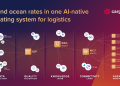




After several months of testing, Penske Logistics is scaling up and bringing AI into the daily execution of transportation, where performance truly matters: shipment tracking, exception management, and information reliability. The group is deploying an “agentic” AI platform developed by Augment, designed as a digital teammate capable of seeking out missing data instead of waiting for it to arrive.
Specifically, when classic visibility tools do not provide an update (incomplete integration, lack of scanning, delayed reporting), the system takes the initiative: it contacts dispatchers and carrier interlocutors via the channels they already use — phone, email, or message — to confirm the status of the loading in near real-time. Stated objective: improve clarity for customers and reduce the internal burden associated with manual follow-ups.
Penske plans to apply this model to a massive volume, on the order of hundreds of thousands of loads, with a promise of significant efficiency: announced productivity gains of 30% to 40% on repetitive tracking tasks. The interest is strategic: visibility is not just a matter of data, it’s a matter of action. When an incident occurs, a quick and structured response is needed, without adding unnecessary friction.
Beyond tracking, Augment’s ambition is broader: quotes, dispatch, appointment scheduling, document collection, invoicing… so many areas where operational time is still consumed by manual processes. In a market where speed and reliability are becoming differentiating factors, this shift shows a strong trend: logistics AI is no longer limited to analysis, it is starting to “do the work” — under control — to streamline transportation.
- Latest
- Trending
ADVERTISEMENT