




Qargo, a UK-based transport management system provider, is moving into the US market with fresh funding, a growing customer base and a clear message: many legacy platforms are no longer built for the demands of modern freight operations.
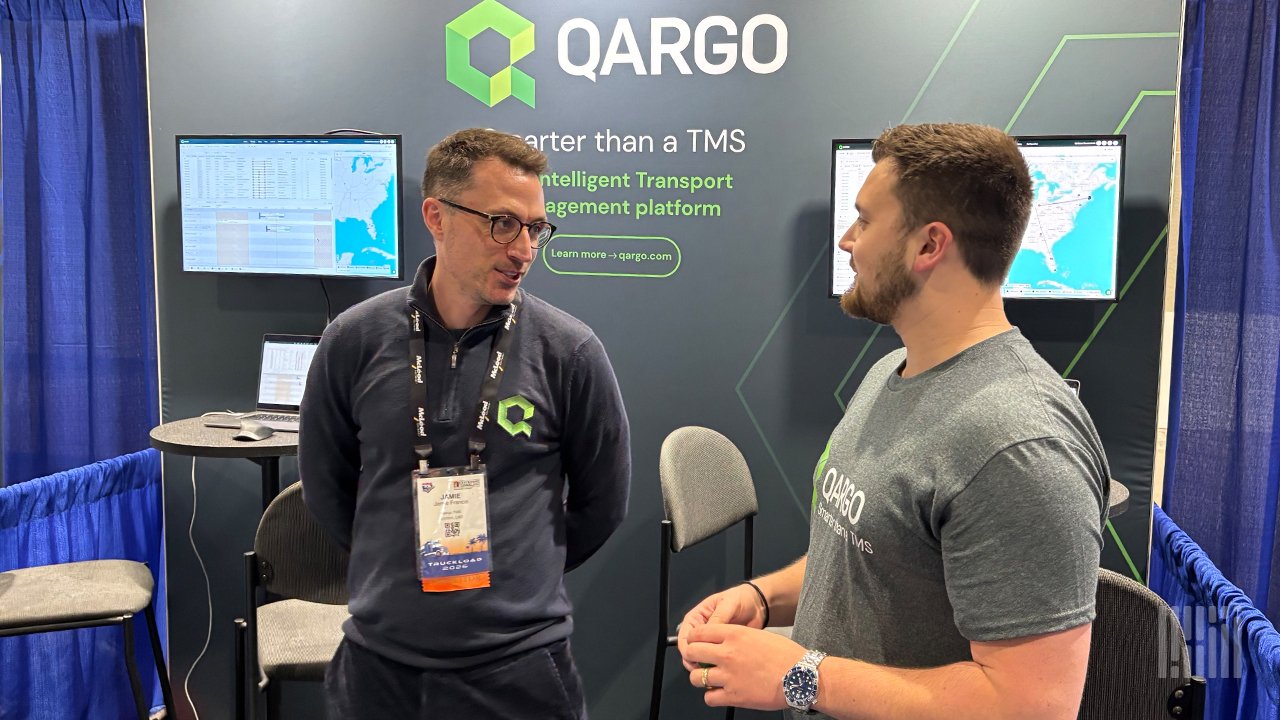
The company recently raised $33m in a Series B round and is now using that momentum to establish a foothold in the US TMS sector, a market dominated by long-established providers. At the recent Truckload Carriers Association annual meeting in Kissimmee, Florida, Qargo’s modest stand contrasted sharply with the larger booths of major incumbents, but the company’s ambitions were anything but small.
Samuel Evans, who was representing Qargo at the show, said the business was founded in the UK around five years ago and has grown rapidly. Staffing has risen from roughly 25-30 people to around 170, while the company now serves 600 fleets and brokers across Europe.
According to Evans, the move into the US was always part of the plan, but Qargo wanted time to refine the product before stepping into such a competitive arena. He said it had taken five years to reach the level of product fit and feature maturity needed to enter the market with confidence.
The company is also arriving with momentum. Qargo has already signed two US customers, including Premier Refrigerated Transport, the dedicated transport arm of Monterey Mushrooms. For now, its US team remains small and is operating from a base in Chicago, though additional executives are in the process of relocating.
Evans argued that one of Qargo’s biggest opportunities lies in the limitations of older systems. Many have been in the market for more than four decades and, in his view, have evolved through multiple bolt-on additions rather than being rebuilt for current technology. That creates challenges when operators want to integrate AI or other modern capabilities.
Interestingly, Evans said Qargo does use AI throughout its platform, but he avoids making it the centre of the pitch. The more important differentiator, he argued, is the user interface and the way the system presents information so operators can make fast, well-informed decisions. AI can support that process, he said, but it cannot yet replace the complexity of human decision-making in transport operations.
Another part of Qargo’s strategy is speed of development. Evans said the company is shipping around four new features per week, allowing it to evolve rapidly without the burden of older architecture.
As for growth strategy, Qargo is not looking to acquire rivals. Evans said the company’s aim is to win market share organically, arguing that acquisitions often create difficult cultural integrations and can trigger customer uncertainty, especially in a market where switching systems is already a major undertaking.
The company has already exhibited at Manifest and plans to attend the FreightWaves Festival of Freight in October as it continues building its US presence.