



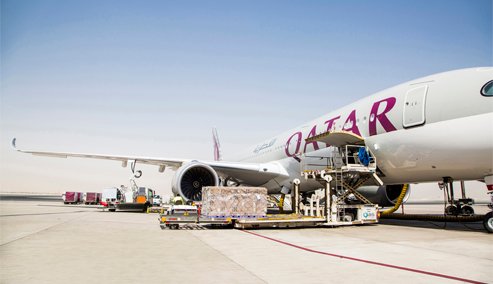
Qatar Airways Cargo has begun gradually restoring freighter operations from Doha, with services to a number of strategic cargo destinations resuming over the weekend as the carrier cautiously rebuilds its network.
The airline said that from 21 March it would once again operate flights to destinations across Vietnam, China, Thailand, South Korea, Nigeria, Kenya, Germany, the Netherlands, Belgium, the United States, Brazil, Ecuador and Panama.
In a statement, Qatar Airways Cargo said it was resuming selected freighter operations to and from Doha following temporary authorisation from the Qatar Civil Aviation Authority, which confirmed the availability of limited operating corridors. At the same time, the airline said it had continued operating its wider freighter network outside Doha in order to preserve access to key global trade lanes and maintain capacity across its broader international operation.
Alongside the resumed freighter services, Qatar Airways is also operating a limited number of passenger flights with bellyhold cargo capacity.
Some restrictions, however, remain in place. The airline said embargoes still apply to certain product categories, including live animals — except for pets and horses to and from Doha — as well as living human organs and blood, and Q Prime urgent critical cargo.
All other Qatar Airways Cargo products remain available for booking through its standard sales channels, including the Digital Lounge and local sales teams, with capacity open to customers.
The carrier said full flight operations would resume only once the Qatar Civil Aviation Authority declares the safe and complete reopening of Qatari airspace.
The gradual return of freighter and passenger operations from the Middle East has already started to reduce the global cargo capacity gap compared with a year ago. Data from consultant Rotate shows that global cargo capacity over the weekend was down 7% year on year. That marks an improvement from the previous weekend, when the gap stood at 10%, from 15% during the first weekend of the month, and from 21% during the weekend of 28 February to 1 March, when fighting in the Middle East first erupted.
Even so, capacity touching the Middle East remains significantly below last year’s levels. Capacity from Asia to the Middle East was down 28% year on year over the weekend, while Middle East to Europe capacity fell 25%.
By contrast, Asia-Europe capacity has risen sharply, up 37%, as carriers move to compensate for the shortage of space normally routed through the Middle East.