Maritime Nov 24, 2026
Savannah records a 25% surge in container traffic in October, reaching 565,366 TEUs
Extended peak shipping season and sustained import demand drive the port’s second-highest monthly container volume on record.
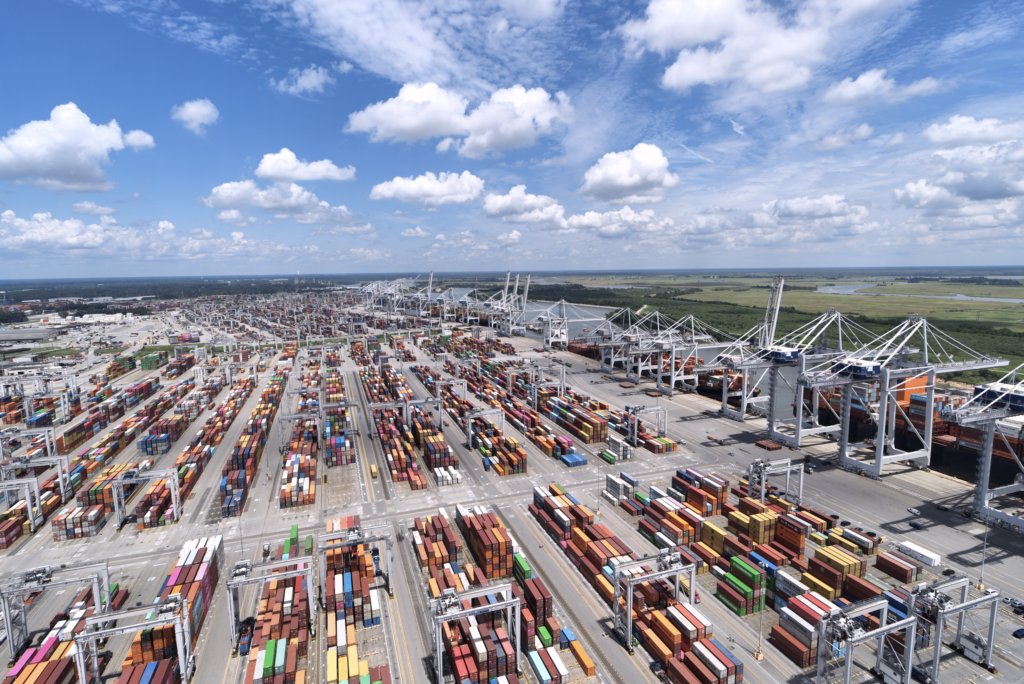
The Port of Savannah posted a robust volume of container traffic in October, handling 565,366 twenty-foot equivalent units (TEUs). That is a 25% increase over October of last year and the second highest monthly container volume in the history of the port.
The strong performance also helped drive container throughput in the first months of fiscal year 2027. Volumes were up 7.8 percent, or 152,991 TEUs, from the same period a year ago, the Georgia Ports Authority (GPA) said.
Vessel activity also picked up during the month with Savannah taking in 160 vessels, a 5% increase year over year.
“We’re seeing a resilient consumer spending pattern and a longer peak shipping season,” said Griff Lynch, chief executive officer of the Georgia Ports Authority. Savannah, one of the world's top 30 container gateways, has benefitted from strong demand for imported goods.
October’s performance comes on the back of another strong month in September, when the port handled 504,015 TEUs, up 3.7% year on year. Activity in the period was helped by rising import volumes and weather delays to shipping.
Major investments focus on increased capacity and improved inland connections
The steady increase in cargo volumes comes as Georgia Ports moves forward with several infrastructure projects to expand Savannah’s handling capacity and strengthen its links with inland markets.
The authority announced in October a $2.3 billion investment in the Savannah Container Terminal following the receipt of a permit from the U.S. Army Corps of Engineers. The facility, planned on around 350 acres, is expected to have an annual capacity of 3.5 million TEUs. It will have on-dock rail facilities and direct highway access for trucks in its infrastructure.
Construction is set to begin in 2028. When finished, the project is expected to boost Savannah’s total annual container capacity to 12 million TEUs.
Another big development is the $1.6 billion redevelopment of Ocean Terminal, which is now over 60 per cent complete. The project will raise the terminal’s annual capacity for handling containers from 200,000 TEUs to 1.75 million TEUs. The GPA said the construction of truck gates and related support services is 99 percent complete.
The first phase of the container yard should be done by mid-fall 2027, with the whole yard to be finished by the end of 2028.
The Gainesville Inland Port is seeing attention to inland connectivity as well. The facility also has another connection to Savannah with direct rail service to North-east Georgia five days a week via Norfolk Southern. Georgia Ports expects the operation to take about 26,000 containers off highways and put them on rail in its first year.
Routeing via Suez Canal offers shorter transit times to Savannah
Changes in maritime routeing are also driving better transit times. Some ocean carriers are returning to routes via the Suez Canal cutting shipping times to Savannah by 10 to 12 days.
The shorter trips come at a particularly opportune time as shippers try to build up inventories before the holiday shopping season.
The Georgia Ports Authority also noted improved operating conditions at the Panama Canal. The canal authority also raised the number of daily vessel transits from 33 to 34, effective Nov. 12. It also increased the maximum allowable draft at the Neopanamax locks from 49 feet to 50 feet, giving additional flexibility in vessel operations.
Brunswick reports mixed results in vehicles, heavy equipment cargo
Elsewhere in Georgia news, the Port of Brunswick saw its total roll-on/roll-off (RoRo) traffic fall 3.6% year on year in October, to 69,599 units.
But shipments of heavy machinery moved in the opposite direction, up 25.8% to 5,193 units, from 4,127 units in the same month a year earlier.
Brunswick continues to be the dominant vehicle import port on the U.S. East Coast.
Infrastructure development is also taking place in the port. They are also building a fourth berth at the Colonels Island facility, which is 60% complete and is expected to open in November 2027.
The new berth should reduce vessel wait and berthing times and improve overall cargo movement through the facility, the Georgia Ports Authority said.
The latest traffic figures and infrastructure investments underscore Georgia’s efforts to manage growing international trade, expand terminal capacity, and enhance the efficiency of its maritime and inland logistics network.
END OF REPORT