Maritime Nov 20, 2026
Shanghai–Genoa Container Rates Rise Against the Global Market Trend
Drewry’s latest World Container Index records a 6% increase in spot rates on the Shanghai–Genoa route, while the overall index declines amid continued weakness across transpacific trade lanes.
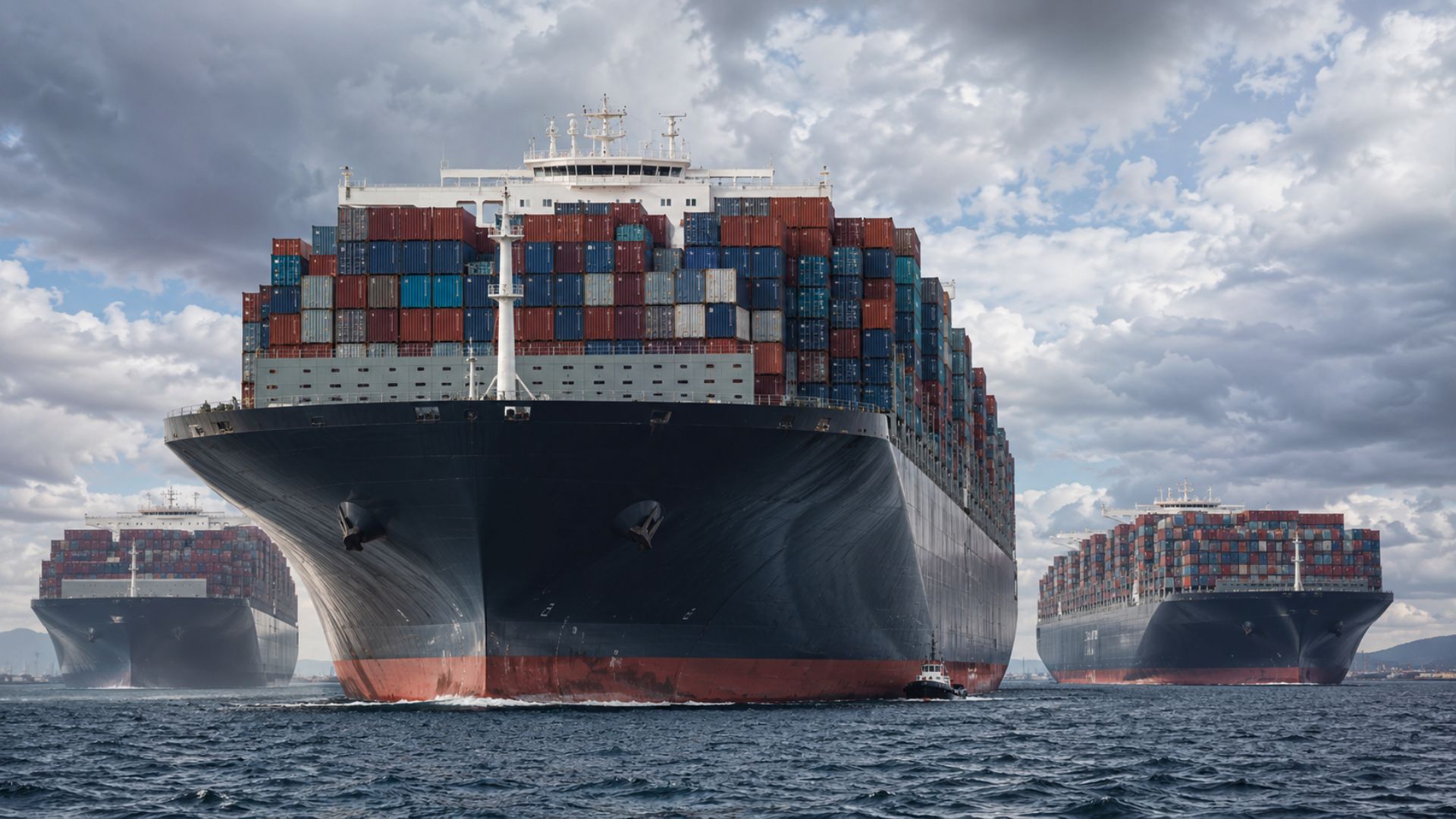
Container shipping rates on the Shanghai–Genoa route went up in Drewry’s latest weekly market assessment published on 19 November 2026, going against the general downward trend in global freight prices.
Spot rates on the Asia–Mediterranean trade lane jumped 6% to $4,436 per FEU, following three weeks of relative stability at just below $4,170. This rise is contrasted with the wider World Container Index (WCI), which dropped 3% to $4,176 per FEU, mostly owing to a fall in freight rates across the transpacific market.
Even after the latest correction, the global index is still up 126% compared to a year ago.
Mediterranean rates still outpace Northern Europe
On a weekly basis, there was no change on the Shanghai-Rotterdam run, with spot rates remaining at $3,496 per FEU. This increased the price gap between Mediterranean and Northern European destinations to $940 per container.
Freight rates from Shanghai to Genoa are now 91% higher year on year, compared with 59% on the Shanghai-Rotterdam route.
Shipping lines are continuing to use canceled sailings to manage available capacity. Drewry's Container Capacity Insight identified four blank sailings planned for the following week on Asia-Europe and Asia-Mediterranean services, after five cancelations during the week of 19 November.
Carriers are still looking for a pick up in demand in December as the market moves into the next contract negotiation season and preparations for the Chinese New Year. To prepare for this seasonal spike, several shipping lines have declared Peak Season Surcharges (PSS) of $1,000 to $1,600 per FEU, starting December.
Transpacific freight rates keep falling
The transpacific market continued to weaken with freight rates posting their seventh straight weekly decline.
The biggest decline was on the Shanghai-New York route, down 9% to $8,194 per FEU. This is its lowest level since fifteen weeks and a $1,109 fall compared to 5 November.
Rates on the Shanghai-Los Angeles route also eased, falling 5% to $7,026 per FEU, the lowest level in a dozen weeks.
But even with these recent changes, both routes are still much more expensive than they were a year ago. Rates are up 223% on the Shanghai-Los Angeles lane and 180% on the Shanghai-New York lane.
Carriers continue to adjust capacity to cope with weaker demand. In the week of 19 November four blank sailings were announced, but the following week has seen 10 blank sailings announced.
Drewry expects transpacific freight rates to continue to fall over the next few weeks, indicating that the market has not yet reached a point of price stabilization.
Transatlantic rates see moderate increase
In the transatlantic market the situation was the reverse, with freight rates rising by 2% in both directions.
The Rotterdam-New York service reached $3,146 per FEU, while the return leg New York-Rotterdam jumped to $1,217 per FEU.
Backhaul rates to Asia, meanwhile, were little changed. The Rotterdam-Shanghai service was unchanged at $632 per FEU, and the Los Angeles-Shanghai service was down 1% at $802 per FEU.
Drewry also noted growing congestion at ports in Northern Europe, slowing the repositioning of empty containers back to Asia. This may gradually reduce the availability of containers in Asian markets, potentially putting further pressure on equipment supply.
Geopolitical tensions, port disruptions top risk list
Ongoing developments in key maritime corridors continue to make the global shipping network more uncertain.
In the past week, the number of ships passing through the Suez Canal jumped to 57, while only four ships transited the Strait of Hormuz.
Shippers can expect freight rate volatility to continue, Drewry said. Geopolitical uncertainty remains a key driver of market conditions, as does the risk of labor disruptions at the US ports of Los Angeles and Long Beach.
The latest numbers underscore the increasingly uneven performance of global container shipping markets. While rates have increased in the Asia–Mediterranean and prices are moving higher on the Atlantic, the World Container Index is still under pressure from the continuing decline in transpacific trade.
END OF REPORT