Events Nov 18, 2026
Shipping Industry Urges Governments to Secure Regulatory Certainty Ahead of IMO MEPC 85
Nine major maritime organisations are calling for a stable, enforceable and commercially viable regulatory framework as governments prepare to decide the future direction of shipping’s decarbonisation strategy at the IMO’s upcoming MEPC 85 meeting.
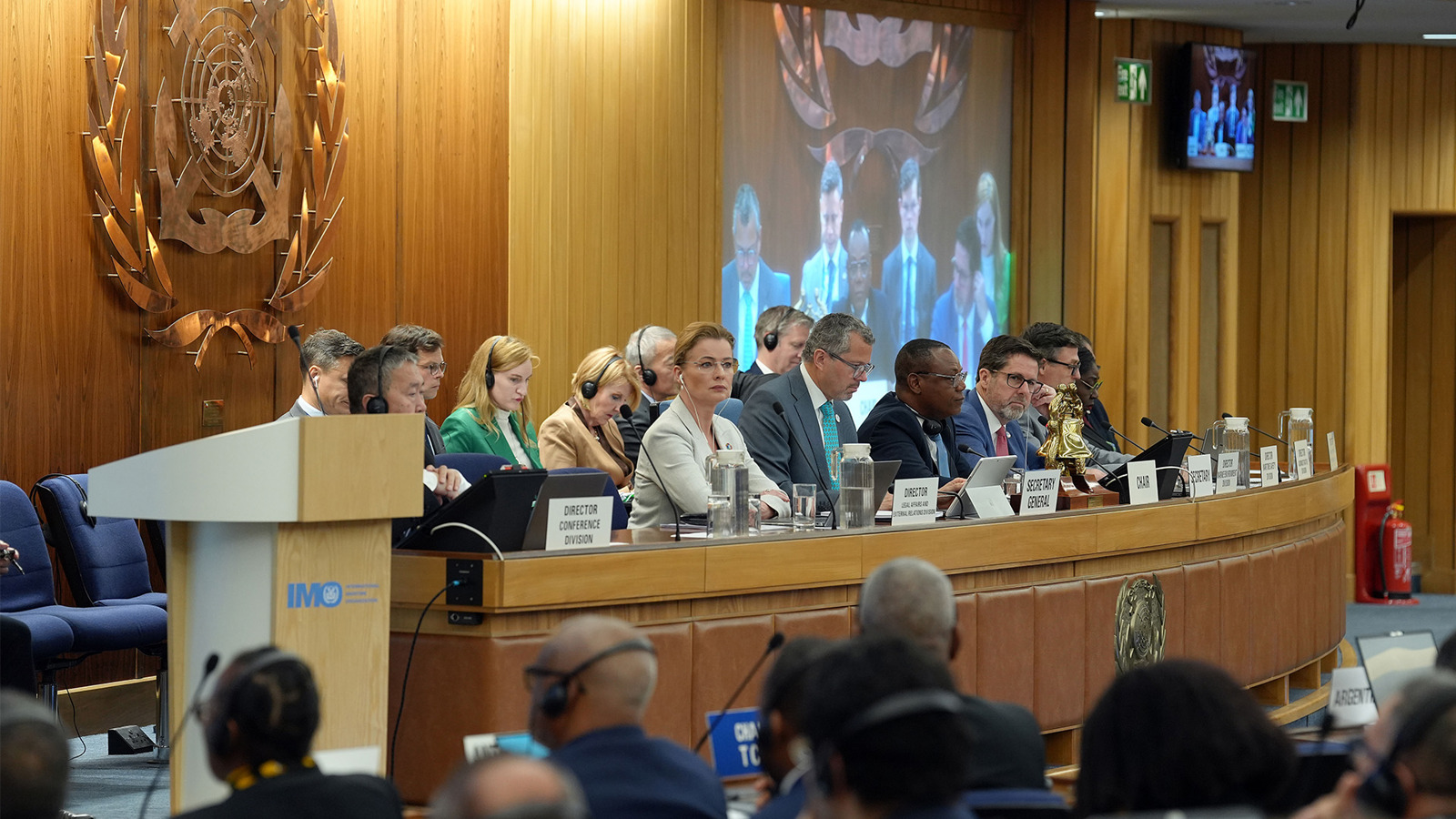
Nine leading maritime organizations are urging governments to agree on a clear and workable approach to shipping decarbonization at the upcoming 85th session of the International Maritime Organization’s (IMO) Marine Environment Protection Committee (MEPC 85).
Industry representatives, in an open letter to governments attending the meeting, are urging delegates to sign up to a policy of constructive engagement and agree on an "achievable, enforceable and stable regulatory framework". While there are still a number of options left on the table, the signatories say that regulatory certainty is essential to maintain the confidence of the investment community in the maritime sector.
The industry’s energy transition is expected to take a major step forward at MEPC 85, which will start on 30 November and last for four days. Friday 4 December has been put aside for talks and a likely decision on the Net Zero Framework (NZF), which will chart the direction of international shipping decarbonization efforts.
Any regulatory framework must consider the real cost and availability of alternative fuels and put in place meaningful incentives for the development and deployment of commercially viable solutions, the organizations say. They also stress the importance of ensuring a safe energy transition through data-driven, fuel-neutral and technology-neutral actions.
The appeal comes as the maritime industry has already invested billions of dollars in green technologies and vessels capable of running on different types of fuel. The momentum of investment will largely depend on the decisions governments make in upcoming IMO discussions, the signatories said.
Other stakeholders besides shipowners are looking for more certainty. The letter also points to the need for a stable regulatory environment for marine fuel producers, charterers, port operators and financial institutions to underpin the sector’s long-term transition.
LNG ambitions, carbon penalty management remain controversial
Two big questions are still dividing stakeholders as they negotiate over the NZF. The first is the level of ambition to be assigned to liquefied natural gas (LNG) in the framework. The second is about the authority that will be in charge of collecting fines for carbon pollution and deciding how to reinvest the proceeds in the maritime sector to speed up the decarbonization.
There are several proposals being considered that reflect different views on how the framework should operate. These range from the more market-oriented approach of Liberia which would allow market forces to determine the most appropriate fuels to hybrid models that would award credits to lower-emission operators while reducing contributions to a dedicated maritime fund.
Other stakeholders supported the NZF implementation in the original form as agreed at MEPC 83, stressing the need to keep the basis of the previously negotiated framework.
Industry warns against a patchwork of regulatory requirements
Maritime organizations, however, are growing more concerned about the implications of failure to agree on an internationally accepted deal, beyond what is being negotiated now.
If there are no practical implementation measures and regulatory stability and provisions to support a just transition, then a framework could result in individual countries and regional authorities introducing their own decarbonization rules.
Such an outcome would risk creating regulatory fragmentation across international shipping, potentially exposing vessel operators to duplicated compliance procedures and multiple charges covering the same greenhouse gas (GHG) emissions.
This is a situation that must be avoided and is one of the key reasons why the industry believes that governments must establish a consistent global approach that can underpin investment and provide clear and predictable obligations for maritime stakeholders.
The open letter was co-signed by nine major industry organizations, namely BIMCO, CLIA, IBIA, ICS, INTERCARGO, INTERFERRY, INTERCARGO, IPTA and World Shipping Council (WSC). Together these organizations represent interests across the global commercial shipping fleet.”
They have a clear message ahead of MEPC 85: the next regulatory decisions must deliver the certainty needed to sustain investment, accelerate adoption of cleaner technologies and ensure shipping’s transition toward net zero emissions remains commercially achievable.
END OF REPORT