Maritime Nov 27, 2026
Ships at Berth Cost Italy €528 Million a Year in Health and Climate Damage
Transport & Environment estimates that pollution from ships docked in Europe's 100 largest ports generates €2.53 billion in annual external costs, with Italy recording the highest national impact. The report calls for faster shore-side electrification and broader EU requirements to reduce emissions.
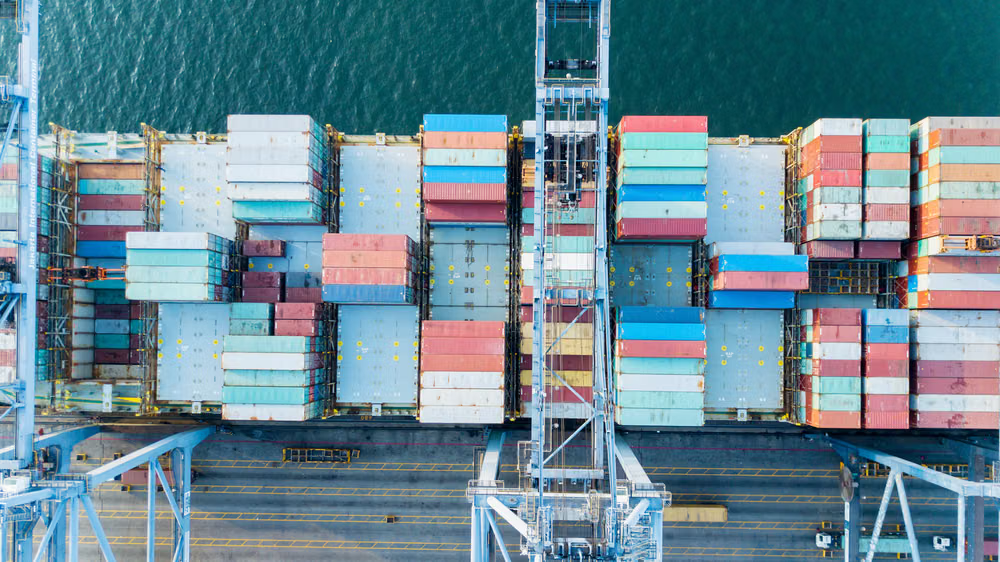
Berthing Ships: Italy Has the Highest Port Pollution Economic Cost in the European
Pollution from ships when they are docked in port is estimated to cost €2.53 billion a year across Europe in health and climate-related costs. Italy is the EU country with the highest overall economic impact, accounting for €528 million of the total. That’s the conclusion of a new analysis by Transport & Environment (T&E) published today (24 November 2026) examining emissions from ships at berth in Europe’s 100 biggest ports.
The report points to a major source of pollution in the maritime industry that tends to be overlooked compared to emissions from navigation. When ships are alongside, their auxiliary diesel generators are often still running to supply power for shipboard services and systems. As such, ships continue to emit pollutants in proximity to dense urban populations and port communities, as they are not plugged into shore-side electricity.
A single ship at berth can emit in a year as much sulfur oxide as 19,300 cars, T&E said. The resulting pollution has serious impacts on public health and the climate. The estimated €2.53 billion is the external cost: the costs not paid directly by shipowners, but borne by society, local communities and healthcare systems.
Italy tops European league table
The economic cost of emissions from ships at berth in the EU is €528 million a year, with Italy at the forefront. Then comes the Netherlands with 463 million euro. Belgium reports 301 million euro.
Rotterdam is one of the ports with the highest estimated impact at port level, at about €350 million. Antwerp followed with 220 million euros, then Marseille and Hamburg with roughly 120 million euros apiece. Another of the most affected European ports is Genoa, where the costs are estimated at 110 million euros per year.
The numbers are impressive, especially if we limit ourselves to passenger shipping. An analysis by T&E found that all four European ports with the highest health costs from air pollution caused by passenger ships are in Italy.
Genoa are the most expensive at 84 million euros a year, with Livorno next at 46 million euros. Civitavecchia and Naples are about €40 million each. The figures illustrate the environmental and public health problems of cruise operations and passenger maritime connections, especially when port infrastructure is located too close to residential neighborhoods and commercial activities.
Ships, port facilities and urban populations are often found in close proximity, which means emissions produced during the berthing process can have direct impacts on the communities living and working around major maritime hubs.
Health impacts and how the numbers were arrived at
T&E also uses scientific studies of the effects of air pollution in port cities to gage the health impacts of port pollution.
One of the studies cited is the one by Mei and other authors published in 2023 in BMC Pulmonary Medicine titled Long-term effects of air pollutants on respiratory and cardiovascular mortality in a port city along the Adriatic sea. The paper discusses the relationship between exposure to atmospheric pollution and the number of deaths from respiratory and cardiovascular diseases in an Adriatic sea port city.
T&E used 2024 vessel emissions data from the European Monitoring, Reporting and Verification (MRV) system for its own assessment. These figures were evaluated using the economic criteria as laid out in the Handbook on the External Costs of Transport, prepared by CE Delft for the European Commission.
The methodology places a monetary value on the damage to health from air pollution and the climate impacts of greenhouse gas emissions. Consequently, the estimates obtained are more representative of the wider economic costs for society than the direct costs recorded in hospital or public administration budgets.
Shore-side electricity is a cheaper option
One of the report’s key findings relates to the economics of producing electricity onboard vessels versus connecting ships to the electricity grid when alongside.
T&E reckons that using fossil fuels for energy while in port costs society twice as much as using shore-side electricity when health and climate impacts are factored in.
This adds to the economic argument for accelerating the deployment of Onshore Power Supply (OPS), or cold-ironing. The technology permits ships to unhook their auxiliary generators while in port and to take the electricity they need for onboard operations directly from the electricity grid at the port.
Besides reducing local air pollution, the system can also significantly reduce external costs of maritime activity, especially for ports near residential areas.
EU regulations still leave significant gaps
European legislation has already introduced requirements to expand shore-side electricity infrastructure, although the current regulatory framework does not cover every vessel category.
Article 9 of the Alternative Fuels Infrastructure Regulation (AFIR) establishes targets for the availability of shore-side electricity supply in maritime ports belonging to the Trans-European Transport Network (TEN-T).
The regulation sets 31 December 2029 as the deadline for the provision of relevant infrastructure for certain categories of container and passenger ships, subject to specific traffic thresholds.
The FuelEU Maritime Regulation introduces a further requirement. From 1 January 2030, passenger and container ships covered by the legislation must use OPS, or alternative zero-emission technologies, while berthed in ports falling under AFIR requirements.
From 2035, this obligation will also extend to other European ports that have developed shore-side electricity capacity.
However, several important segments of maritime transport remain outside the current scope. These include numerous cargo vessels, tankers, bulk carriers and car carriers. Furthermore, fossil-fuel-powered onboard boilers are not covered by the existing OPS usage requirement.
T&E argues that these regulatory exclusions leave a considerable proportion of potential emissions reductions unaddressed.
Closing regulatory loopholes could save €1.56bn
The organization estimates that closing existing regulatory gaps could save €1.56 billion a year in health and climate-related costs.
Requiring shore-side electricity for vessel types that are not currently covered by the rules could save some €500 million a year. A further €714 million could be saved by addressing emissions from on-board boilers.
These numbers back up T&E’s case that the benefits of port electrification go beyond environmental gains. Cutting emissions at berth could also significantly lessen the economic burden currently passed on to public health care systems and society.
“This is what happens to the communities living next to big ports,” said Carlo Tritto, Sustainable Fuels Manager at T&E Italia.
“Port communities are paying the price for ships idling their engines 24 hours a day while in port. He said: “Fossil fuels look cheap only because companies are offloading the costs to health and climate onto society.
There is already a practical solution in the shape of shore-side electricity connections that could save society billions of euros while making port cities considerably healthier places to live, he added.
Tritto also pointed to infrastructure challenges of the transition, in particular the need to upgrade electricity networks. But he warned that the problems should not be used as an excuse to delay the needed investments.
T&E calls for tougher European requirements
For T&E, the next major step must be a revision of the European regulatory framework.
The organisation is calling on the European Commission to use the upcoming AFIR review to progressively extend shore-side electricity requirements to all vessel categories. Its proposals also include introducing specific requirements for ship battery charging and the electrification of onboard boilers.
T&E is additionally advocating national roadmaps for port electrification, with 2032 as the target horizon.
The call for stronger action has also received support from the Clean Port Cities coalition, which brings together industrial operators, civil society organisations and stakeholders from the maritime and energy sectors. Among its members are DFDS and Green Transition Denmark.
In a letter addressed to the European Commission, the coalition called for clear deadlines for the electrification of port berths, regulatory requirements covering battery charging for vessels and faster procedures to secure access to electricity grids.
The debate highlights a growing challenge for Europe's maritime sector: reducing emissions does not stop at improving vessel efficiency while sailing. Port operations must also become part of the decarbonisation process, particularly as the economic and health consequences of ships operating on fossil fuels while berthed become increasingly apparent.
For Italy, where port-related external costs are the highest in the EU and passenger shipping accounts for particularly significant health impacts, accelerating shore-side electrification could become a decisive element of a broader strategy to make maritime transport cleaner and more sustainable.
END OF REPORT