Land Nov 9, 2026
STB signals tougher federal stance on local restrictions affecting rail-served facilities
New policy statement challenges previous regulatory interpretations and could strengthen federal protection for rail infrastructure, giving railroads and their customers greater grounds to contest state and local restrictions on freight-related projects.
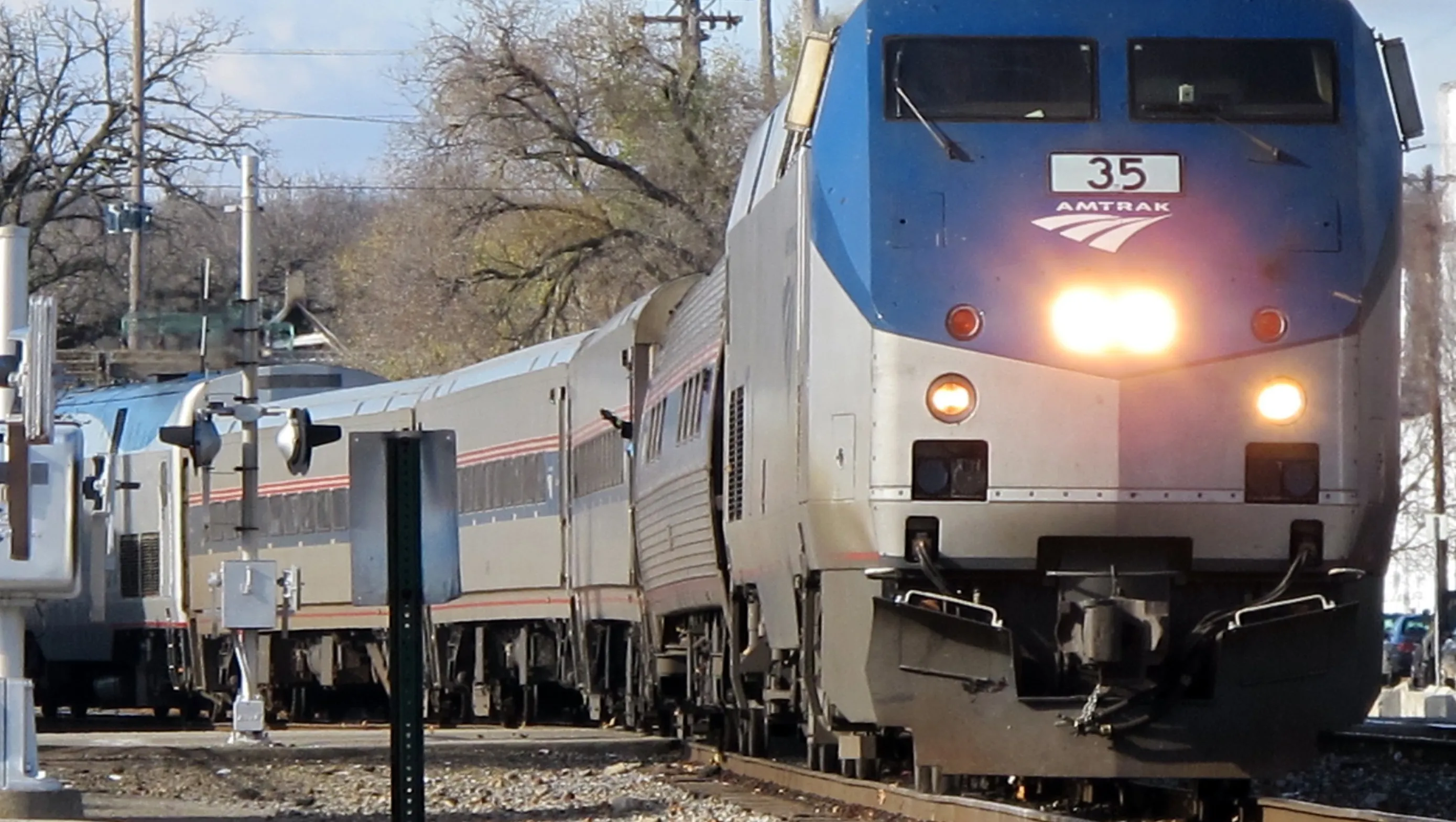
The Surface Transportation Board (STB) is hinting at a potential sea change for how state and local authorities can regulate projects involving freight rail transportation. In a broad policy statement, the federal regulator has laid out an expansive view of its authority over rail-related infrastructure, challenging past agency rulings on privately owned terminals and other railroad-served facilities.
The statement, dated Nov. 9, says some local and state restrictions may conflict with federal law, even if they are formally directed at railroad customers, rather than the rail carriers themselves.
It also includes legal arguments supporting the categorical preemption of government or private attempts to obtain exclusive possession of railroad rights-of-way. This approach might make it unnecessary to assess in detail the effect on train operations of specific takings of property.
But the document does not establish binding legal rulings or grant rail-connected businesses blanket immunity from local regulation. Rather, it confirms existing law and points to areas where further federal protection may be appropriate.
The STB expressly notes that its policy statement is not a binding determination. The individual disputes will continue to turn on their own facts, circumstances and law.
Federal jurisdiction and limits on rail customers
At the heart of the statement is the doctrine of federal preemption, which holds that federal law overrides conflicting state or local requirements.
The STB has wide-ranging and exclusive jurisdiction over transportation by rail carriers and certain associated infrastructure under the Interstate Commerce Commission Termination Act of 1995 (ICCTA).
The agency is set to consider whether the federal authority extends to local regulations that apply to railroad customers, not the carriers providing the service.
The Board recognizes that there has not always been complete consistency in its earlier decisions in this regard. It thus provides a new analytical framework for assessing whether regulations nominally directed at customers really do inhibit common-carrier rail transportation.
The proposed assessment starts with two questions.
First, is the facility being developed or used to receive or tender common-carrier rail service, including transloading and off-loading operations?
Second, does the government measure prescribe or dictate the characteristics of that service, including its volume, frequency, timing, configuration or commodity mix?
If both conditions are met, the restriction may be subject to federal preemption analysis by the STB.
The agency warns that dealing with a restriction on a railroad customer is not necessarily legally distinct from imposing the same condition on the railroad itself. For example, a limit on the amount of rail freight that a facility can accept may restrict the carrier's operations just as effectively as a restriction aimed at the carrier.
Regulatory decisions made in the past are looked at again
To demonstrate its new rationale, the STB turns to two prior cases, SEA-3, decided in 2015, and Valero Refining, decided in 2016.
In SEA-3, the agency refused to preempt a city’s challenge to a zoning decision allowing an existing rail customer to expand its facility from three rail berths to eight.
In the second case Valero Refining a customer wanted to build an off-loading facility that would be designed to receive common-carrier unit-train services. The STB determined it had no jurisdiction over the project, and state and local officials declined to issue a permit to build, citing among other things the anticipated impacts of increased rail traffic and the commodities to be moved.
The new policy statement asks whether these earlier decisions were too preoccupied with the stated target of a regulation and not enough with its actual operational consequences.
The board suggests that a more constructive reading is to look at what a rule really regulates rather than just who is formally targeted.
In the SEA-3 case, stopping the spread could effectively dictate how many railcars a carrier could deliver at one time. It could also require the railroad to add more trips, rearrange train movements and alter its yard-storage arrangements.
Similarly, the refusal of the construction permit at Valero Refining limited the type of train service available and the commodities the railroad could carry.
The STB is careful not to invalidate past results and overturn them automatically. Still, its reassessment gives railroads and their customers more legal ammunition to challenge restrictions that had been thought beyond the board’s jurisdiction.
Railroad Property and Federal eminent domain under increased scrutiny
Another important part of the policy statement concerns the treatment of attempts to get exclusive possession of railroad property.
These disputes may arise from eminent domain, adverse possession, or other legal claims under state law.
In some instances in the past, an as-applied approach has been used, requiring the STB to decide on a case-by-case basis whether a proposed taking would unreasonably interfere with existing or future railroad operations.
The agency now sees strong policy arguments for applying categorical federal preemption where a taking would remove railroad use from a validly held right-of-way or other transportation property.
Its rationale is that it would be inconsistent to prevent a local government from obstructing a rail facility by zoning regulations and to allow that same authority more latitude to take the property itself.
But the board doesn't have a hard and fast rule that applies across the board.
It also distinguishes between exclusive takings of property and ordinary nonexclusive uses of railroad land, such as road crossings and easements for underground utilities. Such arrangements might still be evaluated case-by-case, rather than being automatically subject to categorical preemption.
More legal certainty could back rail infrastructure investment
The STB believes that defining the limits of federal authority can reduce litigation costs, minimize regulatory disputes, and eliminate undue barriers to rail transportation.
Facilities serving multiple major economic sectors, most notably manufacturing, agriculture and energy, could see benefits.
The initiative comes after a September 2025 request filed by six railroad and shipper groups. They included the Association of American Railroads (AAR), American Short Line and Regional Railroad Association, American Chemistry Council and National Grain and Feed Association.
For local communities, the policy statement sets out the bounds of their regulatory power over some rail-related operations.
The board explains that federal preemption may apply even if the STB does not directly regulate the particular activity at issue or provide an alternative regulatory remedy.
One such example are the ancillary tracks. These tracks are subject to the exclusive jurisdiction of the board, although the board does not typically need specific authorization from the STB to build them. And so the local environmental permitting requirements are not always available to fill that regulatory hole.
The agency also notes that federal preemption can apply not only to local ordinances and permit requirements, but also to certain common-law damages claims that effectively regulate railroad operations.
This does not mean that every lawsuit against a railroad is necessarily preempted. Each dispute must still be examined in the proper legal framework.
Rail customers won't get unlimited federal protection
The STB takes a stronger view of federal authority but makes clear that the policy statement should not be read as a blanket exemption from all state and local requirements for businesses connected to rail transportation.
Rail customers themselves are not directly within the Board’s remit. Consequently, many of the rules that apply to their facilities will remain exempt from federal preemption.
For example, a rail incidental manufacturing facility generally will remain subject to local zoning requirements, so long as those requirements do not discriminate against rail transportation.
Similarly, requirements applicable to any part of a project unrelated to the receipt or tender of common-carrier rail services may still be enforceable.
The statement does not also automatically override federal environmental and safety laws. The STB says overlapping federal requirements, including provisions under the Federal Railroad Safety Act, the Clean Air Act and the Clean Water Act, should be harmonized to the extent possible.
The agency also warns railroads against using their federal legal protections to ignore relationships with local communities.
It particularly urges carriers to engage with public officials, share pertinent information and collaborate with local authorities even when those authorities have limited regulatory authority over a project.
AAR welcomes the clarification of federal authority
The Association of American Railroads has welcomed the STB's policy statement, describing it as an important clarification of the federal framework governing rail transportation and the preemption of conflicting state and local regulations.
AAR President and Chief Executive Ian Jefferies said the document brings together decades of decisions by the board and the courts, providing a practical reference for communities, shippers, railroad operators and public officials.
He also emphasized that Congress established a nationally uniform system for interstate rail transportation on a bipartisan basis.
According to Jefferies, consolidating the existing legal framework could reduce uncertainty and help resolve disputes more efficiently, benefiting individual states, local communities and the wider domestic economy.
He added that avoiding a fragmented system of state and local regulations is essential to maintaining a reliable national rail network serving manufacturers, farmers, energy producers and consumers throughout the country.
The broader implications are significant: The STB's position could make it more difficult for state and local authorities to block or restrict rail-served projects, including when regulatory measures are directed at the railroad's customers rather than the carriers themselves. Although the policy does not eliminate local oversight, it signals a stronger federal position in protecting access to freight rail infrastructure and supporting future investment in the network.
END OF REPORT