Land Nov 6, 2026
Italian Rail Freight Operators Call for Long-Term Government Support Amid Mounting Pressures
At the 18th MercinTreno Forum, industry representatives urged Italy and the European Union to introduce stable financial incentives, strengthen logistics terminals and protect rail freight capacity as infrastructure works, rising costs and declining volumes weigh on the sector.
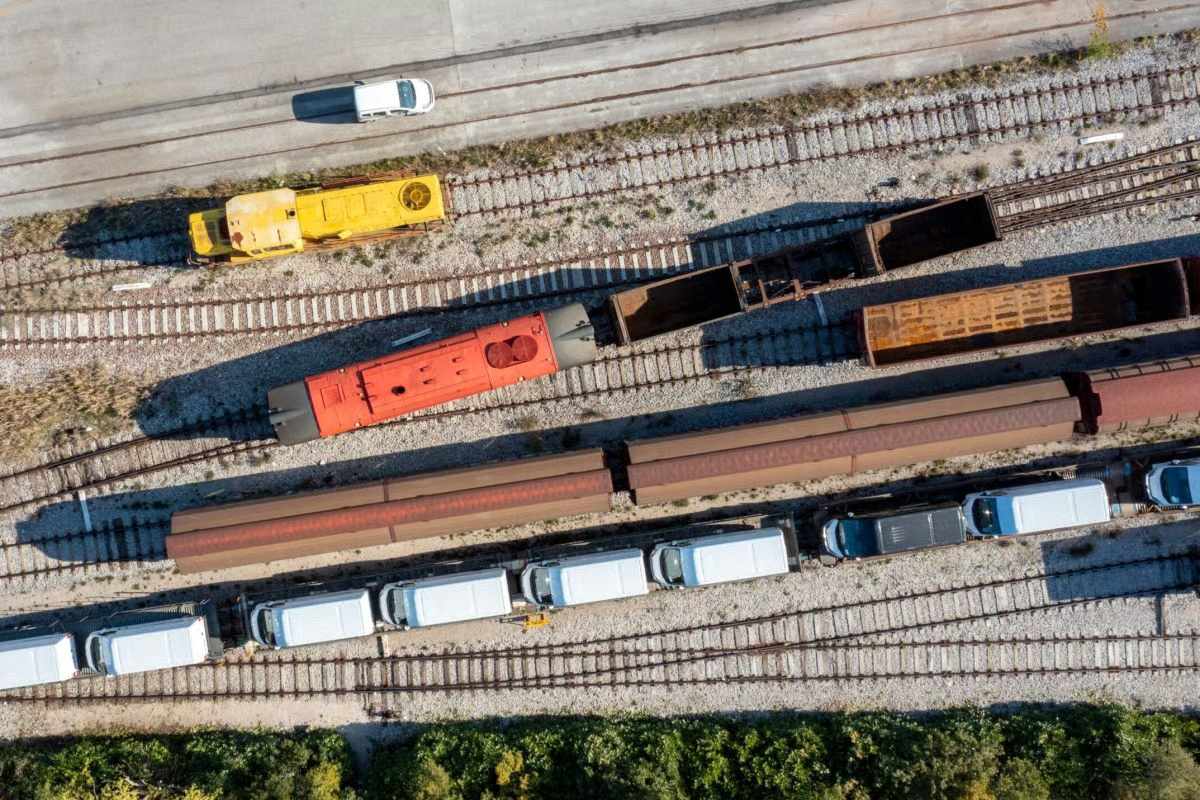
Italy’s rail freight sector is urging a more predictable long-term support framework as operators are facing falling volumes, rising operating costs and persistent capacity limits due to infrastructure works. Industry representatives on November 5, 2026 at Villa Lubin, seat of the National Council for Economics and Labor (CNEL), during the 18th edition of the MercinTreno Forum, stressed that rail freight must be viewed as a strategic instrument of industrial policy and not simply as an alternative transport mode.
Participants called for stable financial incentives until the upgraded rail network is fully operational and a coordinated European approach to freight transport. The event was attended by more than 40 speakers, including representatives of the Italian Government, national and European parliaments, regulatory and safety authorities, rail and intermodal logistics companies, industry associations and academic institutions.
Infrastructure constraints and financial losses are putting pressure on operators
The forum was divided into three main sessions on geopolitics, the post National Recovery and Resilience Plan (PNRR) period, sustainability and innovation. The central topics discussed were measures provided for in Italy's Budget Law.
The two morning panels, Le Mercintreno e la Geopolitica and Le Mercintreno e il Post Pnrr, underlined the scale of the challenges that the sector is facing.
figures included a 40% reduction of capacity available on the German railroad network Italian freight operators have lost around €400 million of revenue in the last three years, adding to the financial squeeze caused by infrastructure disruptions and rising operating costs.
The discussions also discussed extension of support measures that are expiring. Meanwhile, port sector representatives confirmed that reliable rail connections have become a must-have for investors eyeing logistics and port infrastructure projects.
Operators call for shift in industrial policy
“Looking beyond the PNRR investment period, infrastructure development alone will not be enough to ensure a sustained increase in rail freight volumes,” industry representatives said.
They called for ongoing incentives and increased investment in logistics terminals and a national logistics plan to accelerate the shift of freight from road to rail.
A key message from the discussions was the need to shift from an infrastructure-centred approach to a fully developed industrial policy for rail freight.
This would involve converting the extra capacity created by railroad upgrades into commercially viable services. Operators identified a number of priorities: providing reliable and available train paths, better coordination of infrastructure works, safeguarding the freight market during the network transformation, and reinforcing terminals and last-mile connections.
Without such measures, improvements to the physical network risk not delivering tangible commercial opportunities for rail freight companies and their customers.
European funding and regulation will shape the future of the sector
Some of the future support from the industry will be decided at the European level.
Matteo Ricci, Vice-President of the European Parliament's Transport Committee stressed the importance of negotiations on the EU's budget for 2028-2034 and the reform of the Emissions Trading System (ETS). Both processes will have an impact on the availability of financial resources and regulatory conditions to support rail freight transport.
He asked for more commitment from the European institutions and national institutions to ensure the sector gets the support it needs.
MEP Carlo Fidanza invited industry players to prepare quality projects for the upcoming European Competitiveness Fund. The fund is expected to focus mainly on innovation-related investments but the overall financial envelope will depend on negotiations over the European Union’s next multiannual budget.
And Flavio Tosi brought back the spotlight on the proposed Combined Transport Directive, asking for significant input from industry operators in the development of the directive.
Discussions pointed to the importance of making sure that European funding programs and regulatory initiatives result in practical support for companies investing in more efficient and sustainable freight transport solutions.
Digitalization, decarbonization remain top priorities
The afternoon session focused on digitalization, technological innovation and the role of rail freight in cutting emissions across the logistics sector.
Agostino Santillo, Vice-President of the Environment Committee of the Italian Chamber of Deputies, noted the distance between the current progress and the modal shift objectives of the European Union.
The end of the PNRR investment period must not create uncertainty on future funding, he underlined. “The renewal of rolling stock, railroad electrification and the ecological transition of small and medium-sized enterprises will continue to need reliable financial resources,” Santillo said.
"It is essential to develop an integrated logistics system and speed up the implementation of measures already planned," underlined Donato Liguori, Director General for Ports, Logistics and Intermodality at Italy’s Ministry of Transport.
Among the priorities he mentioned was the decree on railroad shunting operations in ports, which is designed to enable better links between port facilities and the wider rail network.
A turning point for rail freight in Italy
The 18th edition of the MercinTreno Forum has brought out the structural problems of the Italian rail freight sector, which is about to face a decisive transition phase after the PNRR.
Operators argue that big infrastructure investments will increase network capacity but must be supported by stable incentives, efficient connections to terminals, coordinated construction planning and a clear long-term industrial strategy.
Throughout the event, one of the key takeaways from the industry to policymakers was that adding rail infrastructure isn’t the whole answer. It will be key to achieving Europe’s modal shift and decarbonization ambitions to ensure that this capacity can be used reliably and competitively by freight operators.
END OF REPORT