Maritime Nov 24, 2026
Strong Shipping Markets Continue to Slow M&A Deals Despite Growing Pressure to Consolidate
High asset valuations and strong cash flows are widening the gap between buyers and sellers, while investment bankers and maritime lawyers point to growing consolidation across shipping, shipbuilding, towing and offshore services.
Shipowners have little incentive to sell as earnings are strong across the shipping industry, making mergers and acquisitions (M&A) harder to complete. High valuations and historically strong cash flows are keeping potential buyers and sellers apart, while listed companies feel growing pressure to grow their scale and cement their position in capital markets.
One of the key messages from the Marine Money conference in New York was the relationship between shipping market cycles and corporate consolidation, said Evercore banker Marc Friedman.
Timing is critical in an industry where asset values can swing widely depending on market conditions, Friedman says. Generally, owners are reluctant to dispose of vessels and other income generating assets when freight markets are performing well.
"It's very difficult to do deals at the top of the market as shipowners are very confident and existing assets are making good cash flow," he said. Consequently, bringing buyers and sellers together becomes a lot harder.
“Two recent examples of these challenges are the abandoned Hafnia/Torm tanker transaction and the ongoing stalemate between Diana Shipping and Genco in the dry bulk market,” Friedman said. Both these situations show that owners can refuse acquisition bids when market conditions are favorable.
Acquisition strategies remain subject to market cycles
Friedman also stressed the importance of timing within the broader economic cycle of the shipping industry. His assessment is that M&A activity can create the most value generally in the middle of a market cycle.
But the cycles we have seen in the 2020s have been less driven by traditional economic fundamentals and more by unexpected events or what are called black swans. To add to this, shareholders are currently sitting on record high cash flows, further reducing their incentive to consider selling.
Friedman said that despite those obstacles “consolidation is still an important strategic objective for publicly listed shipping companies”. His message was simple: companies either need to get big enough to remain relevant in capital markets or they will lose their competitive position.
The principle, he said, was “go big or go home”, a theme he had returned to in previous presentations on the importance of scale for corporations.
Several shipping groups show how this strategy may pan out in practice. Frontline’s position was strengthened by the 2024 buy of very large crude carriers (VLCCs) from Euronav. International Seaways also expanded with its 2021 Diamond S deal and its more recent share-for-ships deal with Norway-based Bruton.
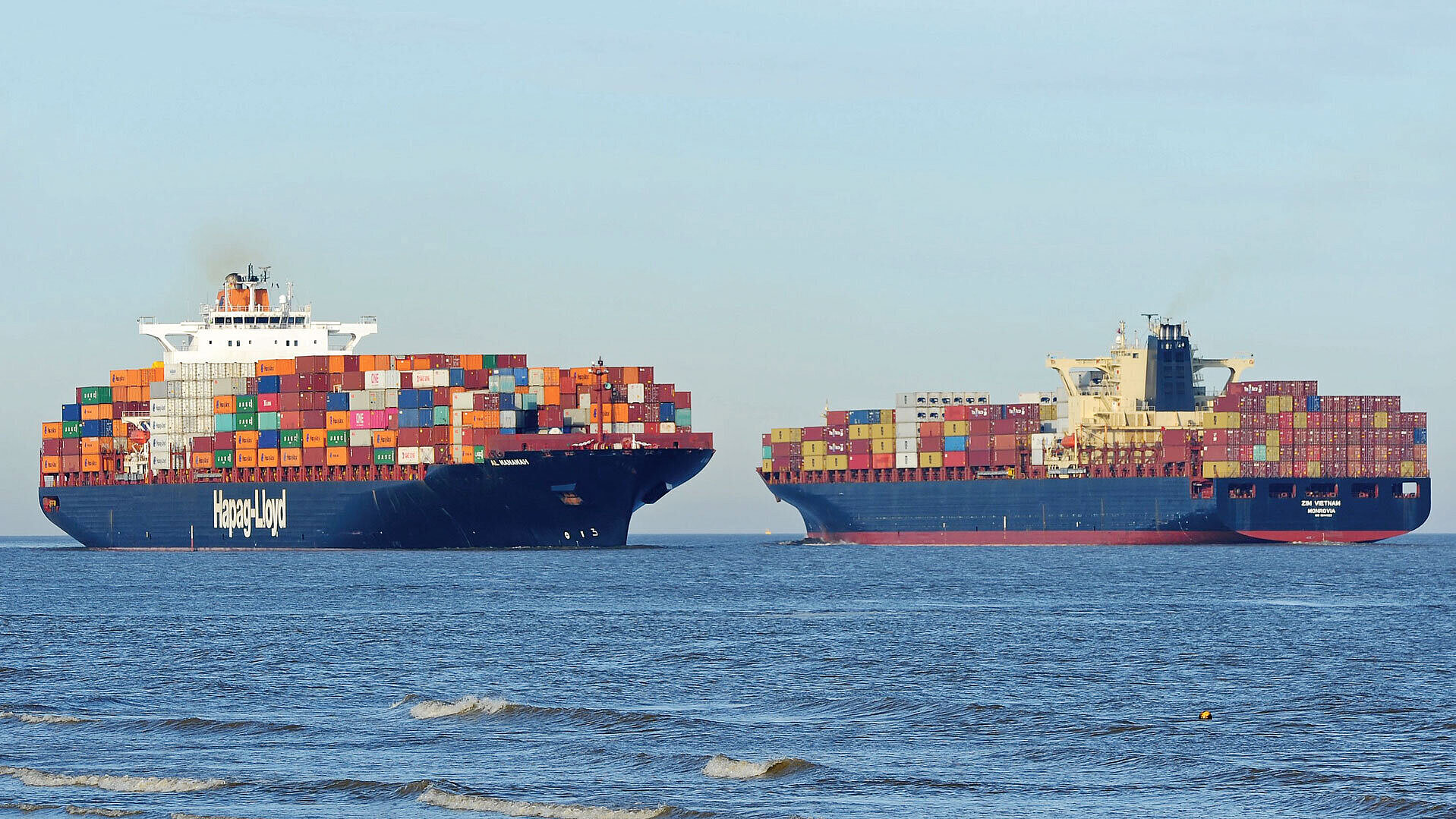
Friedman also mentioned Star Bulk as a serial acquirer and pointed to Hapag-Lloyd’s ongoing transaction with Zim as another important development in the industry consolidation.
Niche operators have the option to go private
Not every shipping company will benefit equally from the expansion In some market segments where companies operate in specialized niches, increasing the fleet size or scale of the company may not bring so many advantages. For these firms, a different strategy has been increasingly visible: leaving the public markets via private acquisitions.
Friedman said there have been a number of recent take-private deals, particularly in the Jones Act market.
He pointed to two purchases by West Coast-based Saltchuk as examples. In 2024 the company bought tanker and barge operator OSG and in 2026 completed its purchase of Great Lakes Dredge & Dock.
This latter deal drew considerable attention as it brought infrastructure investors into a more prominent position in the maritime investment space. Such investors typically prefer long-term opportunities with predictable cash flows.
Evercore’s analysis also pointed to the positive background of big spending on US infrastructure. This investment is supporting dredging and coastal protection demand, helping to alleviate possible concerns surrounding the US offshore wind market.
U.S. maritime M&A activity spills over into multiple sectors
A separate presentation by Will Baldwin and Asher Friend, partners at New Orleans-based law firm Jones & Walker, covered the consolidation trend among American maritime companies.
Lawyers said measuring domestic M&A activity can be tricky because many of the companies involved are privately held and don't publicly disclose details of deals. But they said consolidation is increasing across the US maritime industry.
Today the activity is much wider than just shipping companies and includes towing operations, shipyards, dredging businesses, offshore services, terminals and defence-related assets.
Among the deals they discussed in the presentation was Saltchuk’s acquisition of Great Lakes Dredge & Dock, valued at roughly $1.5 billion.
Another development on the horizon is a bidding war for shipbuilding firm Austal USA, which is drawing interest from two potential buyers — Hanwha Defense USA and Wildcat Infrastructure LLC. Both have made bids of more than $1 billion.
Baldwin and Friend point out that transaction volumes have been especially concentrated in shipbuilding and ship repair, as well as inland and coastal towing operations.
Consolidates interest Towing and barge operators
The towing industry has emerged as a hotbed for acquisitions as existing operators and financial investors seek to strengthen their positions.
“The Jones & Walker presentation noted that “Moran Towing, a veteran player in the industry, recently acquired 11 vessels from Bisso Towboat.
Another interesting investor is a family office, Redwood Holdings. 2024 was the year Maritime expanded with the purchase of Marquette Transportation, and 2025 saw the company grow again with the acquisition of Canal Barge.
Lawyers pointed to Redwood’s plan to combine the two tug and barge businesses into one holding company. The plan is to thicken the network, add customers and grow its share in the inland barge market.
This is part of a broader trend of family offices looking to the maritime sector for investment. These investors want to buy existing platforms that will enable them to grow and make add-on acquisitions, not just buy assets or companies.”
As Baldwin and Friend put it: “Family offices entering the marine market are increasingly looking for their next platform investment or complementary acquisition.
Thus presentations at Marine Money reflected a market with two opposing forces. “Strong shipping fundamentals mean there is little incentive for lucrative owners to sell, making it difficult for spot transactions to take place. At the same time the industry is continuing to consolidate, driven by a long-term search for scale, investment in infrastructure and opportunities in niche maritime segments.
END OF REPORT