



The sharp rise in bunker fuel prices triggered by the Middle East conflict is expected to accelerate investment in ship efficiency upgrades, potentially reshaping the pace of maritime decarbonisation.
According to industry analysis, widespread damage to hydrocarbon infrastructure across the region—linked to US and Israeli strikes on Iran—has severely disrupted fuel supply chains. The resulting impact on oil and marine fuel prices is expected to be both significant and long-lasting.
While the US administration has attempted to slow progress toward the IMO’s Net Zero Framework, the unintended consequence may be the opposite. Higher fuel prices are reducing the payback period for energy-saving investments, making sustainability-driven retrofits far more economically attractive.
The scale of disruption is considerable. Qatar, which supplies roughly 20% of global LNG, has seen around 17% of export capacity at its Ras Laffan facility taken offline, with repairs expected to take up to five years. Additional outages across Saudi Arabia, the UAE, Kuwait, Iran, Iraq and Bahrain are further tightening supply.
Although future price levels remain uncertain, analysts broadly agree that hydrocarbon costs are unlikely to return to early-2026 levels. Instead, structurally higher prices are becoming the new baseline.
For shipowners, the implications are immediate. Maintaining the status quo is no longer viable. Operators are now under pressure to engage more closely with charterers, reassess vessel performance and evaluate retrofit options in detail.
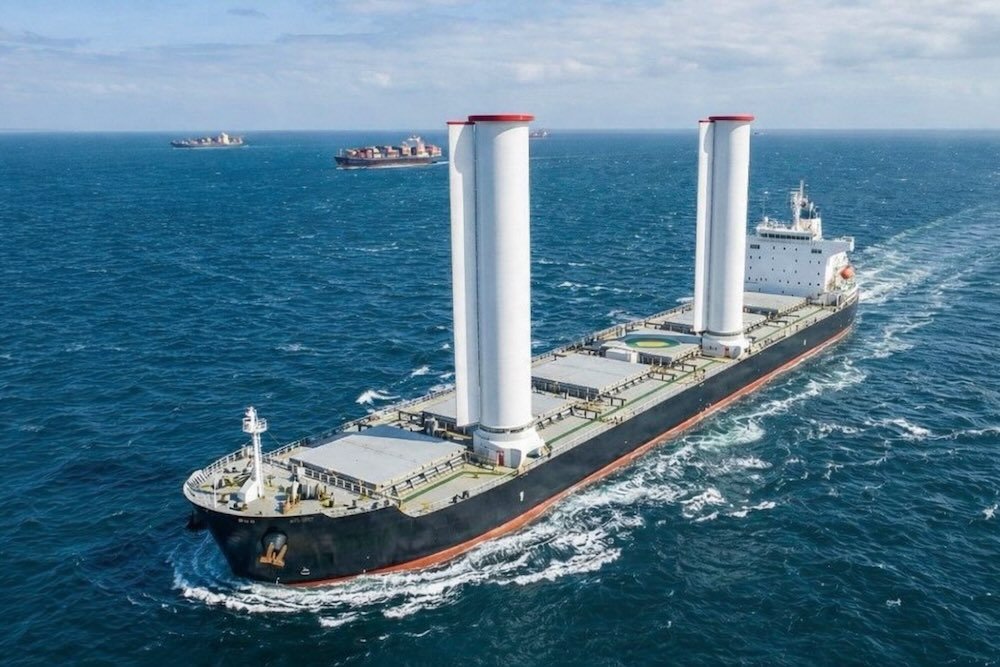
Efficiency upgrades are already gaining traction. Wind-assisted propulsion systems such as rotor sails and e-sails are delivering measurable fuel savings, with Odfjell reporting reductions of 15–20% on initial voyages following installation. Other options—including hull optimisation, air lubrication systems, propeller upgrades, advanced coatings and digital voyage optimisation—are also being actively explored.
While retrofits are not universally viable, a wide range of efficiency measures can be applied across most vessel types. With ESG pressures intensifying—particularly from major shippers tracking Scope 3 emissions—the incentive to act is increasing rapidly.
In effect, what began as a geopolitical shock is now accelerating a structural shift in how shipping approaches fuel efficiency and sustainability.