



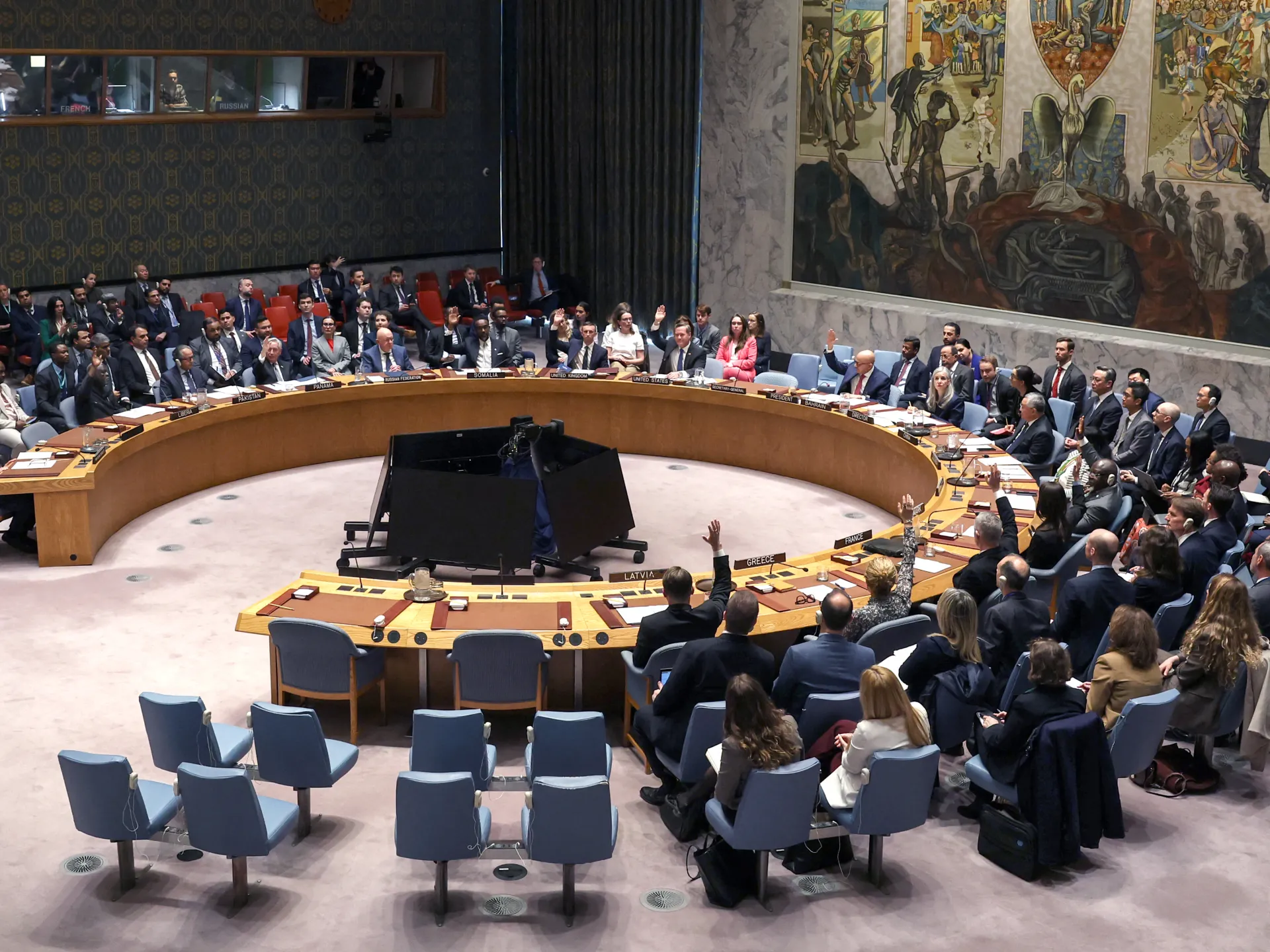
The UN Security Council has failed to pass a draft resolution on freedom of navigation in the Strait of Hormuz after China and Russia vetoed the measure during a vote on 7 April.
The resolution, proposed by Bahrain in its capacity as Security Council chair and backed by Gulf states, aimed to increase diplomatic pressure on Iran to reopen the Strait. Ten countries voted in favour, including the UK, US and France, while Colombia and Pakistan abstained.
China and Russia argued that the text was one-sided and failed to acknowledge what they described as the role of US and Israeli attacks on Iran in triggering the current crisis. Russia’s ambassador Vassily Nebenzia said the text risked creating a dangerous legal precedent and contained language that could open the door to further military escalation. He also objected to wording suggesting the Security Council could consider future measures against those undermining navigational freedoms, which he said implied sanctions pressure.
China’s ambassador Fu Cong said Beijing did not support Iranian attacks on neighbouring states or the blockade itself, but argued that the fundamental cause of the crisis was the military action taken by the US and Israel against Iran. He called on both Washington and Tel Aviv to cease what he described as illegal actions, while also urging Iran to take into account the concerns of Gulf countries and trading nations dependent on the Strait.
The UK defended the resolution, arguing that no state should be allowed to hold the global economy hostage and accusing China and Russia of shielding an ally rather than helping reopen a key international waterway. British representatives noted that only nine vessels had passed through the Strait in the previous 24 hours, compared with a normal daily flow of up to 150, and warned of severe knock-on effects for food security and trade.
Iran rejected the draft outright. Ambassador Amir Saeid Iravani said it amounted to punishing the victim for defending its sovereignty and accused the United States of openly threatening civilian infrastructure in Iran.
The US tried to separate the navigation issue from the wider war, arguing that freedom of navigation must remain a principle independent of the conflict itself. Ambassador Michael Waltz warned that allowing one party to shut a critical maritime corridor and use it as leverage would set a dangerous precedent for other global chokepoints.