Maritime Nov 24, 2026
Survitec warns of overlooked lifeboat components that could compromise maritime safety
Regulatory gaps surrounding davit suspension equipment are leaving critical chains, links and rigging exposed to ageing, corrosion and potential failure. Survitec is urging the maritime industry to strengthen inspection and replacement practices before an incident forces regulatory change.
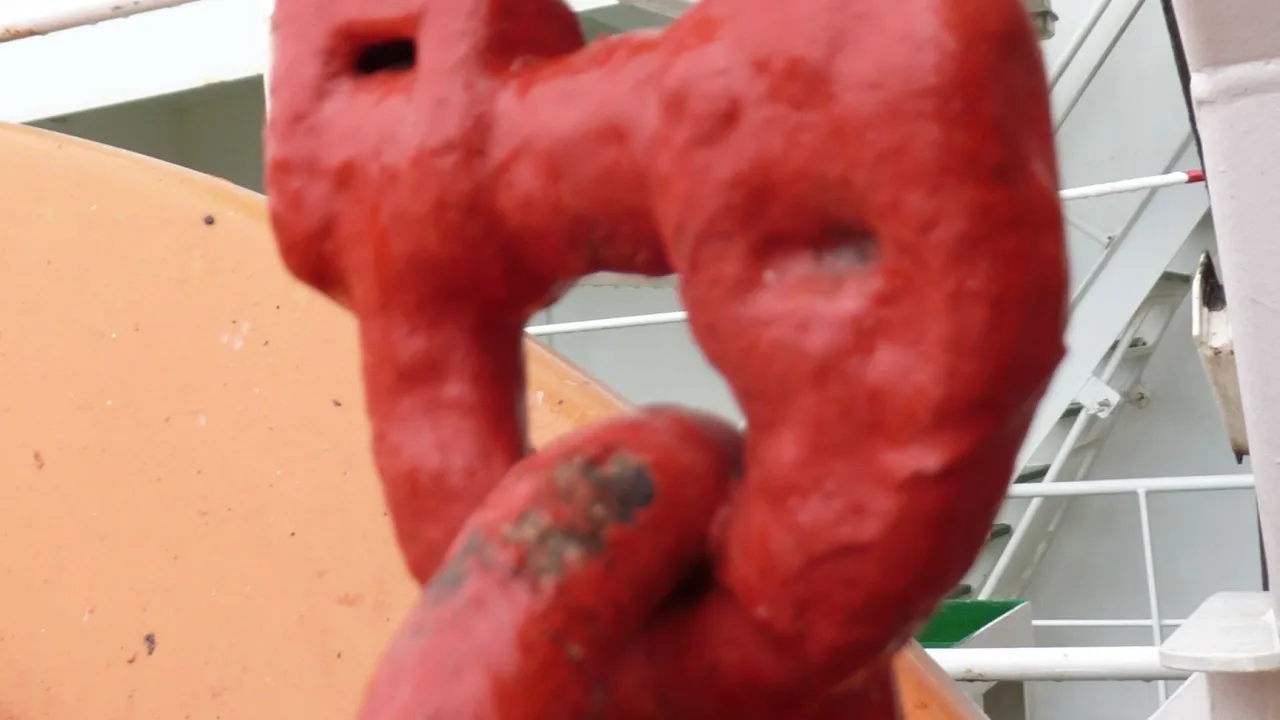
Lifeboat safety remains a fundamental requirement in maritime operations, but an important weakness in the regulatory framework could be putting the reliability of these essential survival systems at risk. Survitec is drawing attention to insufficient regulatory oversight of davit suspension components, warning that chains, links and rigging used to support lifeboats are not subject to the same clearly defined inspection and replacement requirements as other critical equipment.
Paul Watkins, Global Regulatory & Compliance Manager at Survitec, argues that the industry should address these shortcomings proactively rather than wait for an accident or a lengthy regulatory process to trigger action.
Lifeboats are designed to provide a last line of protection when crew members must abandon a vessel. Their design, inspection, testing, maintenance and periodic replacement are therefore governed by strict international requirements. However, the rules do not provide equivalent clarity for every component involved in launching and recovering these survival craft.
Under SOLAS and resolution MSC.402(96), fall wires and release hooks are subject to defined regulatory treatment and renewal requirements. Yet other load-bearing elements within the same suspension arrangement, despite carrying equivalent loads and experiencing similar deterioration over time, do not benefit from the same level of regulatory attention.
Regulatory blind spots of suspension systems
Maritime regulations have often developed in response to accidents and the analysis of incident data. The situation was the same with MSC.402(96), but the time from an incident to the implementation of new requirements can be significant.
“The industry has plenty of reasons to act now, rather than waiting for another safety incident,” Survitec said. As a member of the International Life-saving Appliance Manufacturers’ Association (ILAMA) the company has helped to raise the issue with regulators and maritime stakeholders through a technical paper submitted to the International Maritime Organization (IMO).
The company also calls on shipowners, operators and other industry players to raise awareness, introduce measures to reduce existing risks and support the development of clearer regulatory requirements.
Different terminology hinders standardization
One of the main difficulties of the approach to the problem is the great variety of davit designs and suspension arrangements.
Configurations depend on vessel design, available deck space, deck-head clearance and specific requirements set by shipowners, shipyards and classification societies.
This diversity is also reflected in the terminology used for suspension equipment. Depending on the design or organization, the functional components are sometimes called rigging, jewelry, suspension chains or other technical terms.
And without a common vocabulary, the ability to identify and regulate these safety critical elements becomes more complicated. Inconsistent terminology may also affect maintenance records, inspection histories, incident reporting and decisions on component replacement.
Standardized technical language would therefore be an important first step to improve understanding across the industry and support future changes in regulation.
The effects of inconsistent terminology on Survitec are not just administrative. Unclear definitions can lead to inconsistent inspection procedures and lifecycle management, potentially leaving worn or deteriorated components in service longer than they should.
Aging equipment and too much paint mask deterioration.
Inspection and maintenance practices constitute another major concern. Survitec says that its technicians often find davit suspension components covered in thick layers of paint during its global inspection, testing and maintenance activities, sometimes contrary to the recommendations of the manufacturers.
This practice can conceal visible evidence of decay, including wear, corrosion and cracking. It can also make it more difficult for inspectors to identify defects during routine examinations, testing procedures and PSC inspections.
The absence of a well-defined replacement interval adds another dimension to lifecycle management. Survitec’s technicians have encountered suspension components that have been in service for up to 25 years, according to the company.
As Survitec says it does, authorized service providers can identify these concerns and issue recommendations for corrective action. But shipowners, fleet managers and crews often have to weigh up such recommendations against rising operating costs and financial limitations.
A clear need for regulatory replacement would provide operators with a consistent framework, reduce uncertainty and ensure that critical safety equipment decisions are not driven by competing budget priorities.
Corrosion is another risk in lifeboat operations
The condition of aging suspension equipment may have consequences beyond the immediate risk to crew members and vessels in an emergency. Shortcomings found in ships during PSC inspections may also be the result of poorly maintained components.
The present LSA Code requirements for release mechanism components are for corrosion resistant materials without the use of protective coatings or galvanizing. But Survitec technicians still find older galvanized hooks in service that have signs of corrosion and have been heavily overpainted.
But identifying deterioration is not the only problem that is difficult. Too much paint and built-up corrosion can also affect how well the equipment works. The accumulation of these materials on the moving parts can impede free movement and interfere with the correct operation of the release mechanism.
This is reflected, also, in the international port inspection statistics stressing the general importance of keeping life-saving appliances in good condition.
In its 2025 annual report, the Paris Memorandum of Understanding (Paris MoU) mentioned life-saving appliances covered by SOLAS Chapter III among the top five categories of deficiencies, accounting for approximately 9% of all deficiencies recorded.
A similar concern was reported by the Tokyo Memorandum of Understanding (Tokyo MoU). In its 2025 report, life-saving appliances were the second biggest deficiency category at 13%.
“These figures underline the ongoing difficulties in keeping life-saving equipment working in merchant shipping around the world.”
Industry needs to act before regulations change
While davit suspension components may represent a small percentage of the total equipment inventory on a vessel, they are critical to the integrity of the lifeboat system.
Any failure of function which would preclude the safe launching or recovery of a survival craft may impair the effectiveness of the whole life-saving arrangement. As such, Survitec believes these components deserve the same level of attention as other safety-critical equipment, especially in the areas of inspection, maintenance, lifecycle management and replacement.
The company is urging shipowners and operators, flag States, classification societies, inspection organizations and industry associations to join ILAMA in promoting updates to the current lifeboat regulations.
Regulatory reform inevitably takes time. But Survitec says that does not mean action cannot be taken at the operational level now.
Shipowners and operators can start by identifying all the davit suspension components in their existing maintenance programs, assessing their age and physical condition and establishing internal criteria for replacement. This would help ensure deterioration does not go undetected and there are clearer procedures for intervention.
It is also the responsibility of fleet managers and crew to make sure that inspection surfaces remain visible and that protective maintenance practices do not hide possible defects.
The issue is obvious to Survitec: davit suspension components are a forgotten link in the lifeboat safety chain. Filling this regulatory and operational void is essential to protecting crews and making sure life-saving equipment works when it matters most.”
END OF REPORT