Business Nov 6, 2026
The Tata-Iveco takeover: India's ambitions, industrial synergies and financial problems
Following the acquisition of an 89.42% stake in Iveco Group, Tata Motors is positioning itself as a global commercial vehicle player. The strategy promises new opportunities in technology, manufacturing and international markets, but questions remain over profitability, integration costs and the delivery of expected synergies.
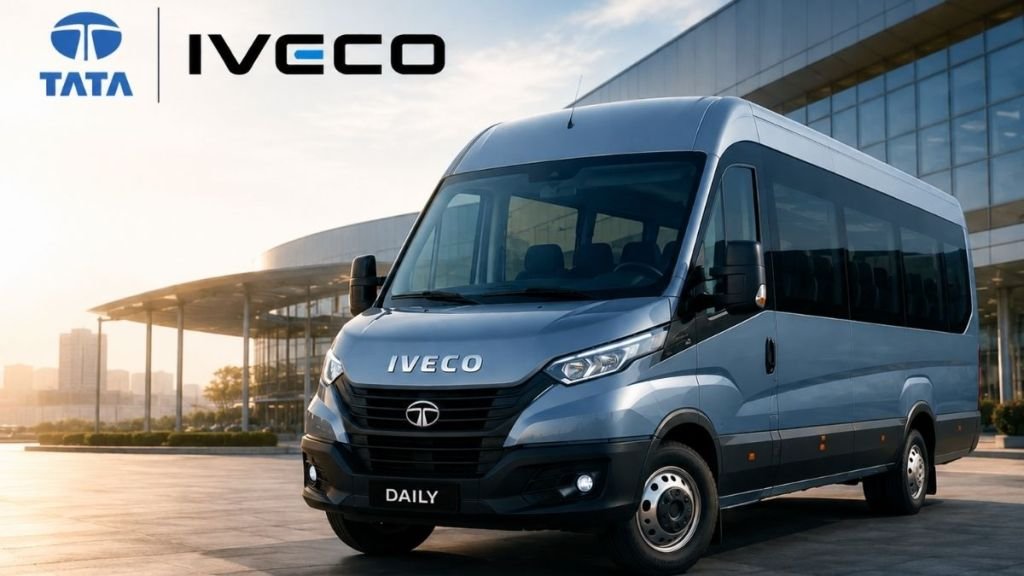
The acquisition of Iveco Group by Tata Motors is an important event for the global commercial vehicle industry. The transaction, carried out on 30 October 2026 through a Dutch subsidiary, provides the Indian manufacturer with an 89.42% stake in Iveco’s share capital, excluding treasury shares, for some €3.43 billion, at a price of €14.40 per share.
The European manufacturer is now an indirect subsidiary of the Tata Group. Olof Persson continues as Chief Executive Officer and Natarajan Chandrasekaran, Chairman of Tata Sons, has taken over as Chairman of Iveco Group’s Board of Directors.
The offer for the takeover was reopened between 2 and 6 November and settlement for shares tendered is due on 13 November. Tata will then explain how to buy the rest of the shares. This could lead to Iveco being delisted from Euronext Milan.
The acquisition was announced officially in Italy on 3 November, with positive statements from the executives of both groups. But a more detailed picture of what the acquisition is expected to deliver from an Indian point of view is emerging. Beyond the change in ownership, the big question is whether Tata can create sustainable financial value from the industrial and commercial combination.
Tata’s ambition: Create a global commercial vehicle business
In India, the debate around the acquisition has largely been about the ability to generate measurable returns.
The Hindu BusinessLine reported on October 30 that the transaction was announced in July 2025 with commitments including cash flow synergies, neutralization of the impact of the acquisition on earnings per share within two years and repayment of the acquisition debt within four years.
At press conferences on November 3 and 4, Tata’s leadership was more focused on the group’s growth ambitions.
But Chandrasekaran views the acquisition as an opportunity to establish a global commercial vehicle group, rather than just adding manufacturing capacity under one ownership, The Economic Times reports.
The strategy centers around four key priorities:
· Entry into the Indian market withIveco products, which will be initially imported as semi-knocked down kits and subsequently manufactured in increasing local content.
Use existing Iveco market presence to increase Tata platforms international reach.
Creating new commercial opportunities for FPT engines.
Sharing development programs on electric and hydrogen propulsion, connected vehicles and vehicle software.
Tata is looking at a five-year horizon with expectations of substantial growth in volumes, revenues and margins. However, it has not yet disclosed detailed targets by product and market breakdown.
The financial ambitions were already set out at the company’s annual general meeting on 29 June 2026. “The combined revenues could go up from $25 billion (€21.5 billion) to $35 billion-$40 billion (€30 billion-€34.5 billion),” Business Standard quoted Chandrasekaran as saying.
He also mentioned initial combined volumes of about 600,000 vehicles with the long-term target of more than one million units.
FPT is one of the most immediate industrial opportunities
“FPT is one of the clearest opportunities for cooperation among the potential industrial benefits.
The Economic Times's specialist automotive platform EAUTO identified the powertrain business as a space where Tata could generate concrete commercial benefits in a report published on 3 November.
Iveco’s Turin-based engine maker could increase its industrial applications and power generation footprint by tapping Tata’s vast commercial network in India and other overseas markets.
But important details hang in the air. There are no revenue targets or investment commitments announced for localizing Iveco products yet.
Tata has also made it clear that its current joint venture with Cummins will continue to supply engines for heavy commercial vehicles for the Indian market. FPT’s capabilities will instead be evaluated for other parts of the product range and there are no plans for a general replacement of existing powertrain suppliers.
This difference matters to the integration strategy, as Tata aims to explore complementary technologies and business opportunities without disturbing existing industrial partnerships across its core business.
India’s international expansion: Two-way market access
The geographic rationale for the acquisition had been coming together since June 2026 when ETAUTO had described Tata's strategy as having two complementary goals.
The first is to shore up the company’s position in its home market. Tata’s share of India’s commercial vehicle market slipped to 35.7% in the 2025-2026 financial year from 37.1% a year earlier.
A second objective is the use of Iveco's international presence as a platform for the expansion of Tata's global activities.
Iveco gets around three-quarters of its revenues from Europe and around 12% from Latin America, giving Tata access to established markets where it would take considerable time to build similar commercial and distribution infrastructure on its own.
The commercial opportunities, Business Standard says, do not stop at the launch of Iveco vehicles in India. Existing Iveco distribution networks could be used to bring Tata products to European, Latin American and Australian markets.
“Such infrastructure is important,” Girish Wagh, a senior Tata Motors executive, was quoted as saying by the newspaper in 2025.
It would take several years to build up service networks, distribution channels and customer financing capabilities from scratch, he said. So, in buying Iveco, Tata has bought a ready-made international platform that could speed up its expansion.
The two brands are also likely to maintain their separate market positions. Tata would still be for durability and value for money and Iveco would be a premium brand.
Financial analysts remain split on the acquisition
The industrial opportunities aside, the financial outlook is more nuanced.
Business Standard quoted a report by Ambit Capital from December 2025, which said four things were driving the optimism: access to a larger market, geographical diversification to reduce exposure to individual economic cycles, access to different propulsion technologies and the opportunity to share investments in electrification, emissions reduction, driver assistance systems and software.
The report also talked about management’s aim to achieve annual free cash flow synergies of up to 0.5% of combined revenues from the 2027-2028 financial year.
Other market analysts have taken a more cautious stance.
In September 2025, brokers told Business Standard that the operating profitability of the two manufacturers was worlds apart. Iveco’s EBIT margin was 5.3% compared with 8.7% for Tata, raising concerns that the European company’s lower profitability could dilute the overall margins of the combined group.
Another important consideration is financing. Debt could finance about 60% of the acquisition and the net debt-to-equity ratio could leap to 0.6 times from 0.1, analysts estimated. But they considered this level acceptable.
Nuvama continues to have a "Reduce" on the stock while Motilal Oswal continues to have a "Neutral". Both assessments had raised concerns that the group's balance sheet could come under pressure if the expected synergies did not materialize.
The integration risks and the performance of Iveco remain under monitoring
Concerns over the acquisition were rekindled on 25 June 2026 when Business Standard quoted analysts Kapil Singh and Siddhartha Bera as saying they were dubious about Iveco’s latest financial performance, and the uncertainty over the integration timetable.
ICICI Securities sees the international expansion as strategically positive in the long run, but is cautious about the impact of the transaction on Tata’s debt levels.
“Potential short-term challenges are integration issues and vulnerability to the global commercial vehicle cycle,” said Ravi Singh, Head of Research at Master Trust.
We are paying special attention to the European market, which is generally considered cyclical and with relatively low growth prospects. That could make it harder for the combined group to deliver rapid improvements in profitability.
The challenge for Tata will be to balance the investment requirements, the financial commitments and the varying conditions of their respective markets while managing the integration of two large industrial organizations.
Industrial commitments in Italy and the search for efficiency
For Iveco's Italian operations, one of the most important issues is still the commitment by Tata not to close plants or make redundancies for two years from the closing of the transaction in 2025.
Similarly, Girish Wagh has pointed to product range simplification and cost-oriented vehicle design as ways to improve efficiency.
Such measures may help to reduce the costs of development and production, without necessarily implying major changes in the industrial footprint.
One of the key aspects of the integration process will be the balance between the preservation of existing manufacturing operations and the improvement of competitiveness, especially considering the industrial footprint of Iveco in Italy.
A global opportunity yet to be delivered
For Tata, buying Iveco means getting an international footing, distribution networks that already exist and technologies that could speed up its push in commercial vehicles.
The upside is mostly in manufacturing, powertrains, software, electrification and a less India-centred footprint. But the deal also brings financial commitments, an integration job that won’t be simple, and exposure to a European truck market that rises and falls with the economic cycle.
Some questions remain for investors and analysts. The operating margins of the two companies are far apart, the acquisition debt is sizeable, and there are no detailed targets by product line.
In the end, it comes down to whether Tata can turn its expansion plan into higher revenue, better margins and steady cash flow, while keeping the industrial know-how and market positions that made Iveco a major European truck maker in the first place.
END OF REPORT