



Manufacturers and retailers across North America are increasingly embracing mobile storage trailers as supply chains come under pressure from tariff volatility, labour shortages and mounting logistics costs.
That shift is being driven by a search for flexibility, according to John Brooks, founder and chief executive of Warehouse on Wheels, a mobile storage provider headquartered in Crestview Hills, Kentucky.
The company operates around 37,000 trailers across roughly 37 locations in the United States, Canada and Mexico, serving more than 7,000 customers in sectors ranging from manufacturing and retail to nonprofit organisations.
Brooks said the trailers are designed to give businesses temporary capacity when warehouses are full or when logistics networks are disrupted.
Rather than committing to long-term warehouse expansion, companies can use trailers on a month-to-month basis for overflow storage at factories, distribution centres or ports. According to Brooks, that ability to scale capacity up or down quickly is becoming increasingly valuable in a market where demand can shift suddenly.
He said many businesses are looking for ways to convert fixed logistics costs into more flexible operating expenses.
An internal analysis by Warehouse on Wheels estimates that traditional warehouse leases average around $11 per square foot before operating expenses, while storage trailers cost about $6.64 per square foot. That difference can create substantial savings for companies that only need temporary capacity.
Brooks said that when businesses compare the long-term commitment of a warehouse lease with the much lower monthly cost of renting a trailer, the logic often becomes straightforward. In his view, mobile storage has become another practical tool available to supply chain leaders under pressure.
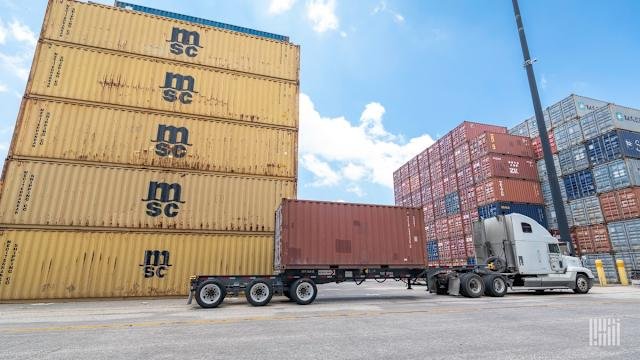
The trailers are typically refurbished units fitted with forklift-rated floors, allowing them to be used either for static storage or for short-distance cartage within regional supply chains.
Demand has been fuelled by ongoing disruption. Tariff changes, port congestion and abrupt shifts in inventory patterns have all created situations where companies need extra space immediately, not months later.
Brooks said that even a small disruption in a tightly managed just-in-time supply chain can create major operational chaos. When production is at risk, businesses do not have time to negotiate warehouse leases. They need assets that are available right away.
In practice, the trailers are often used to temporarily hold inbound inventory, stage manufacturing components or store empty packaging used in production systems.
In some cases, usage has grown dramatically. Brooks said one automotive assembly plant in the Midwest expanded from roughly 60 trailers to more than 1,600 units over time.
Nearshoring has added another layer of demand, especially in Mexico and along US border corridors. Brooks said manufacturers in logistics hubs such as Monterrey, Laredo and El Paso are increasingly using mobile storage to manage cross-border operations.
He noted that instead of borrowing equipment from local trucking companies, manufacturers can scale much faster using a dedicated storage network positioned along the border.
Demand linked to nearshoring remains strong in both the United States and Mexico, although Brooks said the Canadian market has been softer due to slower economic conditions.
Warehouse on Wheels has expanded rapidly in recent years through acquisitions and the launch of new markets, integrating regional trailer rental providers into its network. The company’s longer-term target is to grow to 100 locations and roughly 100,000 trailers across North America.
Because trailer demand often rises when warehouses are full or when manufacturers begin increasing production, Brooks believes the business can also serve as an early indicator of wider supply chain activity.
According to him, warehouse space tends to be maxed out at the peak of the cycle, while at the bottom companies become reluctant to commit long-term capital. He said the company is already seeing early green shoots and a slight uptick as the market heads into 2026.