



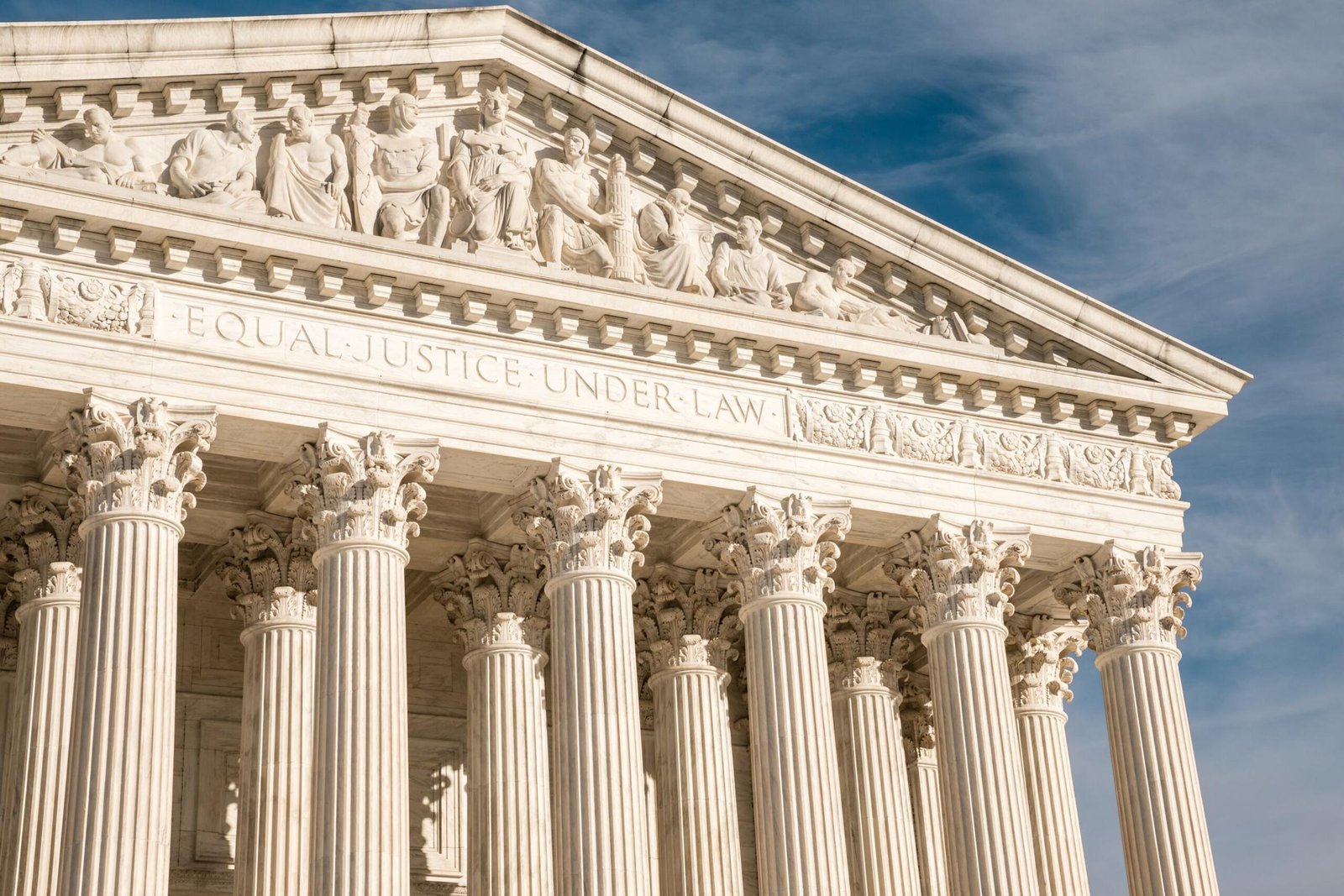
WASHINGTON — The U.S. Supreme Court is preparing to examine one of the most consequential legal questions facing the freight brokerage industry: whether brokers can be held liable for accidents involving motor carriers they contract.
The case, Montgomery v. Caribe, centers on the interpretation of a key provision within the Federal Aviation Administration Authorization Act (F4A). The legislation generally prevents states from regulating the “price, route or service” of transportation providers, effectively shielding many logistics intermediaries from state-level legal action.
However, the law also includes a “safety exception” allowing states to regulate issues related to transportation safety. The central debate before the court is whether that exception extends to freight brokers.
Specifically, the dispute hinges on the phrase “with respect to motor vehicles.” Courts across the United States have issued conflicting interpretations of whether this wording applies strictly to trucking companies or also includes third-party logistics providers that hire those carriers.
The Montgomery case arose after a driver, Shawn Montgomery, was struck by a truck operated by Caribe Transport, which had been contracted by logistics giant C.H. Robinson.
Initially, C.H. Robinson was named as a defendant. However, both a lower court and the Seventh Circuit Court of Appeals dismissed the claims against the brokerage, ruling that federal law preempted state negligence lawsuits against brokers.
Those courts concluded that the safety exception applied only to motor vehicles themselves and not to third-party intermediaries arranging transportation services.
Other courts have reached different conclusions.
In Miller v. C.H. Robinson, the Ninth Circuit rejected the broker’s argument that federal law shielded it from liability. More recently, the Sixth Circuit ruled in Cox v. TQL that the safety exception does not necessarily protect brokers from negligence claims.
The growing split among federal appellate courts ultimately prompted the Supreme Court to accept the Montgomery case.
During oral arguments, attorneys representing C.H. Robinson are expected to emphasize that Congress deliberately established separate regulatory frameworks for carriers and brokers. One point likely to be raised concerns insurance requirements: trucking companies must maintain specific insurance coverage, while brokers are subject to different standards.
If lawmakers had intended brokers to carry identical liability responsibilities, they would likely have imposed the same insurance obligations, legal experts argue.
The federal government has also entered the debate. Solicitor General D. John Sauer has been granted ten minutes during the oral arguments to present the administration’s position supporting the brokerage industry.
The Supreme Court’s decision could reshape liability standards across the logistics sector, potentially exposing brokers to significant legal risks if they are found responsible for negligence in selecting carriers.
Given the scale of the U.S. freight brokerage market, the ruling could have far-reaching consequences for the entire trucking and logistics ecosystem.