




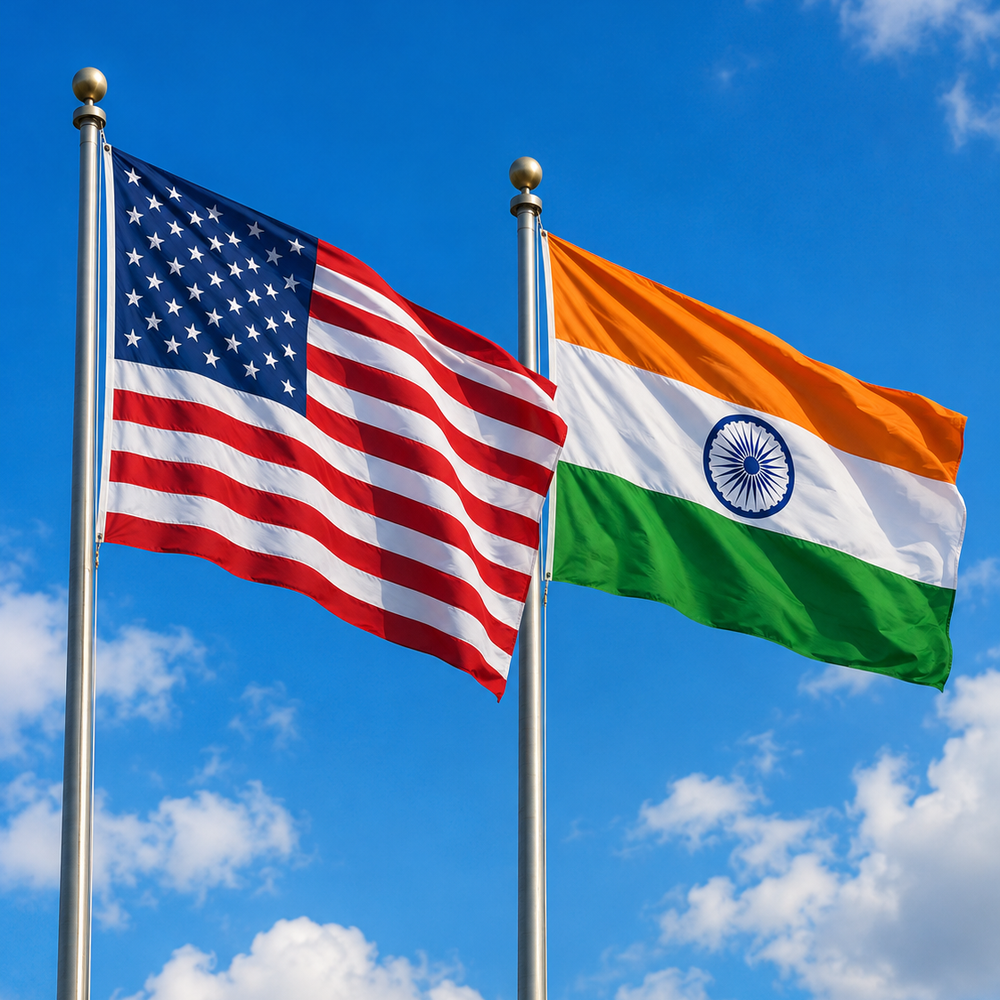
U.S., India Edge Closer to Trade Pact
The US and India are said to be close to agreeing a trade deal after months of negotiations with US Secretary of State Marco Rubio saying the two countries are “very close” to finalizing a deal.
Rubio spoke to reporters in Uzbekistan’s Samarkand, at Registan Square, during a diplomatic tour of Central Asia. The latest statement suggests a fresh momentum in the talks between Washington and New Delhi, which are expected to take up broader bilateral relations and outstanding trade issues in the next round.
Rubio is to meet External Affairs Minister S. Jaishankar in Mumbai on October 20, India’s Ministry of External Affairs said. The meeting is expected to build on months of negotiations and could bring the two sides closer to an agreement with implications for trade flows, transport and international supply chains.
The agreement could help reduce tariff uncertainty and boost air cargo exports and imports between the two countries. Better trading conditions should be of benefit to goods such as pharmaceutical products, electronics and textiles.
Tariffs and power supplies Be at the Center of Negotiations
Along with traditional trade barriers, energy procurement will probably be high on the agenda. And India’s continued consumption of Russian fuel and the implications of Lindsey O. Graham Sanctioning Russia and Iran Act of 2026 add another dimension to the negotiations.
The US market continues to be a large market for India’s pharmaceutical products. United Nations COMTRADE data show that pharmaceutical imports across the Pacific were valued at more than $15 billion in 2025, highlighting the need for stable trade routes for temperature-sensitive and other specialized cargo.
Any agreement that involves a reduction in tariffs or an increase in market access could therefore have implications beyond the bilateral trade figures, including demand for air freight and the movement of pharmaceutical, electronic and textile goods between the two economies.
Washington Reverses Tactics on Russian Oil Sanctions
The US administration has also shifted its stance on sanctions related to Russian fuel purchases. Last week, the White House changed course when President Donald Trump on Friday signed an executive order waiving sanctions under the Graham Act.
The absence of a defined end date for the waiver could affect negotiations with India, particularly because of its reliance on Russian energy supplies.
Rubio defended the administration’s approach, citing the pressures on international energy markets and the real-world challenges some countries face when searching for other suppliers.
“Over the last few months, we have had to waive sanctions due to the impact on global supplies and prices,” he said, adding that geography was an important consideration when countries looked for alternative energy sources.
Some countries have a lot of trouble getting energy from alternative sources. “That’s not an excuse, but all of that has to be taken into account when you’re doing foreign policy,” Rubio said.
His remarks underscore the dilemma confronting Washington as it tries to balance sanctions policy with energy security and wider diplomatic goals.
Earlier Plan Included US Purchase Commitments, Deep Tariff Cuts
The current talks follow a proposal reported in February in which the US government offered to cut tariffs on Indian products from 25% to 18%. The proposal also sought to scrap a further 25% tariff imposed in response to India’s purchases of Russian crude.
In return, India would have committed to buying $500 billion worth of American goods over five years and would have said it would stop buying Russian oil.
Recent developments show that tariff policy and energy sourcing remain closely linked in the bid to reach an agreement. Rubio’s upcoming meeting with Jaishankar could shed more light on the ability of the two governments to bridge their positions.
A final deal could bring more predictability for businesses working across international supply chains, he said. However, the possible effects on tariffs, energy buying and freight traffic are unclear until the terms are settled and formally announced.