Business Nov 26, 2026
US-Led Investment Group Moves to Take Control of Lukoil’s $16 Billion International Portfolio
A consortium led by US investment firm Eldridge has agreed to acquire Lukoil’s overseas oil and gas operations through a share exchange valued at approximately $10 billion. The transaction would separate the Russian energy giant’s international assets from its domestic business, subject to approval from US sanctions authorities.
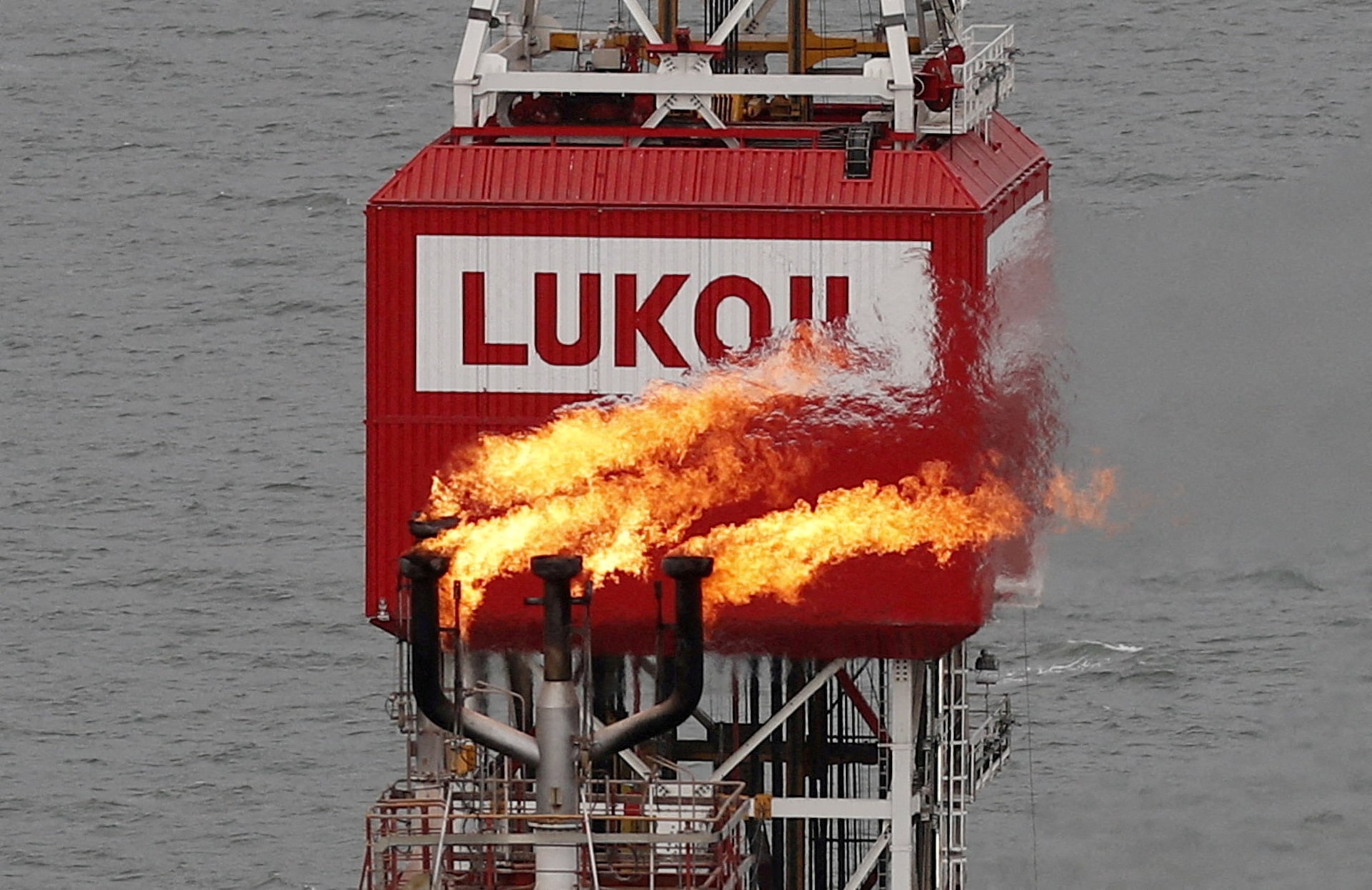
A US-led investment group has agreed to buy Lukoil International GmbH (LIG), the unit that handles the Russian energy group's oil and natural gas assets outside of Russia. Sources said the deal would give a new group of investors control of Lukoil’s international operations in a share exchange worth about $10 billion.
The consortium is led by US investment firm Eldridge, and includes the US International Development Finance Corporation (DFC), UAE-based Catena Investment Holding and Xtellus Partners. Under the proposed arrangement, Lukoil’s overseas business would be spun off to independent owners, separating it from the Russian parent company.
The international portfolio is valued at approximately $16 billion and spans a broad range of energy activities in about 40 countries. Its assets consist of upstream oil and gas production, refineries, pipeline infrastructure, trading businesses and extensive fuel distribution networks.
Three refineries in Europe in key portfolio holdings
Lukoil International is producing in 11 countries with total output of about 350,000 barrels of oil equivalent a day.
The portfolio includes three European refineries among the most important industrial assets: Burgas in Bulgaria, Zeeland in the Netherlands and Petrotel in Romania. These refineries can process about 350,000 barrels of crude oil per day.
Burgas, the biggest refinery in the Balkans, is a particularly important strategic asset for energy supply in the Black Sea region and Southeastern Europe.
The portfolio also includes LITASCO, an international oil trading company, and a retail distribution network of over 2,000 fuel stations in 16 countries, in addition to refining and producing. These operations put prospective owners in position to gain a foothold in several of the world's major energy markets.
Share Exchange Structure Without Cash Payments
The parties have agreed to structure the transaction as a share-swap rather than a traditional acquisition financed by cash.
Under the plan, the consortium would exchange shares in Lukoil and other Russian firms that are restricted for a controlling stake in Lukoil International GmbH.
The shares involved in the deal are said to be worth something around $10 billion and were purchased from investment funds and custodial banks in the United States and the United Kingdom.
Instead of transferring the securities directly to Lukoil, they would be placed in a restricted escrow account in the UAE as part of the structure. The assets are expected to remain frozen for five years, or until the relevant sanctions are lifted.
The structure is intended to ensure cash proceeds from the sale of its international businesses do not flow directly to the Russian parent company.
The U.S. International Development Finance Corp. will also buy an equity stake in the company for the United States. The expectation is that after private investors have recovered their initial investments and received the agreed return, the US government will have ownership in future profits of the company and will have board representation.
Past effort to sell gets no sanctions clearance
Lukoil has sought to sell its foreign assets under pressure from US sanctions and a possible deal is in the offing.
Russian energy company earlier this year agreed to sell its overseas portfolio to US investment firm Carlyle Group. But the deal did not come to fruition as the necessary authorisation from the sanctions authorities was not forthcoming.
The new pact still has to get the OK from the Office of Foreign Assets Control (OFAC) at the US Treasury Department. The parties also need to do financial and legal due diligence and obtain the further regulatory approvals required to proceed.
It could take up to 12 months to complete.
If approved, the new consortium would own Lukoil’s international operations, in effect separating the overseas portfolio from the Russian parent company.
Authorisation will be key to the future of one of the largest Russian-owned energy portfolios outside Russia, depending on whether investors can meet the requirements of the US sanctions and complete the regulatory process.
END OF REPORT