



The past week’s biggest maritime stories were all tied, directly or indirectly, to the disruption in and around the Strait of Hormuz. Ship movements through the waterway have begun to recover slightly, including the first LNG carrier transit since the Iran war started on 28 February, but overall traffic remains far below normal and is still dominated by outbound eastbound movements rather than any true return to normal operations.
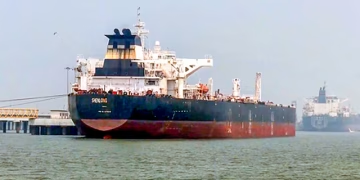
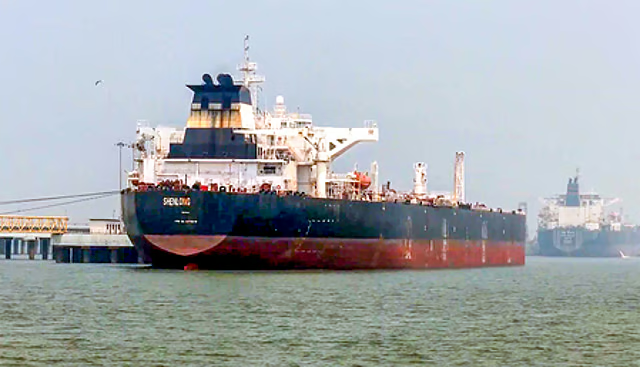
The tanker market has also tightened dramatically. Analysts said the dislocation of ships caused by the Hormuz crisis has left Asia short of VLCCs, forcing charterers to secure whatever tonnage they can. That has pushed Aframax and Suezmax ships into Asian trades where they would not usually be seen, adding to an already highly volatile freight environment.
Saudi Arabia’s Red Sea port of Yanbu has emerged as a crucial alternative loading point thanks to the Kingdom’s east-west pipeline. Signal Ocean data showed 47 VLCC loadings there in February, nearly four times the normal volume. But even this workaround is under pressure, with the pipeline now full and the Houthi threat in Yemen adding a fresh layer of risk.