Tech Nov 6, 2026
Zipline raises $1.5 billion to accelerate US drone delivery rollout
The $21.5 billion autonomous delivery specialist intends to boost its US manufacturing capability, ramp up its workforce and expand its nationwide operations following its latest funding round. Big investors and commercial partnerships with Walmart and Uber mean the company is speeding the development of drone-based logistics.
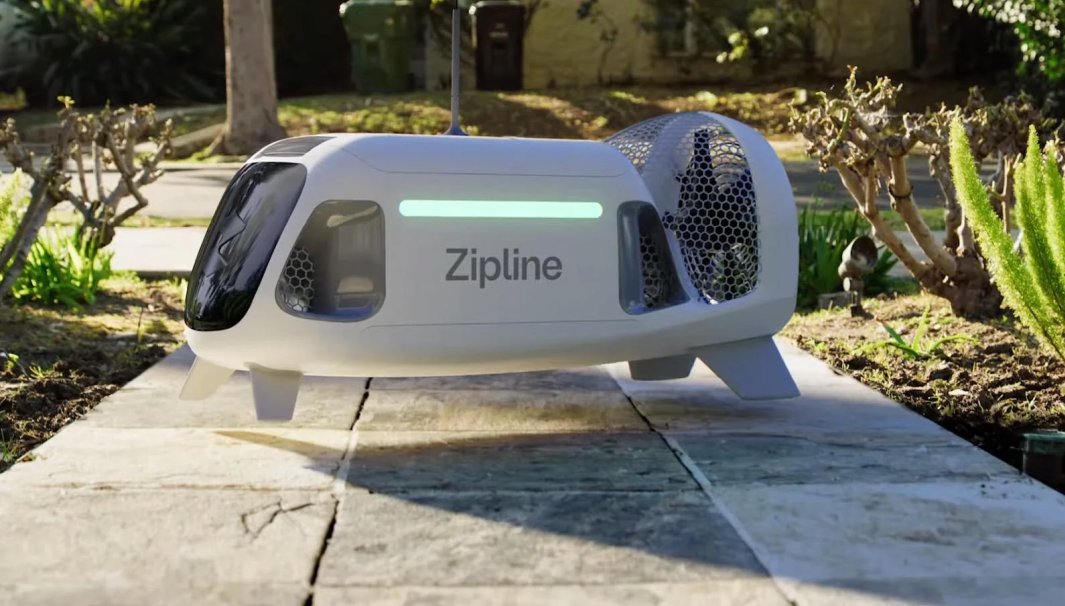
Zipline raises $1.5 billion to boost US expansion
Zipline’s $1.5bn in new capital to strengthen its US foothold marks a new chapter for the autonomous delivery market. The drone delivery company, based in San Francisco, now has a post-money valuation of $21.5 billion, suggesting rising investor confidence in its technology and business model.
The new financing will allow Zipline to scale its workforce significantly and grow its manufacturing capabilities around the U.S. The investments are intended to speed up the development of a nationwide autonomous delivery network and to increase the company’s operational capacity.
The round was led by Paradigm, WCM Investment Management and Layer Global. Some big investors also took part, including Valor Equity Partners, Fidelity Management & Research Company, Uber, Tiger Global, J.P. Morgan, ARK Invest and Salesforce Ventures.
This is putting pressure on traditional logistics networks with increasing demand for deliveries.
Zipline raises money as demand for faster deliveries only grows. The company cites increasing limitations on traditional ground transportation, including worsening road congestion, aging city infrastructure and rising operating costs.
It is in this context that autonomous delivery systems are gaining commercial ground. Zipline is expanding, thanks to an ever-growing network of partnerships with large retailers and other companies, which are increasingly incorporating drone deliveries into their distribution strategies.
One of the biggest developments is a new multi-year national agreement with Walmart. The partnership will bring Zipline services to an additional 300 locations, with potential for further growth.
Its partnership with Uber also shows the scale of its ambitions. The two companies hope to deliver one million items daily by 2029 using Zipline’s technology.
Zipline says hundreds of businesses are already profiting from orders placed on its platform. The network grows weekly with new merchants coming on board and existing partners adding hundreds, sometimes thousands of locations to their geographic coverage.
Drone deliveries are bringing in more money for merchants
The company’s commercial performance is also a good indicator of the financial impact of autonomous delivery.
Zipline recently released numbers for a handful of its longest-standing restaurant partners. The delivery revenue share from Zipline jumped from 10.8% in March to 34.9% in October this year.
Restaurants saw a 26% year-over-year increase in total delivery gross merchandise value (GMV) during that same period. Of that growth, 80% was driven by orders from Zipline.
The company stresses that the added activity is new business and not a shift of existing demand away from traditional ground delivery platforms. Thus, the drone network is helping restaurants that participate generate incremental sales.
More than 1 million deliveries made in Dallas-Fort Worth
Zipline’s operational development is particularly evident in the Dallas-Fort Worth metropolitan area, where the company has already completed more than one million deliveries this year.
It still has speed as a key competitive advantage over traditional services that rely on vehicles. In October, the median time for a Zipline order to arrive was only 19 minutes from the time a customer checked out. Traditional deliveries by car, however, usually take longer than 30 minutes.
Some product categories have even shorter delivery times. For example, bakery orders were delivered in a median of just 10 minutes.
In addition to the reduction of delivery times, autonomous aircraft could enable businesses to reach customers beyond the geographical boundaries of traditional delivery networks.
Zipline estimates that only around 5% of restaurant orders in the United States are currently for delivery. Most of these orders come from customers within a two-mile radius of the restaurant because longer journeys mean longer transport times and higher courier costs.
Some food service operators are already altering their business models to mirror this emerging distribution system. For example, Wonder is one of the companies building new storefronts and commercial kitchens customized for the operational needs of Zipline’s delivery technology.
Big investors are betting on drone logistics becoming mainstream
“The company’s growth has been strongly supported by its financial partners who see autonomous delivery as a market that is moving toward broader commercial adoption.
Paradigm Co-Founder and Managing Partner Matt Huang pointed to Zipline’s position in the robotics space, noting that the company is, “one of the largest autonomous robotics companies in the world.” He also noted its operational scale, safety performance, and customer experience for both consumers and merchants.
“The company’s platform is the result of more than a decade of work in technology,” said Alan Tu, portfolio manager at WCM Investment Management. "Zipline has built a team and an organizational culture that can deliver advanced drone technology, and now the market is starting to see the transformative potential," he said.
Anton Levy, founder and managing partner at Layer Global, said the company’s commercial partnerships with Walmart and Uber were also key. “The company can replicate its market-entry model in other locations and so is well-placed to make autonomous deliveries part of the everyday consumer activity,” he says.
New aircraft designed to improve speed, noise levels and capacity
Besides its commercial expansion, Zipline continues to invest in the development of its aircraft and flight systems.
Recently, the company has developed a dynamic flying system optimized for acoustic performance. This upgrade aims to reduce the drone noise and increase the speed and energy efficiency of the flight.
Zipline has also put into service a next-generation aircraft that flies higher and with a lower noise signature. The new platform is capable of carrying heavier loads and traveling further, thereby extending the capabilities of its delivery network.
Such tech upgrades are especially important as the company expands its presence in populous areas, where noise reduction, operational efficiency and delivery capacity are critical to scaling autonomous services.
A decade of operations driven by safety and humanitarian logistics
Zipline’s commercial aspirations are supported by a decade of operational experience in autonomous aviation.
The company says it has flown 150 million commercial autonomous miles since the first flights a decade ago, with not a single safety incident.
Its activities reach far beyond deliveries to retail and restaurants. Zipline operates long-range medical distribution services across several continents, delivering vital medical supplies and bolstering healthcare programs that save over 14,000 lives annually.
In Côte d’Ivoire, the company is currently working on developing a national logistics network that will serve over 2,200 healthcare facilities. Once complete, the infrastructure is expected to increase access to vital medical supplies for some 12 million people.
With $1.5 billion in new financing, expanded partnerships and continued investment in aircraft technology, Zipline aims to take autonomous drone delivery out of niche applications and into the mainstream of the logistics industry as a scalable component.
END OF REPORT