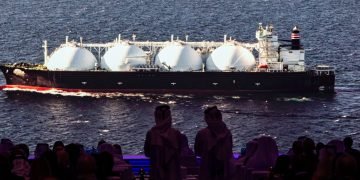




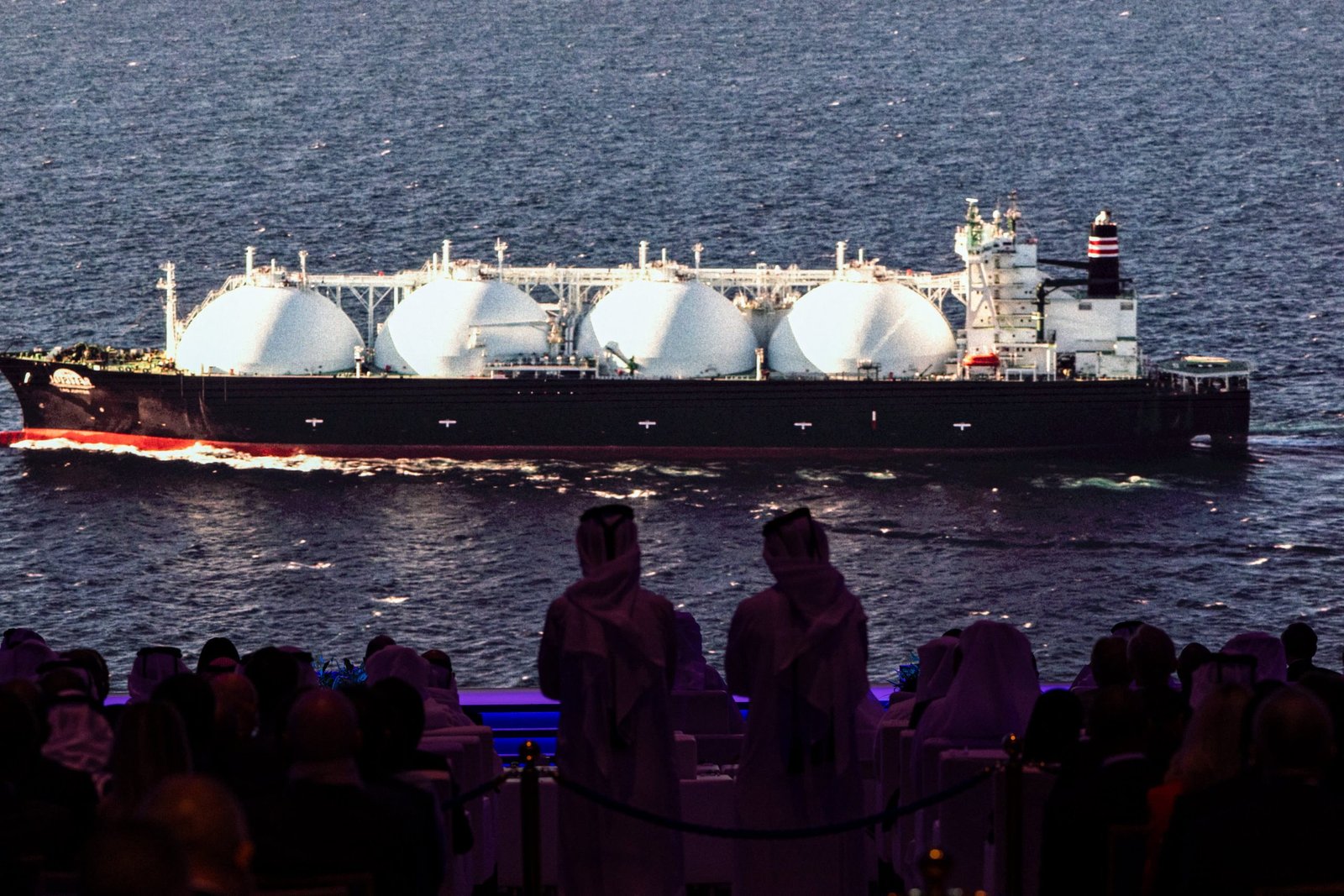
Qatar has halted LNG production at Ras Laffan, one of the world’s largest liquefied natural gas production and export terminals, in response to Iranian attacks and maritime disruptions in the Strait of Hormuz.
Industry sources report that up to 150 tankers are idling west of the Strait, including fully loaded LNG carriers unable to safely transit the waterway. Qatar accounts for approximately 20% of global LNG trade, supplying key markets such as China, India, South Korea and Europe.
The financial implications are significant. A typical 174,000-cubic-meter LNG vessel can lose between 50 and 100 tonnes of cargo per day due to boil-off—gas that is normally reused as propulsion fuel.
Simultaneously, crude production at Saudi Arabia’s Ras Tanura export complex was suspended following drone attacks. The facility is one of the largest oil export terminals globally.
While energy markets had not fully priced in the disruptions by the close of European trading, LNG prices were reported up 50% earlier in the day. Brent crude rose 8% to approximately $75.50, while West Texas Intermediate climbed 7% to near $72.