




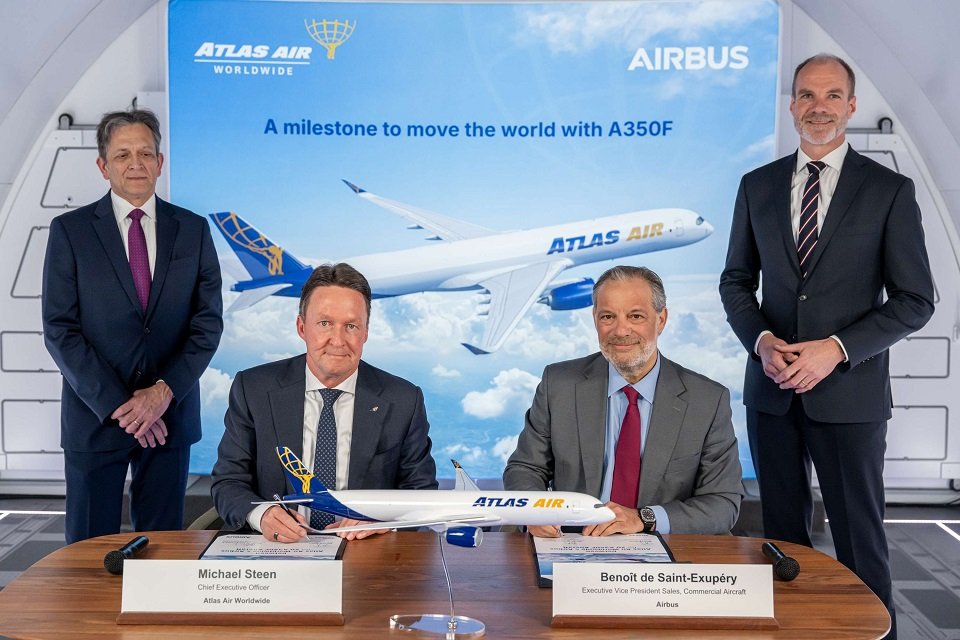
Atlas Air Worldwide has placed the largest order to date for Airbus’ next-generation A350 freighter, marking a significant strategic shift for the US-based cargo operator.
The company confirmed an order for 20 Airbus A350F aircraft, with options for an additional 20 units, making it the largest customer for the model so far.
Deliveries are scheduled to begin in 2029 and continue through 2034.
Atlas Air said the aircraft will support its long-term expansion strategy and strengthen its ability to serve global cargo and charter markets with improved payload-range performance and fuel efficiency.
Chief executive Michael Steen pointed to the aging global freighter fleet as a key driver behind the investment.
“As retirements of older widebody freighters accelerate, the market for large cargo aircraft will remain constrained with limited new capacity entering the market,” Steen said.
He added that the purchase underlines the company’s confidence in long-term airfreight demand growth.
The order also represents a diversification of Atlas Air’s historically Boeing-dominated fleet.
The company currently operates 113 aircraft, primarily consisting of Boeing 747, 777 and 767 freighters.
Introducing the Airbus A350F will also add Rolls-Royce engines to Atlas’ supplier ecosystem, providing greater operational flexibility.
Airbus welcomed the deal as a major milestone for the aircraft programme.
Lars Wagner, chief executive of Airbus Commercial Aircraft, described the order as a pivotal moment for the new freighter platform.
The A350F has been designed specifically around standard industry cargo pallets and containers, featuring a large maindeck cargo door and optimised fuselage length.
More than 70% of the aircraft structure is made from advanced materials, reducing take-off weight by approximately 46 tonnes compared with older aircraft derivatives.
The aircraft is also expected to be the only freighter fully compliant with ICAO’s new CO₂ emissions standards, which will come into force in 2027.
For Atlas Air, the investment represents a long-term bet that global air cargo demand will continue expanding despite market cycles and geopolitical disruptions.